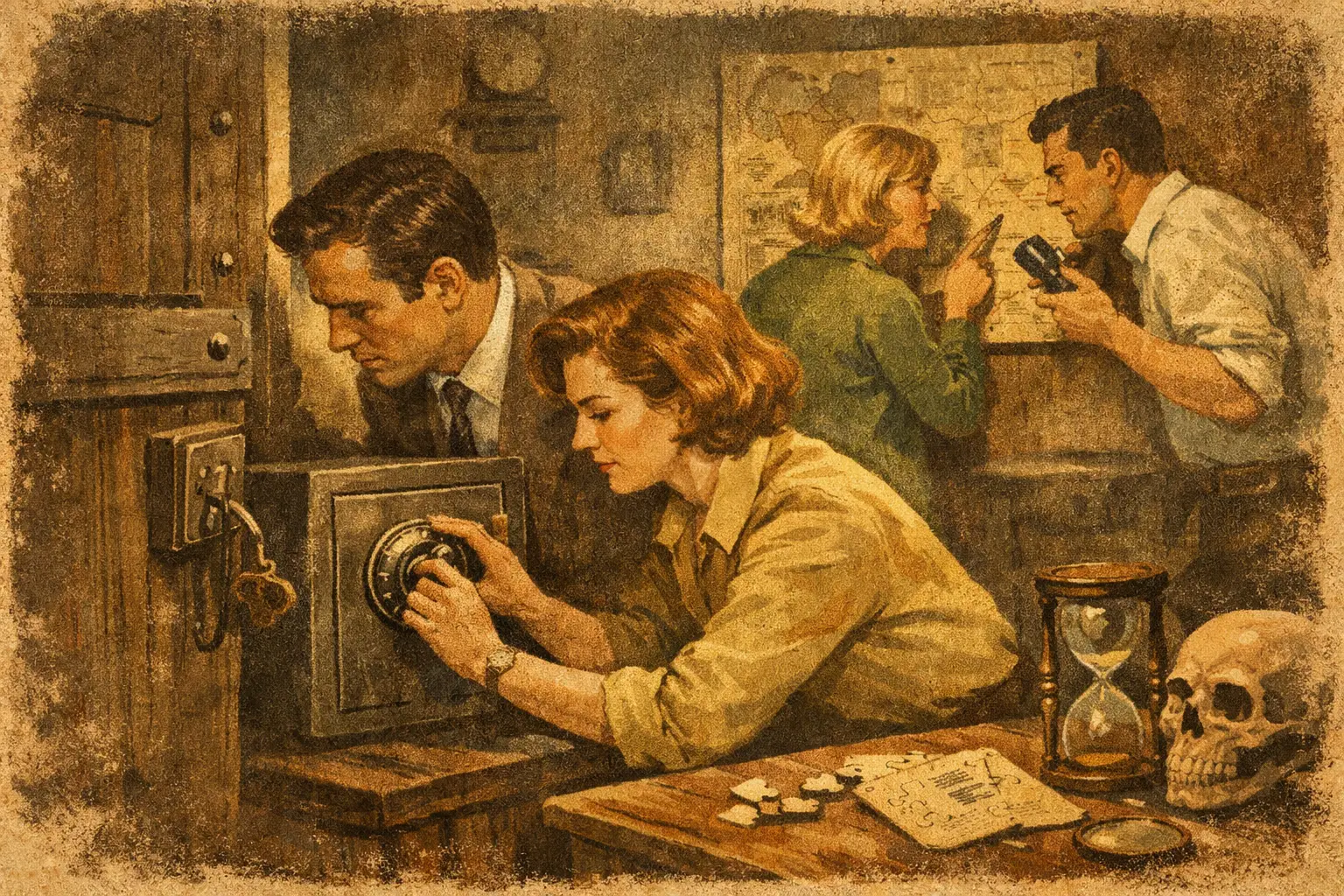
Put a group in a locked-room mission with a ticking clock, a handful of clues, and one objective, and people show you exactly how they work together. That is why so many planners ask, are escape rooms good for team building? In the right setting, absolutely. They turn communication, problem-solving, and collaboration into something people actually want to do instead of something they have to sit through.
Escape rooms work because they create a real shared challenge. Not a pretend office exercise. Not a trust fall nobody asked for. A real, time-sensitive goal that gets everyone involved fast. When the pressure is on, teams start revealing habits that matter in everyday work too – who listens, who leads, who stays calm, who spots details, and who helps the group move forward when the room starts feeling impossible.
Why escape rooms are good for team building
The biggest reason escape rooms help teams is simple: they require people to work together in real time. You cannot solve the room by having one person dominate the whole experience. The best groups split tasks, share information, and connect ideas quickly. That kind of cooperation feels natural because it is built into the game.
Unlike a dinner outing or happy hour, an escape room gives the team a common mission. Everyone has a role, even if they do not realize it at first. One person notices patterns. Another keeps track of solved clues. Someone else brings energy when the group gets stuck. You start to see how different personalities contribute, and that can be a huge win for teams that usually only interact in meetings, emails, or project updates.
There is also a level playing field that people appreciate. Titles matter less when everyone is racing the clock. The manager does not automatically have the answer. The quiet teammate might crack the biggest clue in the room. That shift can be refreshing, especially for groups that need better trust and more balanced participation.
What teams actually practice in an escape room
The value is not just that the activity is fun, though that definitely helps. Escape rooms put teams in a situation where several useful workplace skills show up naturally.
Communication is the first one. Teams have to say what they found, explain what they think it means, and update each other as the room changes. If people keep information to themselves, the group stalls. If they communicate clearly, progress speeds up.
Problem-solving is another big one. Escape rooms reward curiosity, pattern recognition, and creative thinking. Teams learn to test ideas, pivot when something fails, and keep moving without getting discouraged. That is a lot closer to real project work than many traditional team-building activities.
Then there is time management. Every second counts!! Groups have to decide what deserves attention now, what can wait, and when to ask for help. Those choices reveal a lot about how teams handle pressure.
Trust also gets a boost. Team members have to rely on one another, especially when the room is designed so multiple clues are being worked on at once. That kind of trust forms faster when people are actively succeeding together instead of just talking about collaboration in theory.
Escape rooms reveal team dynamics fast
One of the most useful parts of the experience is how quickly patterns appear. Within minutes, you can often spot whether a team jumps into chaos or organizes itself. You can see whether people interrupt, support, delegate, or freeze. That does not make escape rooms a formal assessment tool, but it does make them revealing.
For companies, this can be especially helpful when bringing together new hires, cross-functional groups, or teams that do not usually work side by side. Shared pressure tends to speed up connection. People learn each other’s style fast, and because the environment is playful, those lessons tend to feel energizing instead of awkward.
Are escape rooms good for every team-building goal?
Not always, and that is worth saying clearly.
If your goal is pure relaxation, an escape room may not be the best fit. It is active, fast-paced, and mentally engaging. For some groups, that is exactly the point. For others, especially after a long conference day, something lower energy might be a better call.
They are also not a magic fix for serious workplace issues. If a team has deep conflict, poor leadership, or long-running trust problems, one game will not solve that overnight. What an escape room can do is create a fresh shared experience and give people a chance to interact differently. Sometimes that opens the door. It does not replace actual management or communication work.
Group size matters too. A team-building activity feels stronger when everyone has room to participate. If you cram too many people into one small experience, some will naturally become spectators. The best setups match the group to the game so everyone has something to do.
Who benefits most from escape room team building
Escape rooms tend to work especially well for teams that need more interaction and less routine. New teams, sales teams, hospitality groups, school groups, and office departments often get a lot out of them because the activity breaks habits fast.
They are also a strong fit for destination events. If your group is in a place like Key West, team building does not have to feel like a conference room with name tags and stale coffee. It can feel like a real adventure. That changes the mood right away and makes participation easier.
Even mixed groups can do well, as long as the game is designed with accessibility and variety in mind. You do not need every person to be a puzzle fanatic. Good escape rooms include different kinds of challenges so detail-spotters, big-picture thinkers, talkers, and observers all have ways to contribute.
How to make an escape room team-building event work
The experience itself matters, but planning matters too.
Start by being clear on the goal. If you want your team to bond, choose a game that encourages communication and shared discovery. If you want a reward outing that still gets people engaged, go for a fun theme and keep the expectations light. Not every team event needs to become a lesson.
Next, choose a private experience if possible. Teams usually get more out of the event when they are playing only with their own group. That keeps the focus on their communication and chemistry instead of mixing in strangers.
It also helps to set the tone before the game starts. Let people know this is about participation, not perfection. Some groups get overly competitive and start chasing a win at all costs. A little competition is fun. Too much can make the experience feel stressful for the wrong reasons.
After the room, talk about it. You do not need a formal debrief with a flip chart unless that fits your style. A quick conversation is enough. What worked? Where did the team get stuck? Who noticed something surprising? Those simple questions can turn a fun hour into a more memorable team-building moment.
What makes escape rooms better than standard team outings
A lot of group activities are social, but not all of them are collaborative. That is the difference.
At dinner, people may split into familiar conversations. At a bar, some team members may not want to participate much at all. At a sporting event, the entertainment is happening in front of the group, not because of the group. Escape rooms put the team at the center of the action. They have to create the outcome together.
That active participation is what makes the experience stick. People remember the clue that almost broke them, the last-minute solve, the unexpected hero moment, and the rush of beating the clock – or nearly beating it. Those stories carry back into the workplace and keep the team talking long after the event is over.
For groups visiting Key West Room Escape, that team-building benefit comes with an extra layer of destination fun. Instead of another generic group activity, teams get an immersive challenge with local personality, strong themes, and a reason to rally together from the first clue to the final lock.
So, are escape rooms good for team building? Yes – when you want people to communicate more, think together, and share an experience that feels exciting instead of forced. The best team-building activities are the ones people actually enjoy, and a great escape room gives your group a reason to show up, crack the code, and leave a little more connected than they came in.