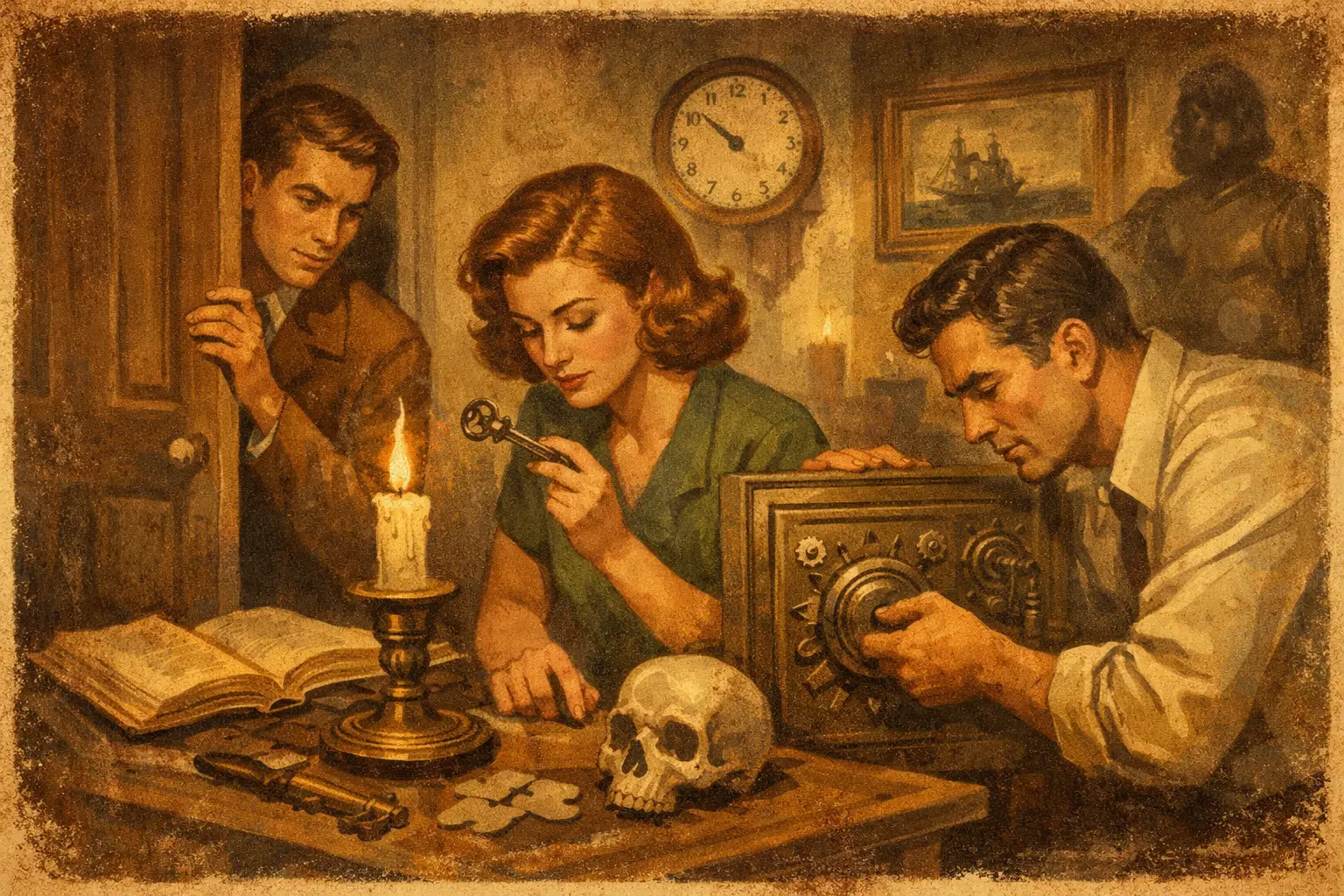
You’ve got 60 minutes, a locked door, a table full of strange clues, and one friend already insisting the answer is “definitely pirate-related.” That’s usually the moment people start asking, what is an escape room experience, really? The short answer: it’s a live-action group adventure where you solve puzzles, uncover hidden clues, and work against the clock to complete a mission before time runs out.
But that simple answer misses the best part. An escape room is not just a game. It’s part puzzle hunt, part team challenge, and part story you get to step into. One minute you’re laughing at a ridiculous wrong guess, and the next minute your whole group is shouting because a secret compartment just popped open. Every second counts, and that’s exactly why people love it.
What Is an Escape Room Experience and How Does It Work?
At its core, an escape room experience is an immersive game played in a themed environment. You and your group enter a room, or sometimes a larger multi-room setting, with a goal to complete. That goal might be escaping from a pirate’s hideout, solving a mystery, recovering stolen treasure, or stopping a mission before the clock hits zero.
Once the game begins, you search the space for clues. Some are obvious, like a locked chest or a coded message on the wall. Others are easier to miss, like a pattern hidden in the decor or an object that only makes sense after you solve a different puzzle. The clues connect, and your team has to figure out how.
Most games are designed for small groups, often between 2 and 10 players, though some experiences can handle larger teams. The room is private in many cases, which means you’re only playing with your own group. That matters if you want the experience to feel personal, whether you’re with family, coworkers, or a bunch of competitive friends on vacation.
A game host usually explains the rules before you start. You’ll learn the mission, safety guidelines, and what to expect if you need help. After that, the countdown starts. You search, solve, communicate, and try to finish before time runs out. If you get stuck, many escape rooms offer hints, which keeps the game fun without turning it into an hour of staring at the same lock.
What an Escape Room Feels Like
If you’ve never played before, the biggest surprise is how quickly everyone gets into it. Even the person who says, “I’m just here to watch,” usually ends up crawling around looking for hidden clues five minutes later.
There’s a certain kind of energy in the room. It’s focused, but not stiff. You’re thinking hard, but you’re also laughing. You might split up to search different corners, then rush back together when someone finds a key or cracks a code. Good escape rooms create that sweet spot where the challenge feels real, but the fun stays front and center.
The theme makes a big difference. A plain room with random puzzles can still be entertaining, but a well-designed themed game pulls you in faster. Suddenly you’re not just opening locks. You’re hunting treasure, outsmarting a villain, or piecing together a story. That extra layer is what turns a puzzle activity into a memorable outing.
In a destination like Key West, that local flavor can make the whole thing even better. A room built around pirates, island legends, or Old Town style feels more connected to the place you’re visiting. It becomes part of the trip, not just something to do indoors when it’s too hot or raining.
The Puzzles Are About Teamwork, Not Trivia
A lot of first-time players worry they need to be geniuses. You don’t. Escape rooms are not IQ tests, and they’re not designed just for hardcore puzzle experts.
Most games use a mix of logic, observation, pattern recognition, wordplay, sequencing, and hands-on discovery. One person might notice tiny visual details. Another might be great at number patterns. Someone else might connect story clues faster than anyone. That mix is the whole point.
The best teams are not always the smartest on paper. They’re the ones that communicate well. If you find something, say it out loud. If you solve part of a puzzle, tell the group. If an idea sounds weird, mention it anyway. Sometimes the random guess is the one that cracks the next step.
That’s also why escape rooms work so well for team building. They quickly reveal how a group shares information, handles pressure, and solves problems together. It feels like fun because it is fun, but there’s a real teamwork element underneath it.
Who Should Try an Escape Room?
Pretty much any group that wants to do something more active than dinner and more memorable than scrolling through vacation options on a phone. Escape rooms are popular with families, friend groups, couples, birthday parties, bachelor and bachelorette outings, and work teams.
For tourists, they’re a great way to mix up a trip. You get a break from the usual sightseeing routine, but you still do something social and story-driven. For locals, they’re an easy win when you want a night out that feels different. For corporate groups, they offer a structured challenge without feeling forced or overly formal.
That said, the right room depends on the group. Some games are spooky, some are lighthearted, and some are more challenging than others. Families with younger kids may want a theme that feels adventurous rather than intense. Experienced players may want something with more complex puzzles. It depends on the group’s age, comfort level, and patience for pressure.
What to Expect Before You Go
Most escape rooms are easy to book in advance, and that’s usually the smart move, especially in a busy tourist town. You choose your date, time, and group size, then show up a little early so you can check in and hear the instructions.
Wear comfortable clothes. You usually won’t need anything athletic, but you do want to move around easily. Expect to stand, search, and interact with the room. You’re there to play, not sit on the sidelines.
It’s also smart to arrive with the right mindset. Don’t overthink every clue in the first five minutes. Search thoroughly, talk constantly, and use hints when needed. There’s no trophy for suffering in silence while the clock burns down.
If you’re worried about being locked in, don’t be. Modern escape rooms are designed with safety in mind, and staff will explain exactly how that works before the game begins. The challenge is the mission, not actual danger.
Why People Get Hooked After One Game
Once you play a good escape room, you start to get it. The countdown creates urgency. The puzzles give everyone a role. The theme makes it feel bigger than a standard game night. And when your group solves a big moment together, it feels earned.
That shared win is a big reason people come back. Even if you don’t escape, you still get the fun of the chase. You replay the best moments afterward. You laugh about the clue you missed that was right in front of you. You argue about who actually solved the final puzzle. It sticks with you.
Every room is different, too. A pirate adventure won’t feel the same as a detective case or an outdoor city puzzle. Some experiences even go beyond the standard room setup. At Key West Room Escape, for example, the idea of an escape adventure can stretch from indoor themed rooms to outdoor puzzle experiences and even a private boat-based challenge. That variety keeps the concept fresh and gives groups more ways to play.
Is an Escape Room Experience Worth It?
If you want passive entertainment, maybe not. Escape rooms ask you to participate. You have to talk, think, search, and stay engaged. That’s exactly why the right group loves them.
They’re worth it for people who want a real shared experience instead of everyone doing their own thing in the same place. They’re worth it for vacation groups trying to create an actual memory. They’re worth it for coworkers who need something more interactive than another awkward dinner reservation.
And while the goal is usually to beat the clock, the real payoff is what happens in the room. You solve something together. You get surprised together. You celebrate together. That’s harder to find than people think.
So if you’ve been wondering whether an escape room is just a bunch of locks and riddles, here’s the answer: it’s a fast-moving, story-driven group adventure where your team becomes part of the action. Show up ready to search, speak up, and think on your feet – the clock is already ticking!!