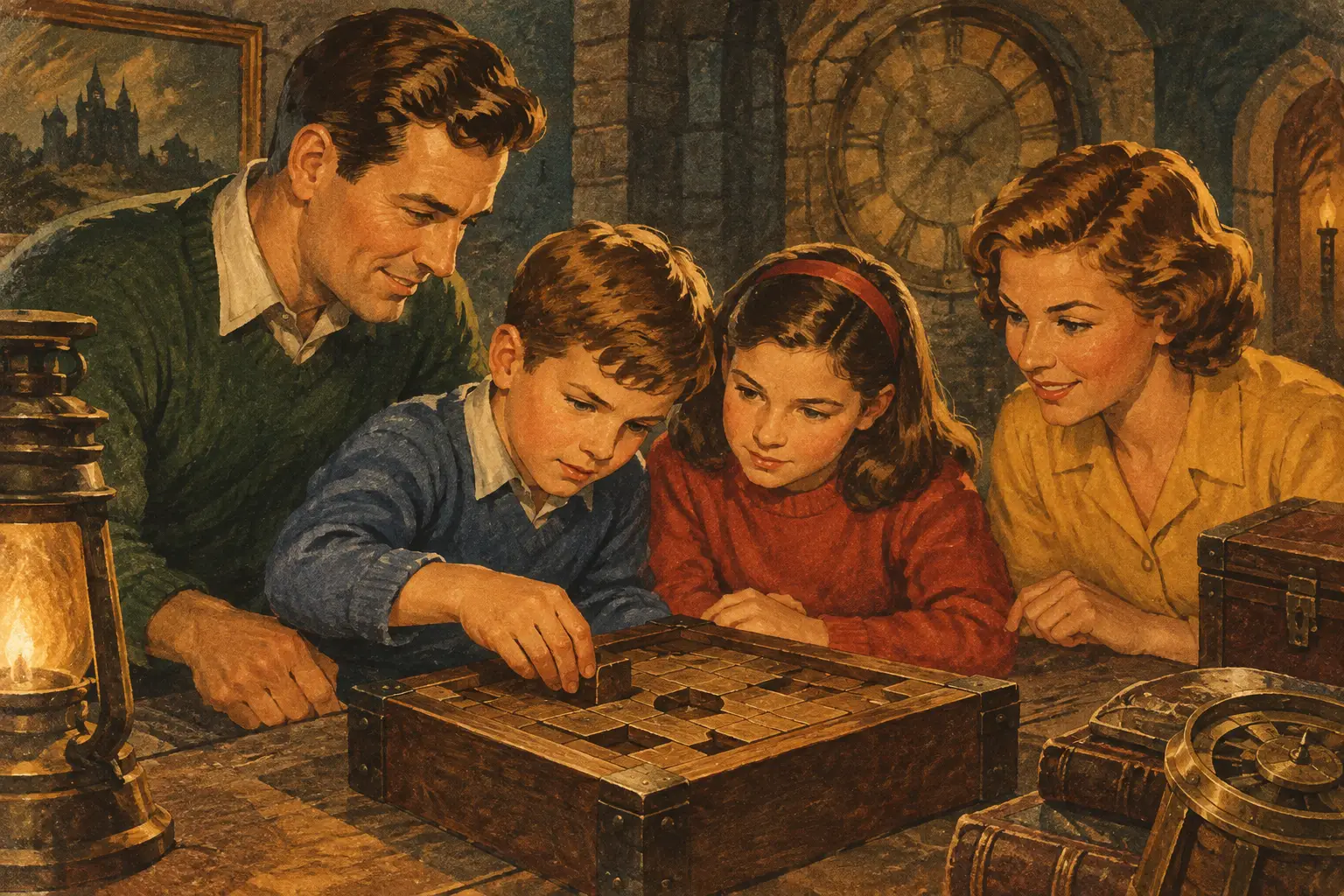
A seven-year-old spots the pirate map clue before anyone else. A teenager notices the pattern on the wall. Grandpa remembers a bit of Key West history that sends the whole group in the right direction. That is the real answer to what age plays escape rooms: more ages than most people expect.
Escape rooms are not just for serious puzzle fans or grown-up friend groups. They are shared adventures, which means every player can bring something useful to the mission. Observation, curiosity, communication, creativity, and a willingness to try a weird idea all matter when the clock is running.
The better question is not whether a certain age can play. It is whether the game, group, and level of support are the right match. Here is how to plan an escape room experience that gets everyone involved – and gives your crew a real shot at cracking the code before time runs out!
What age plays escape rooms most often?
Escape rooms are especially popular with teens and adults, but families with school-age kids are a major part of the fun. You will also find birthday groups, multigenerational vacation crews, college friends, corporate teams, and couples looking for something more memorable than another dinner reservation.
Most players fall somewhere between about age 10 and adulthood, largely because they can read clues independently, stay focused through a 60-minute game, and enjoy the challenge of connecting several puzzles at once. That does not mean younger kids cannot have a great time. It simply means they usually need adults or older siblings beside them to help with reading, patience, and puzzle flow.
At the other end of the spectrum, there is no real “too old” age for escape rooms. Adults, parents, grandparents, and retirees often shine in a game because life experience counts. A clue based on music, history, maps, old objects, or wordplay may click for one person immediately while everyone else is still staring at it.
Kids: when are they ready for an escape room?
For many families, around ages 7 to 9 is when children can begin enjoying an escape room as part of a mixed-age group. They may not solve every lock, but they can search for hidden details, match colors and symbols, spot objects that adults overlook, and celebrate every big reveal.
The key is setting expectations. A younger child may find a dark theme, a ticking clock, or a tricky riddle more intense than exciting. Choose an adventure with a playful story rather than heavy scares, and make sure at least one adult is ready to keep the mood upbeat. Escape rooms should feel like a team mission, not a test.
Kids do best when adults avoid taking over. Give them a job: search this shelf, check the map, organize these objects, or tell us if you see anything with a skull on it. Small assignments keep younger players engaged while the rest of the group works through more complex clues.
A private game makes a big difference for families. Your crew can laugh loudly, pause to explain a puzzle, and let the kids chase the exciting discovery without worrying about strangers waiting on them. That freedom turns the room into your own adventure movie.
Signs a child will enjoy the challenge
A child does not need to be a straight-A student or a junior detective to have fun. They are usually ready if they enjoy scavenger hunts, board games, mystery stories, building projects, or looking for hidden things. The biggest predictor is interest, not age alone.
If a child gets frustrated quickly, consider bringing another adult or choosing a less puzzle-heavy group activity first. A supportive game guide, clear hints, and an encouraging team can still make it a win. The goal is smiles, high-fives, and a story they tell all vacation long.
Teens: the escape room sweet spot
Teens are fantastic escape room players. They are old enough to handle layered puzzles, quick enough to notice details, and competitive enough to care deeply about the clock. Give a teen group a mysterious mission, a few hidden compartments, and 60 minutes to escape, and suddenly everyone is communicating.
This is why escape rooms work so well for birthday parties, family trips, school groups, and friend hangouts. Phones tend to disappear into pockets because the action is happening right in front of them. There is always another key to test, another code to decode, or another theory to argue about.
For teen groups, look for a room with a strong story and enough challenge to make the victory feel earned. A game that is too easy can feel over fast. One that is overly difficult can drain the energy. The sweet spot is a room where the group needs hints occasionally but still gets several big “we figured it out!” moments.
Adults do not need to be puzzle experts
Adults sometimes hesitate because they assume escape rooms are only for people who love logic games. Not true. A good escape room rewards many types of thinking, not just math or trivia knowledge.
One person might be excellent at organization. Another may be the calm communicator who makes sure no clue gets forgotten. Someone else may have the confidence to try combinations that seem ridiculous until the lock pops open. Even the person who says, “Wait, has anyone checked under that?” can become the hero of the room.
Escape rooms are especially strong for adult groups because they create a shared challenge without requiring athletic skill, expensive equipment, or prior experience. They work for date nights, reunions, bachelor and bachelorette outings, vacation groups, and team building. Everybody starts with the same mission, and everybody has a reason to talk to each other.
The trade-off is that adults often overthink. Kids may try the obvious answer first, while grown-ups debate it for five minutes. The best strategy is to test sensible ideas, share discoveries out loud, and keep moving. Every second counts!
Mixed-age groups can be the most fun
A group with kids, teens, parents, and grandparents can look like a puzzle challenge on paper. In reality, it can be the perfect escape room team. Different generations notice different things, and that variety is an advantage.
The trick is choosing a game that does not depend on one person carrying the whole mission. Look for a room with physical searching, visual puzzles, simple ciphers, story clues, and tasks that let several people contribute at once. A pirate-themed Key West adventure, for example, can give one player a map to study while another searches for symbols and a third works on a lock.
Before booking, think about mobility and comfort as well as age. Ask whether the experience includes tight spaces, sudden sounds, dim lighting, stairs, or intense themes if anyone in your group may be affected. A little planning means fewer surprises once the timer begins.
At Key West Room Escape, private games help mixed-age groups settle into their own rhythm. Your team can focus on the adventure, use hints when needed, and make the experience fit your group instead of competing for attention in a room full of strangers.
How to pick the right escape room for your group
Age guidance matters, but group size and personality matter too. A confident eight-year-old with two engaged adults may have more fun than a bored twelve-year-old who was dragged along. Likewise, a group of adults may want a tougher mystery than a family hoping for a lively first-time experience.
Start with the theme. Choose a story your group wants to step into, whether that means pirate treasure, a local mystery, a daring escape, or an outdoor city puzzle adventure. The theme creates buy-in before the first clue even appears.
Next, be honest about your group’s experience level. First-timers should not be afraid to choose an approachable room or ask for hints. There is no prize for pretending you know what every cryptic symbol means. Hints keep the game moving and help everyone stay part of the action.
Finally, plan the practical details. Arrive early enough to hear the rules, use the restroom, and get into mission mode. Make sure everyone knows that the goal is not to prove who is smartest. The goal is to work together, laugh at the wrong guesses, and see how far your team can get before the final seconds disappear.
The best age to play an escape room is the age when someone is ready to be curious, join the team, and try the next clue. Bring your family, bring your friends, bring the person who claims they “hate puzzles.” They may be the one holding the key when the final lock clicks open.