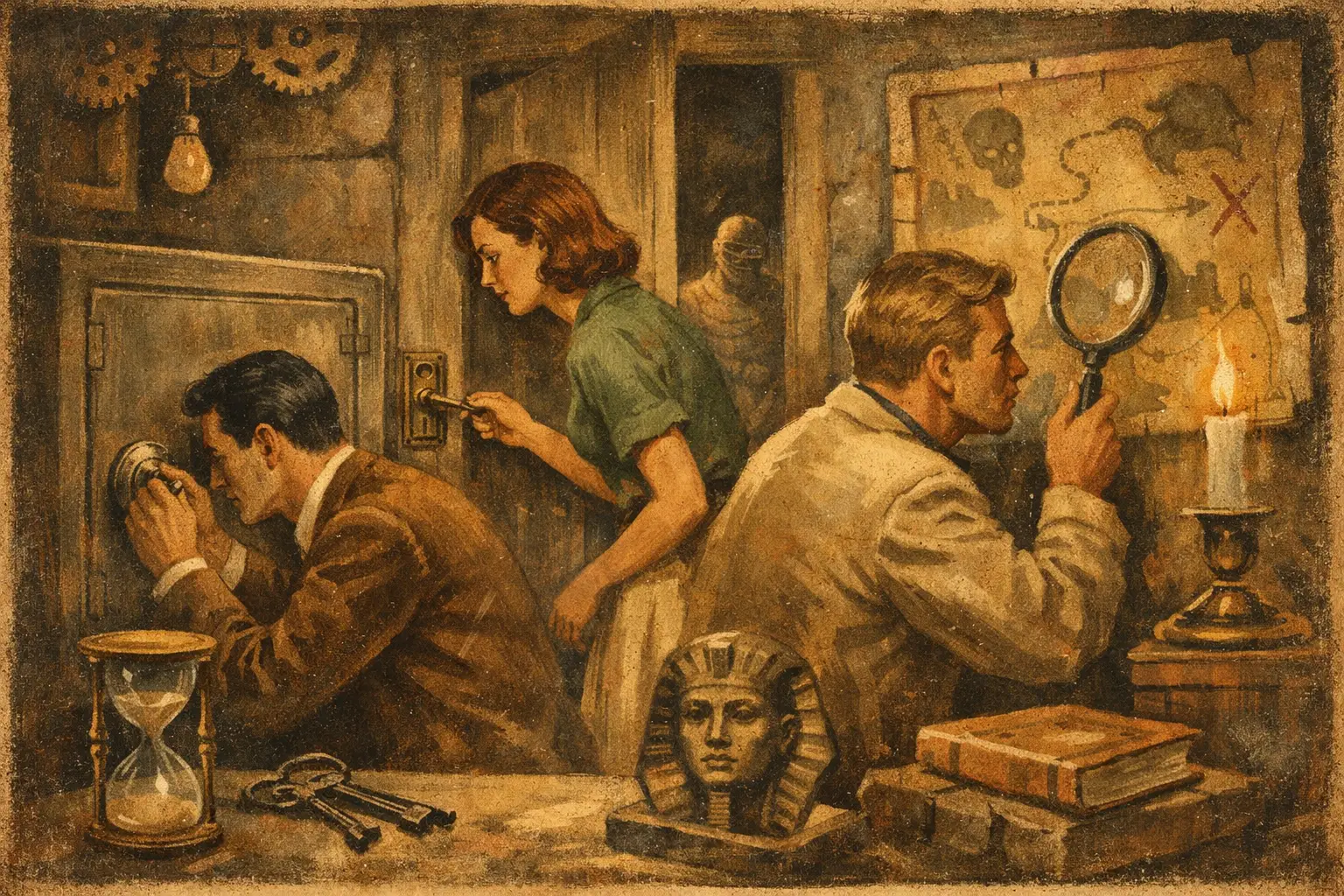
Some escape room examples sound great on paper, then fall flat the second the clock starts. A cool theme alone is not enough. The best rooms give your group something to chase, a reason to communicate fast, and just enough pressure to make every solved clue feel like a win.
That is why good escape rooms stick with people long after the final lock pops open. You remember the moment your team spotted the hidden pattern, argued over the map, or realized the quietest person in the room had the key idea all along. If you are planning a group outing, building a game concept, or just comparing what makes one room more exciting than another, these examples show what really works.
What makes escape room examples worth copying?
A strong escape room has three things working together – theme, puzzle flow, and group energy. If one of those is weak, the experience starts to wobble. A beautiful pirate room with random clues feels frustrating. A clever puzzle chain inside a bland setting feels forgettable. And a room with no moments for teamwork can leave half the group standing around.
The sweet spot is a room where the story pushes the action forward. Players should know what they are trying to do and why it matters. Maybe they are recovering stolen treasure before rival pirates return. Maybe they are stopping a bad experiment. Maybe they are solving a mystery in Old Town before time runs out. The exact storyline can change, but the urgency has to feel real.
Good design also respects the group. A family on vacation, a birthday crew, and a corporate team do not play exactly the same way. Some want high drama. Some want laughs. Some want a challenge without feeling stuck for half the game. The best examples give different personalities room to contribute.
10 escape room examples that keep people engaged
1. Pirate treasure hunt
This one works because the mission is instantly clear. Find the treasure, beat the clock, and do not let the competition get there first. Pirate rooms are great for mixed groups because the theme feels playful, not intimidating, and it opens the door to maps, coded messages, hidden compartments, and physical search challenges.
The trick is keeping the room from becoming a pile of random nautical props. The best pirate games use the setting with purpose. A compass might reveal a directional puzzle. A ship log might hide a cipher. A captain’s chest should feel earned, not decorative.
2. Haunted hotel or ghost mystery
A spooky room can be a huge hit when the suspense supports the puzzles instead of replacing them. Players love atmosphere, but they still need a job to do. Solve the disappearance. Break the curse. Find out what happened in room 13 before the final minute.
This format works especially well for groups that want a little thrill without full horror-movie intensity. Sound, lighting, and timing matter here. Too scary, and some guests check out. Not scary enough, and the tension disappears.
3. Prison break
Prison escape remains popular for a reason. It gives players a built-in problem, a physical environment with obvious obstacles, and a strong time crunch. Handcuffs, bars, contraband clues, and hidden tools all make sense within the story.
It is also one of the best formats for teamwork. One player spots details. Another handles combinations. Another keeps everyone focused on the next step. If the room starts with players separated, even better – that creates instant communication pressure.
4. Art heist
An art theft room flips the usual escape formula. Instead of getting out, your team is trying to get in, outsmart security, and complete the mission before getting caught. That change alone makes the experience feel fresh.
This example shines when it uses elegant, layered puzzles. Think laser patterns, fake identities, security schedules, and hidden gallery clues. It is a great choice for adult groups, date nights, and team events because it feels clever and stylish without needing complicated backstory.
5. Secret laboratory
Lab rooms are puzzle-friendly by nature. They support logic, pattern recognition, and cause-and-effect tasks better than almost any other setting. Mix chemicals in the right sequence, stabilize the experiment, and stop the countdown before the whole place goes sideways.
The risk here is making everything feel too technical. Players do not want to feel like they need a science degree to have fun. The strongest lab rooms keep the rules simple and visual, then let the pressure build from there.
6. Detective case file
A detective room works because everyone understands the role right away. There is a crime, a suspect, a missing witness, or a cold case that needs cracking. Search the scene, connect the evidence, and solve it before the trail goes cold.
This format is perfect for groups that love talking through clues together. It rewards observation and discussion more than brute-force lock opening. Done well, it feels less like hunting for keys and more like building a case.
7. Island survival challenge
For a destination crowd, island-themed escape rooms can feel especially fun because they tap into adventure without taking themselves too seriously. Your team might be stranded after a storm, racing to repair a radio, decode a rescue signal, or locate hidden supplies before nightfall.
This style works well for families and vacation groups because it feels active, sunny, and approachable. It can also lean local. In a place like Key West, tropical details, shipwreck stories, and coastal clues feel natural instead of generic.
8. Time travel mission
Time travel rooms let designers go big. One puzzle might involve an old journal, the next a futuristic control panel, and the next a historical artifact that changes everything. If your group likes surprises, this format delivers.
But it needs discipline. Too many disconnected ideas can make the room feel messy. The best version has one clear mission – fix the timeline, stop the event, recover the lost object – and each era supports that goal.
9. Outdoor city puzzle adventure
Not every escape room happens inside four walls. Outdoor escape-style games can be fantastic for groups that want fresh air, movement, and a bigger sense of place. Instead of one enclosed room, the city becomes the puzzle.
This example is especially strong in walkable destinations. Landmarks, statues, signs, historic details, and local stories can all become clues. It feels part scavenger hunt, part escape game, part sightseeing with a mission. For travelers, that is a strong combo.
10. Boat escape adventure
A boat-based escape game is memorable for one simple reason – most people have never done one. The setting changes the energy immediately. You are not just solving puzzles. You are on the water, working through a challenge that feels like part action story, part group mission.
This format needs smart pacing because the environment itself is part of the excitement. The goal is not to overload the space with locks and codes. It is to use the boat, the route, and the theme to create something your group will talk about all vacation long. That is exactly why unusual formats can outperform standard ones when they are done right.
How to choose the right escape room example for your group
If you are booking for a family, theme matters more than extreme difficulty. Kids and parents usually have the most fun in rooms with clear objectives, strong visuals, and a balance of searching and solving. Pirate adventures, island survival setups, and mystery games tend to play well because everyone can jump in.
If you are planning a birthday, bachelor or bachelorette outing, or a friend-group event, go for energy. Choose a room with big reveals, laugh-out-loud moments, and enough pressure to keep everyone involved. The best social rooms are the ones that turn your group into the story instead of making half the players watch from the sidelines.
For corporate teams, the smartest choice is not always the hardest room. Team building works best when the challenge exposes communication habits, leadership styles, and problem-solving strengths without crushing morale. A game with parallel puzzles and shared information usually works better than one bottleneck clue that leaves everyone stuck.
Why themed local experiences stand out
Here is where many generic rooms miss the mark. They could be anywhere. Swap out the signs, and the experience barely changes. That is not ideal when people are on vacation or looking for something they cannot do back home.
The strongest escape room examples borrow from the place around them. Local legends, neighborhood history, pirate lore, island atmosphere, and city-specific details make the game feel grounded and memorable. That is a big reason destination-based experiences stand out. They do not just challenge your group. They give you a story tied to where you actually are.
For a tourism-heavy spot, that matters. Visitors want more than another activity to fill an hour. They want something they will bring up at dinner later. A room with local personality has a better shot at becoming the highlight of the trip.
At Key West Room Escape, that local flavor is part of the fun. When a game feels connected to the island, the streets, or the water around you, the adventure lands harder.
The best escape room is not always the flashiest one. It is the one that gets your group talking, moving, laughing, and racing the clock together. Pick the example that fits your crew, and every second counts.