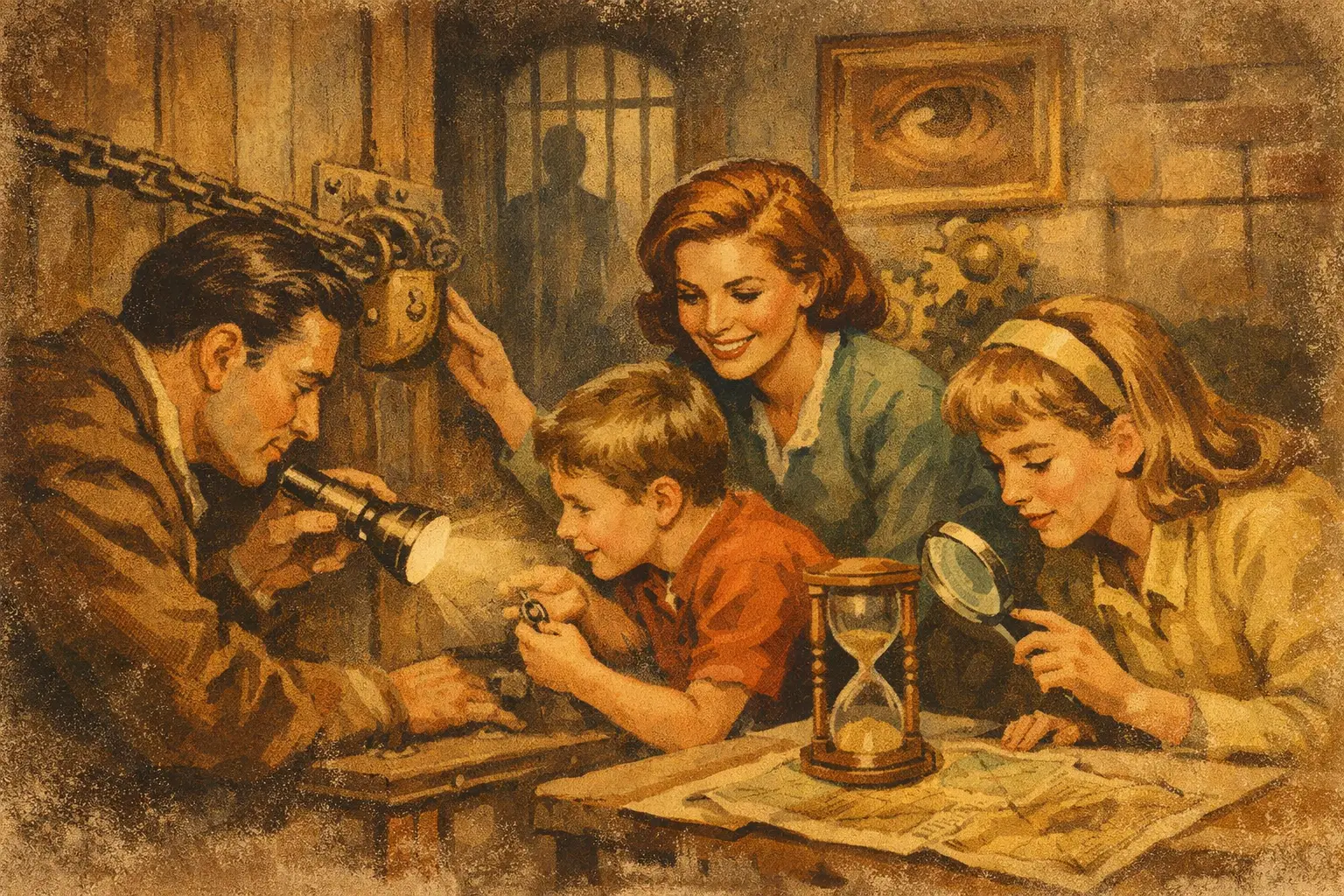
Vacation arguments usually start with good intentions. One person wants the beach, one wants air conditioning, one wants something the kids will actually remember, and suddenly the group chat feels like a negotiation. That is exactly why a family friendly escape room activity works so well. It gives everyone one mission, one clock, and one reason to work together instead of splitting off into separate plans.
For families in Key West, that matters. You are not just filling an hour. You are looking for something that feels worth the time, works for different ages, and turns into a real shared story. Escape rooms do that better than a lot of attractions because nobody is standing on the sidelines. Every person in the room gets to notice something, test an idea, solve a clue, or celebrate the moment when the final lock clicks open.
What makes a family friendly escape room activity actually family friendly?
Not every group activity earns that label. A truly family friendly escape room activity has to hit the sweet spot between exciting and approachable. If it is too hard, younger players check out fast. If it is too easy, teens and adults feel like they are paying for a decorated waiting room. The fun lives in the middle.
That usually means puzzles with variety rather than one single skill set. Families do best when there are visual clues, word puzzles, physical searches, pattern recognition, and a few satisfying “aha” moments that reward teamwork more than trivia knowledge. A great room does not expect every player to solve everything alone. It gives different personalities different ways to contribute.
Theme matters too. Families respond to adventure, mystery, treasure hunts, and playful suspense because those stories create energy without crossing into anything too intense. A pirate mystery in Key West feels like part of the trip. A room built around local flavor can feel more memorable than a generic game you could play anywhere.
There is also a practical side. Family-friendly means clear rules, a welcoming game master, and private bookings that let your group play at its own pace. That makes a big difference for parents with younger kids, grandparents joining in, or teens who would rather laugh with people they know than team up with strangers.
Why families remember this more than passive attractions
A lot of vacation activities are fun in the moment and fuzzy by dinner. You saw it, you took a photo, you moved on. Escape rooms stick because your family created the experience together.
That is the real difference. You are not watching a performance. You are the performance. The loud clue-reader, the kid who spots the hidden key before anyone else, the cousin who insists the code has to mean something, the parent trying to keep everyone calm with 12 minutes left – those roles become part of the story your group tells afterward.
That shared momentum is hard to fake. Families spend so much time moving in parallel. One person is booking, one is scrolling, one is hungry, one is tired. In an escape room, all of that narrows into one objective. Find the clues. Crack the code. Beat the clock. Every second counts, and suddenly everybody is engaged in the same thing.
For families with older kids and teens, this is especially useful. It is one of the few activities that feels active and social without requiring athletic skill or a perfect weather forecast. For mixed-age groups, it creates a rare even playing field. A 12-year-old might spot the pattern the adults missed. Grandpa might be the one who keeps the team organized. That balance is part of the fun.
A family friendly escape room activity works best when the group knows what to expect
The easiest way to make the experience better is to set expectations before your game starts. Families do not need a strategy seminar, but they do better when everyone understands that escape rooms are cooperative, fast-moving, and not about one person taking over.
Tell younger players that they will absolutely have jobs to do. Searching carefully, reading clues out loud, matching symbols, and keeping track of what has already been tried are real contributions. Tell competitive adults that solving everything solo is not the goal. The best teams talk constantly and share information fast.
It also helps to choose the right difficulty level. Some families want a challenge with a little pressure. Others want a win with plenty of laughs. There is no wrong choice. It depends on the age range, your group size, and whether this is your first escape room or your tenth.
If you are planning around a vacation schedule, timing matters. Escape rooms are a smart option when the midday heat kicks in, when rain rolls through, or when your family wants something active without another full outdoor commitment. They fit neatly into a travel day because the experience is structured and the start time is clear.
Why Key West is a great place for this kind of family adventure
Some activities feel interchangeable from city to city. Escape rooms can be different when they lean into where you are. In Key West, the best experiences do not feel pasted in from somewhere else. They pull from the island’s offbeat energy, maritime history, treasure-hunt spirit, and old-town sense of adventure.
That local angle matters more than people think. Families on vacation want at least one activity that feels tied to the destination, not just inserted into it. A room with pirate lore, island storytelling, or a city-based puzzle challenge can turn your outing into something bigger than a standard indoor game.
That is one reason Key West Room Escape fits so naturally into a family trip. The experience has the urgency and puzzle-solving families want, but it also carries the kind of local flavor that makes the hour feel like part of the island adventure rather than a break from it.
And if your family likes options, that flexibility helps. Some groups want the classic indoor escape room format. Others want to stretch the experience into an outdoor puzzle mission or even something more distinctive built around the water. That range lets families choose the version of adventure that matches their energy level and vacation style.
The biggest trade-offs to think about before you book
Escape rooms are a strong fit for families, but they are not one-size-fits-all. If your group includes very young children, attention span matters. A 60-minute mission can feel thrilling for one child and long for another. In that case, the private-group format becomes even more valuable because your family can play without worrying about keeping pace with strangers.
If your group has puzzle lovers and puzzle skeptics, the theme can make or break the buy-in. The skeptics usually respond better when the room sounds like an adventure first and a brain game second. Sell them on the mission, not the mechanics.
There is also the question of intensity. Some families love the countdown pressure. Others want more laughs and less stress. A good game master can help set the tone, but the room choice still matters. It is worth thinking about whether your crew wants a dramatic race against time or a lighter mystery-solving experience.
Group size changes things too. Smaller families often communicate better and move faster, but larger families bring more ideas and more energy. The sweet spot depends on your crew. Too few people can make a difficult room feel packed with tasks. Too many can turn clue-solving into friendly chaos. Fun chaos, ideally, but still chaos.
How to get the most out of the experience
The best family teams keep talking. Say what you find out loud, even if it seems small. Put solved clues aside in one spot. Let different people take the lead at different moments. When a lock opens, celebrate for three seconds and get moving – there is always another puzzle waiting.
Parents can help by resisting the urge to direct every move. Kids and teens enjoy escape rooms most when they get to make discoveries themselves. A quick nudge is helpful. Running the whole room for them is not. Half the payoff comes from that look when they realize they solved something real.
And do not judge the experience only by whether you escaped. Yes, everybody wants the win. But the best measure is whether your family stayed engaged, laughed a lot, and left talking about the moment everything finally made sense. That is success too.
For families trying to choose one activity that feels active, memorable, and surprisingly good at getting everyone on the same page, this is a strong bet. You get challenge, teamwork, and a story you actually helped create. If your crew is ready to trade the usual vacation routine for a mission with clues, countdowns, and bragging rights, an escape room is a very good place to start.