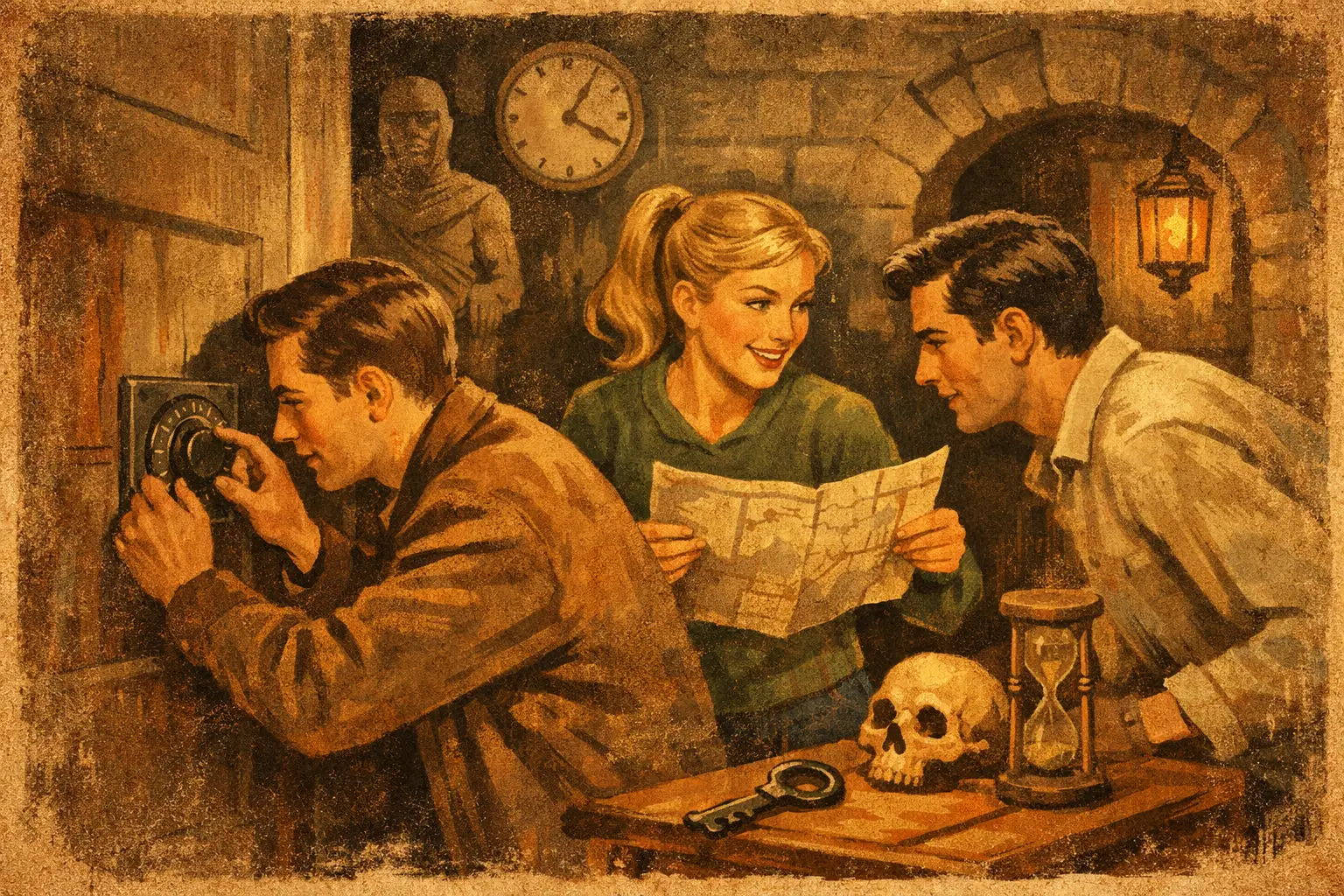
You do not need to be a puzzle wizard, a codebreaker, or the friend who always wins trivia night. If you’re wondering can beginners do escape rooms, the short answer is yes – and first-timers often have the most fun because everything feels fresh, surprising, and fast-paced.
That hesitation is completely normal. A lot of people assume escape rooms are only for experts who know every trick, solve riddles in seconds, and never panic when a lock will not open. Real escape rooms are not like that. They are designed for regular people who want to laugh, think, search, communicate, and try something way more exciting than sitting around deciding where to go next.
Can beginners do escape rooms without experience?
Absolutely. Most escape rooms are built with new players in mind. The goal is not to make people feel stuck and frustrated for an hour. The goal is to create a fun challenge where your group works together under pressure, finds clues, solves puzzles, and enjoys the rush of the clock counting down.
A good escape room gives beginners enough structure to get moving quickly. You usually start with a game master explaining the mission, the rules, and what kinds of things to expect. That means you are not walking in blind. You are walking into a guided adventure with a clear objective and a team beside you.
Experience can help, but it is not the deciding factor. Some returning players are great at spotting patterns. Some beginners are fantastic at noticing details, keeping everyone organized, or making clever connections. Escape rooms reward all kinds of thinking, not just one type of brain.
Why escape rooms work well for first-timers
The best part of an escape room is that nobody has to carry the whole game alone. This is not a solo test. It is a group challenge, and that makes it much more beginner-friendly than people expect.
One person might notice a hidden clue. Another might solve a word puzzle. Someone else may remember a symbol, line up a sequence, or realize that two odd details fit together. Even if you have never played before, you can still contribute right away. In fact, beginners often help a team because they are not overthinking the puzzle style or expecting a trick that is not there.
That shared energy matters. Families, friend groups, coworkers, and vacation crews usually have more fun when everyone jumps in instead of standing back and assuming they are not “good” at puzzles. You do not need to be perfect. You just need to participate.
What beginners usually worry about
Most first-time players are not actually worried about the room. They are worried about feeling silly. That fear fades fast once the game starts.
One common concern is, “What if I’m bad at puzzles?” Escape rooms are not made up of only brain-bending riddles. Many include observation, matching, searching, sequencing, and teamwork. Some puzzles are logical. Some are visual. Some just require your group to slow down and look carefully.
Another concern is, “What if we do not escape?” That can happen, and it does not mean you failed at having a good time. Plenty of groups have a blast without beating the clock. The excitement comes from the chase – the clues, the discoveries, the close calls, the big moments when something clicks with ten minutes left and everybody suddenly gets loud.
Some beginners also worry that they will freeze under pressure. Fair enough. A countdown timer can make anything feel dramatic! But the time limit is part of the fun, not a punishment. It creates momentum. Instead of overanalyzing every clue, your team keeps moving, trying, talking, and adjusting.
How to make your first escape room easier
If you are new, the smartest move is not to find the hardest room possible. It is to choose an experience that sounds fun, fits your group, and feels approachable.
Start by paying attention to room difficulty. Many escape room venues label games by challenge level, age fit, or ideal group type. If you are traveling with kids, first-time adults, or a mixed group, a beginner-friendly room usually leads to a better experience than jumping straight into the toughest mission on the board.
Your group size matters too. A team that is too small may miss clues or get bogged down. A team that is too large can turn chaotic if nobody communicates. For many beginners, a medium-sized group feels just right because there are enough people to split tasks without stepping on each other.
It also helps to show up ready to play. That sounds obvious, but a little focus goes a long way. Arrive on time, listen to the intro, put your phone away, and commit to being present. Escape rooms reward attention. The more engaged your group is from the start, the smoother the first ten minutes will go.
What beginners should do once the game starts
The first few minutes matter most. New players often bunch together and all stare at the same object. That is usually the slowest way to begin.
Spread out and scan the room. Open what is clearly meant to be opened. Look for patterns, numbers, words, symbols, and anything that feels intentionally placed. When you find something, say it out loud. Escape rooms are won by teams that communicate constantly, not by one silent hero crouching in a corner with a clue.
If you solve something, tell everyone. If you are confused, say that too. A clue that means nothing to you might instantly make sense to someone else. Good teams keep information moving.
And use hints if they are available. Beginners sometimes treat hints like cheating. They are not. Hints are part of the game design at most venues. They keep the experience fun and prevent your team from spending twenty minutes stalled on one small step. Asking for help at the right time can actually make the whole game feel more exciting.
Can beginners do escape rooms on vacation?
They really can, and vacation is one of the best times to try one. People are already looking for something different, something active, and something the whole group can talk about later. An escape room checks all of those boxes.
It works when the weather shifts, when your group wants a break from beaches and bars, or when you need an activity that gets everyone involved instead of splitting up. It is especially good for families with teens, birthday groups, and travelers who want a memory that feels more interactive than just another dinner reservation.
In a place like Key West, that can be even more fun because the adventure can carry local personality too. A room with island energy, pirate flavor, or Old Town atmosphere feels like part of the trip, not just a random indoor stop. That is a big reason first-timers tend to love the experience at Key West Room Escape – it feels playful, social, and tied to the destination.
Signs your group is perfect for a beginner escape room
If your group likes games, friendly competition, mysteries, scavenger hunts, or doing anything together with a little pressure and a lot of laughs, you are probably a great fit. You do not need special knowledge. You need curiosity and a willingness to jump in.
Even groups with mixed personalities usually do well. The talkers keep ideas flowing. The quiet observers notice tiny details. The organized person tracks progress. The impulsive one tries the weird idea that somehow works. Escape rooms are great at turning different personalities into a team.
The only real mismatch is a group that refuses to communicate or expects one person to do everything. If everyone participates at least a little, beginners can have a surprisingly smooth first game.
The real answer to can beginners do escape rooms
Yes – and not just “technically yes.” Beginners can genuinely enjoy them, contribute to the team, and walk out feeling like they just did something exciting together. You do not need prior experience to have that moment when a lock clicks open, the room changes, and everybody suddenly starts moving faster because every second counts!!
The trick is choosing the right room, bringing the right attitude, and letting yourself play. Be curious. Be vocal. Laugh when your team goes in the wrong direction for a minute. Then regroup and crack the code.
If you have been waiting until you feel “ready,” this is your sign to stop waiting. First-timers belong in escape rooms too – and sometimes they end up being the most valuable players in the room.