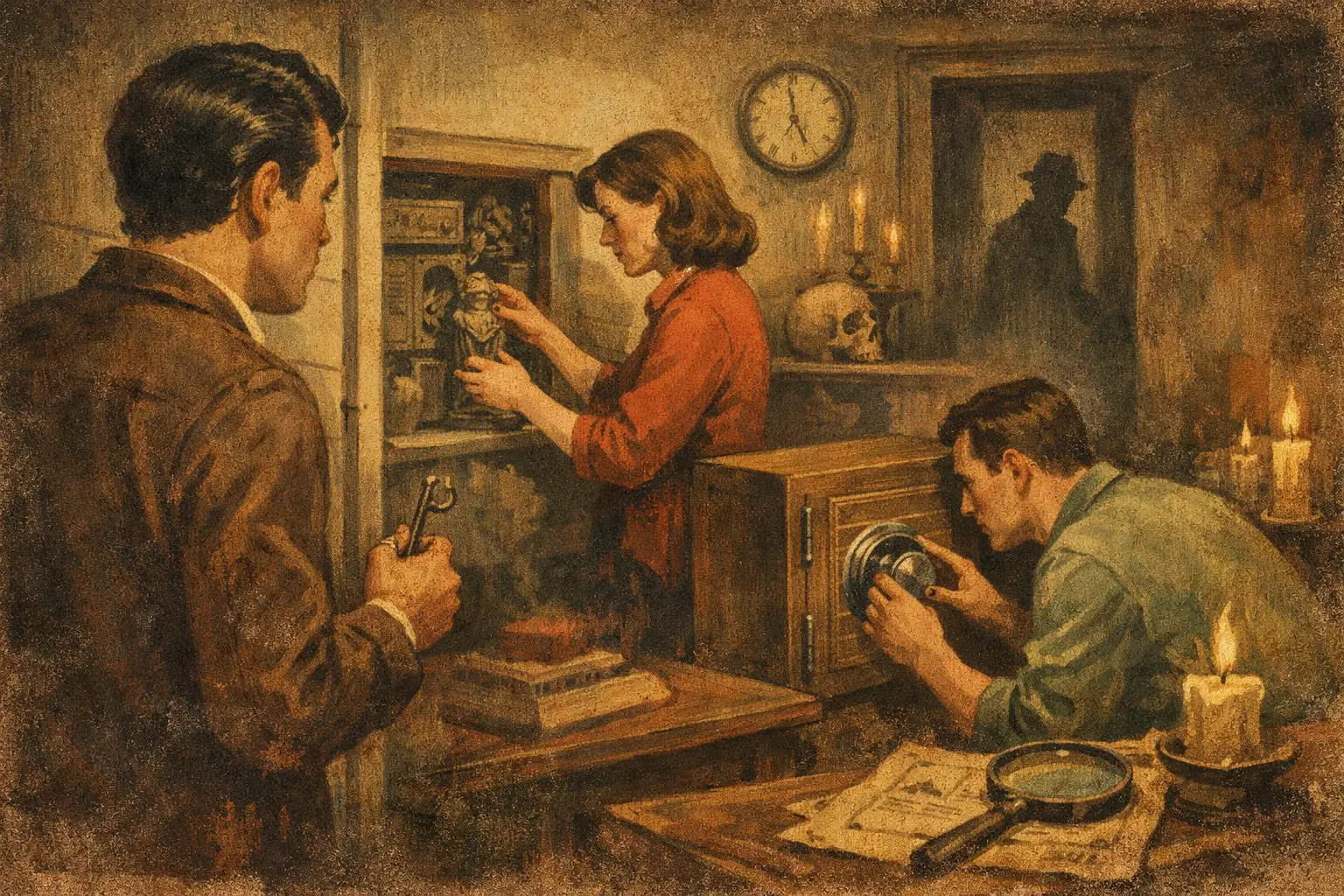
The sunset cruise is booked. Duval Street can wait until later. Now your crew needs an hour where phones go away, clues come out, and everyone has a job to do. This private escape room review looks at what makes a private game different from a shared booking – and why it can be the right kind of Key West chaos for your group.
A private escape room puts your people in the story together. No strangers joining your team, no awkward introductions over a locked chest, and no wondering whether someone you have never met will grab the clue you were solving. It is your family, friends, coworkers, or celebration crew against the clock.
What a Private Escape Room Actually Means
In a private booking, the game room is reserved for your group alone. Whether two of you are on a date night mission or ten friends are chasing clues before dinner, the people you bring are the people you play with. That changes more than the guest list.
You can communicate in your own style. Loud families can celebrate every tiny breakthrough. Coworkers can test their teamwork without turning the experience into a formal meeting. A bachelor or bachelorette group can bring the big energy without worrying about disrupting another party. There is room for inside jokes, dramatic theories, and the occasional wildly confident wrong answer.
Private play also makes the pace feel more natural. In a shared room, experienced escape artists may race ahead while first-timers are still figuring out how clues work. A private group can take a moment to get oriented, divide up tasks, ask for a hint when needed, and enjoy the story instead of trying to keep up with strangers.
Private Escape Room Review: The Best Reasons to Book
The strongest reason to choose a private escape room is simple: the experience belongs to your group. Escape rooms are built around collaboration, but collaboration works best when everyone feels comfortable speaking up. Your quiet cousin may notice the pattern that saves the game. The teenager who said they were “just here” may crack the final code. Your most organized coworker may discover that pirate maps are harder to manage than spreadsheets!
For travelers, private play is also a smart way to make vacation time count. Key West has plenty of places to eat, drink, sightsee, and relax. A timed puzzle adventure gives your itinerary a shared story. Weeks later, people may not remember exactly what they ordered at lunch, but they will remember who found the hidden compartment with 43 seconds left.
Privacy is especially valuable for celebrations. Birthdays, reunions, date nights, and wedding-weekend groups often want an activity that includes everyone without requiring anyone to be an expert. You do not need athletic ability, pirate knowledge, or a detective badge. You need curiosity, communication, and a willingness to search places that look suspiciously ordinary.
A private room is also a better fit for groups with different confidence levels. Some guests want to examine every prop. Others want to hang back until a number puzzle appears. When the room is only yours, nobody has to compete for attention or feel embarrassed about taking a little longer to process a clue.
The Trade-Offs: Private Is Not Always the Same as Easy
Private does not mean effortless. You still have a time limit, puzzles that require focus, and a story that will not solve itself. If your group spends ten minutes debating a clue without testing an idea, the clock will keep moving. Every second counts!
The biggest variable is group size. A pair can have a fantastic private escape experience, but two players will handle every search, lock, and connection themselves. That is great for couples and puzzle fans who want a focused challenge. Larger groups bring more eyes and more ideas, but they can also create clue traffic jams if everyone crowds around the same box.
The sweet spot depends on your crew. Families and friend groups often do well when they naturally split into smaller tasks, then regroup to share what they have found. Corporate teams may benefit from assigning a loose role at the start: searchers, pattern spotters, note keepers, and communicators. Do not turn it into a board meeting, though. The best plan is one your group can abandon the second a better clue appears.
Cost can be another consideration. A private reservation may feel like a bigger commitment than buying a single ticket for a shared activity. But for many groups, the value is in the full experience: exclusive use of the room, a story built for participation, and an hour of genuine together-time. Compare it with other group entertainment, not with sitting on the beach for free.
Who Gets the Most From a Private Game?
Private rooms work beautifully for people who want to do something together rather than simply stand near each other. They are a natural match for vacationing families, friend groups, couples, birthday crews, and coworkers looking for a team-building activity that feels like play first.
They are also a solid choice for first-time players. A good escape room does not expect you to arrive knowing the rules. You will learn by looking closely, sharing discoveries, and trying ideas. Hints are part of the game experience, not a sign that your team has failed. Smart teams use them before frustration steals too much time.
For more experienced players, a private booking creates a clean test of your own group chemistry. There are no outside players to carry the puzzle load or change the rhythm. If you escape, you earned it together. If you do not, you will have excellent material for the post-game debate over drinks.
At Key West Room Escape, private games let groups step into themed adventures with their own crew at the center of the action. That local, vacation-ready flavor matters. A pirate tale, Old Town mystery, or island-style challenge feels more memorable when it becomes part of the trip rather than just another indoor activity.
How to Make Your Booking Worth It
Start by choosing a time that gives your group breathing room. Do not schedule an escape room for the exact minute everyone is supposed to be arriving from the beach, checking into a hotel, or finding parking. Plan to arrive early enough to get settled, hear the game briefing, and start with your brain switched on.
Bring the right number of players for the room and your group dynamic. If you have a large party, ask about capacity and options before booking. For school groups and corporate outings, larger-group arrangements may be available, but planning ahead makes a huge difference.
Once the game begins, make communication your secret weapon. Say clues out loud. Put used keys and solved items in one place. Keep a simple note of numbers, symbols, and patterns. If someone says, “I found something weird,” do not answer, “Probably nothing.” In an escape room, weird is usually the whole point.
Finally, decide what success means before you enter. Escaping is thrilling, of course. But a great private game can also mean seeing your kids lead a puzzle, watching coworkers laugh outside their usual roles, or giving your best friend a birthday story that beats another round of bar trivia. Crack the code if you can. Make the memory either way.