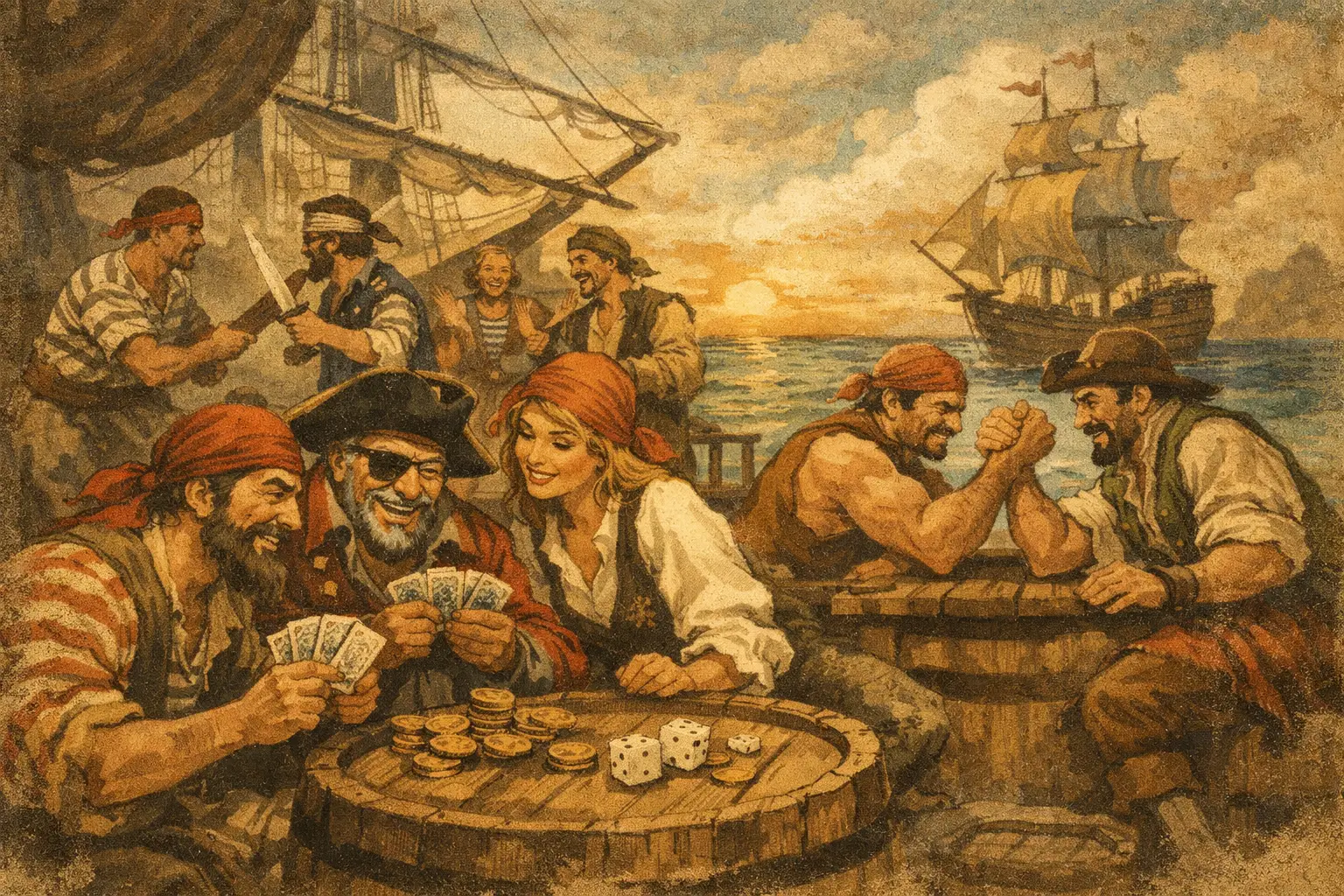
A pirate theme can turn a regular group outing into a full-on mutiny, treasure hunt, or race against the clock. The best pirate group games do more than hand everyone an eyepatch and call it a day. They give every crewmate a reason to speak up, search closely, make a wild guess, and celebrate when the final clue clicks into place.
That matters when you are planning for a family on vacation, a birthday crew, a bachelorette party, or coworkers who have heard the words “team building” one too many times. A great pirate game has enough structure to keep the action moving, but enough room for your group’s personalities to take over. Loud strategists, quiet clue-spotters, competitive cousins, and the person who just came for the pirate voice all get a job on the ship.
What Makes Pirate Group Games Work?
Pirate games are naturally built for teamwork. There is a treasure to find, a map to decode, a rival crew to outsmart, or a ship to save before it is too late. Those stakes are simple, fun, and easy for people of different ages to understand without a 20-minute rulebook.
The strongest games create a shared problem instead of turning one person into the captain who does everything. If a challenge requires observation, wordplay, logic, movement, and communication, the whole crew has a chance to contribute. That is the difference between a game people watch and an experience they talk about over dinner afterward.
Theme helps, too. A weathered map, a cursed chest, a coded message in a bottle, and a ticking clock make ordinary puzzles feel like part of the adventure. You do not need a Hollywood-sized set. You need a clear mission and a few details that make your group feel like they have stepped onto the deck of a pirate ship.
Choose the Right Game for Your Crew
Not every pirate activity fits every group. Before assigning a captain or hiding the treasure, think about the size of your party, how much time you have, and whether your crew wants casual laughs or a real challenge.
Fast party games for high-energy groups
Quick challenges work well when you have a larger gathering, a mixed-age group, or a schedule packed with other Key West plans. Keep rounds short, explain the goal in one breath, and rotate who gets to lead. These games are especially handy for birthdays, family reunions, and pre-dinner gatherings.
A pirate relay can be as simple as carrying a “gold coin” from one point to another without using hands, then passing a map clue to the next player. A pirate charades round gives players missions, sea creatures, treasure items, and famous pirate phrases to act out. For a little more suspense, try a captain’s orders game: players only follow commands when they begin with “Captain says.” Anyone who moves at the wrong time has to perform their best “arrrr” before jumping back in.
The trade-off is depth. Fast games bring instant energy, but they may not create the same satisfying, everyone-around-the-table victory as a longer puzzle challenge. They are best used to warm up a crowd or fill a short window, not as the main event for serious clue hunters.
Treasure hunts for explorers
A treasure hunt gives a group a mission and lets the setting do some of the storytelling. Build clues around pirate language, landmarks, hidden symbols, and a final prize. The prize does not have to be huge. A bag of chocolate coins, first pick of dessert, or bragging rights as the cleverest crew can be plenty.
For younger players, use picture clues and obvious hiding spots. For adults and teens, make the clues connect. One answer should point to the next location, object, or code. Add a small twist by splitting a map into pieces so each team member must find information before the group can chart the final course.
If you are planning a hunt outdoors, keep safety and logistics in mind. Avoid sending people into traffic, private property, or places where the clue could disappear before your group arrives. In the Key West heat, shorter routes, shade breaks, and water are smart planning, not surrender.
Escape-style pirate missions for puzzle lovers
When your group wants more than a few rounds of party games, an escape-style mission is where pirate storytelling really earns its sea legs. Instead of simply finding a hidden object, your team works through a chain of puzzles under a deadline. A locked chest may require a code. The code may be hidden in a ship’s log. The log may only make sense after someone notices a pattern in the captain’s collection.
This format works because it rewards different kinds of thinking. One person notices details. Another connects the clues. Someone else keeps track of what has already been tried. The clock adds urgency without requiring anyone to run around shouting, although that does happen sometimes.
For groups of friends, couples, families with older kids, and corporate teams, a private escape room offers the easiest way to get this level of immersion without spending hours building it yourself. Key West Room Escape brings the pirate-minded adventure to life with themed, private challenges where your crew can crack codes, search for secrets, and try to beat the clock together.
Build Challenges That Need More Than One Person
The fastest way to sink a pirate game is to make it solvable by one clever player while everyone else stands around nodding. Design or choose challenges that create natural handoffs between people.
A map puzzle is better when one person finds the pieces, another assembles them, and a third recognizes the destination. A riddle is more fun when its answer opens a box containing a physical item someone else must use. Even a simple scavenger hunt becomes more social when each player receives a different clue and the group has to pool its information.
Try mixing puzzle styles rather than stacking five word riddles in a row. Include visual searching, pattern matching, simple ciphers, physical objects, and a task that requires clear communication. This keeps the game friendly for players who do not consider themselves “puzzle people.” No one needs to know pirate history or speak in nautical jargon to be useful.
Also, resist the urge to make every clue brutally difficult. A good game has momentum. Let the crew earn a few quick wins early, then raise the stakes with a tougher final challenge. If a group is stuck, offer a hint that points them in the right direction without handing over the answer. The goal is a triumphant “we got it!” not 20 minutes of everyone glaring at a locked box.
Set the Mood Without Overcomplicating It
You can create a pirate atmosphere with a few smart choices. Give the group a mission: recover stolen treasure, break a curse, expose a mutinous first mate, or escape before the tide turns. Name the team, choose a captain, and put a visible countdown on the action if time pressure fits the game.
Props should support the game, not slow it down. Maps, keys, envelopes, fake coins, rope, and a small treasure chest are useful because players can touch and examine them. A dozen decorative objects with no purpose can send clue hunters chasing ghosts. If something is just decoration, make that clear or keep it out of the puzzle area.
Music can help, but keep it low enough for people to hear one another. Pirate games are powered by conversation. The best moments happen when somebody says, “Wait, what if this symbol matches the map?” and three people rush over to test the idea.
Make It Fun for Families, Friends, and Work Teams
A family group may need adjustable difficulty and roles that let kids participate without making adults feel like babysitters. Friends often enjoy competition, silly accents, and a dramatic final reveal. Work teams tend to get the most value when the game requires listening, delegation, and shared decision-making rather than trivia expertise.
For a corporate group, skip the forced speech about leadership. Let the game do the work. Afterward, ask one simple question: what helped the crew move forward when the first plan failed? You will get more honest answers after a real challenge than after a slide deck.
For celebrations, protect the fun by making the game private when possible. Your group will be more willing to laugh loudly, try ridiculous ideas, and lean into the theme when they are playing with their own crew.
Pick a mission with a clear finish, give everyone a piece of the puzzle, and let the clock create just enough pressure. Whether your crew finds treasure, breaks a curse, or barely escapes with seconds left, the best pirate game leaves everyone with a story worth retelling on shore.