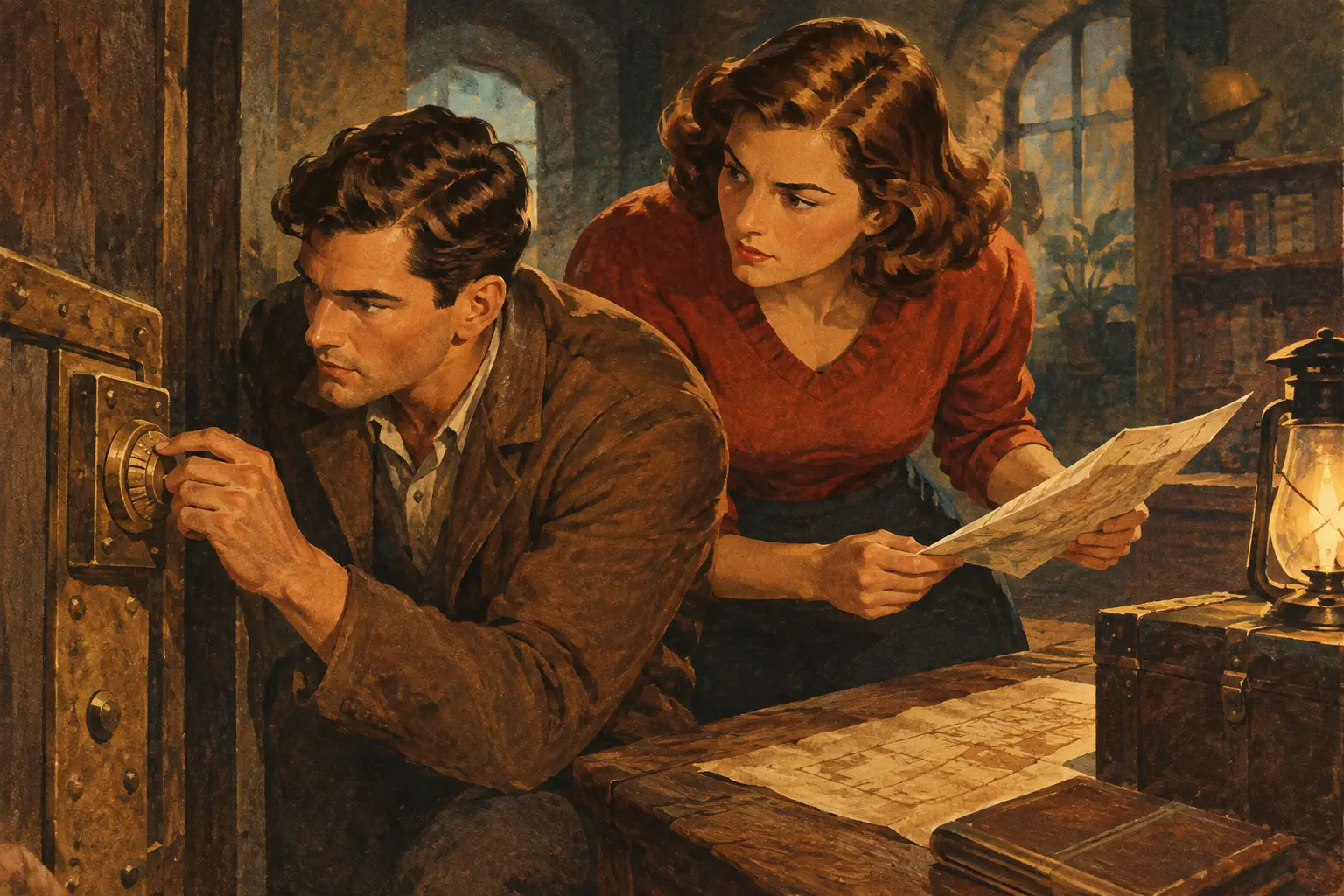
Two people, one locked-door scenario, 60 minutes, and a table full of clues that may or may not be trying to trick you. So, can two players escape? Absolutely! A two-player escape room can be one of the most exciting ways to play because every discovery matters, every second counts, and there is nowhere to hide when a puzzle has your attention.
A larger group brings more hands and more ideas. A pair brings focus, fast communication, and the kind of shared victory that makes a vacation story worth retelling. Whether you are planning a date, a parent-and-teen outing, a best-friends challenge, or a break from sightseeing in Key West, two players can bring plenty of brainpower to the game.
Can Two Players Escape an Escape Room?
Yes, two players can escape an escape room, especially when the game is designed to welcome small private groups. Success is not about having the biggest team. It is about noticing details, sharing information, and knowing when to switch gears before one stubborn clue eats up five valuable minutes.
Two-player teams have a few real advantages. You can hear each other clearly. You do not need to wait for six opinions before trying a solution. You also know exactly who has checked which drawer, decoded which symbol, or found that suspicious-looking object in the corner. The game can feel more intense, but that is part of the fun!
The trade-off is simple: there are fewer people available to work on separate tasks. If one player gets stuck, the other player cannot always keep three other puzzle tracks moving at the same time. That means pairs do best when they stay organized and avoid treating every clue like a solo mission.
At Key West Room Escape, private experiences let your group take on the adventure together without being mixed in with strangers. For two players, that means the story, the surprises, and the final escape attempt are all yours.
Why a Two-Person Team Can Be a Blast
A great escape room is not a test of who knows the most trivia or who can solve a complicated equation fastest. It is a team game. The winning move is often one player spotting a pattern while the other remembers where they saw a matching symbol ten minutes earlier.
With two people, communication is naturally direct. Say what you find out loud, even if it seems small. A word written on a map, a strange color order, a key with an unusual tag, or a lock that looks different from the rest may become useful later. The clues are meant to connect, and your partner cannot help make that connection if the information stays in your head.
Pairs also get to enjoy more of the room. In a large group, someone may crack a code before you even get a look at it. In a two-person game, both players are usually involved in every major breakthrough. You are not just along for the adventure. You are steering the ship.
This format is especially fun for couples and close friends because it reveals how you solve problems together. One person may be the pattern-spotter. The other may be the practical lock-checker. One might keep track of loose clues while the other loves a wild theory. There is no wrong role, as long as you use both brains.
How Two Players Should Tackle the Room
The first few minutes set the pace. Do a quick sweep of the room together, but do not race past the details. Look for items that clearly belong to the game: marked objects, written messages, unusual containers, number sequences, maps, symbols, and anything that seems deliberately placed.
Then split your attention without splitting your communication. One player can inspect the clues already found while the other checks for additional puzzle pieces. You do not need a formal job title or a clipboard. Just avoid both spending four minutes staring at the same lock while an unopened compartment sits nearby.
When you find something, announce it. Try simple callouts such as, “I found four colored symbols,” or, “This lock needs a five-letter word.” That gives your teammate a chance to connect it to another clue immediately. Escape rooms reward shared information, not secret genius.
Keep One Clue Area
Small teams can lose time when clues wander. Choose a clear spot for items you have found but have not used yet. Keep solved clues separate when possible. This makes it easier to see what is still active and prevents you from repeating work.
If an item has already opened something or revealed its purpose, set it aside. If you are unsure whether it is finished, say so. A simple “I think this key is used” can save a lot of second-guessing later.
Use the Two-Minute Rule
Not every puzzle should be solved immediately. If both of you are circling the same idea and getting nowhere, pause and move on. Look at a different clue, search for a missing piece, or ask for a hint if hints are available.
This is not quitting. It is smart time management. Many escape room puzzles become clearer after you solve another section or return with fresh eyes. The clock is always moving, so do not let one stubborn code become the captain of your adventure.
Check Before You Force Anything
Escape room props should not require brute strength, climbing, or dismantling. If something will not open, the answer is usually another clue, not more muscle. Try the code again, check the lock direction, or look for a detail you missed.
That approach keeps the game fun and protects the room for the next crew of would-be escape artists. Pirates may kick down doors in the movies. Puzzle solvers use the right key.
What Makes Two Players Successful?
Experience helps, but it is not required. First-time players escape rooms all the time because they stay curious and work together. What matters most is your willingness to speak up, test reasonable ideas, and let go of a theory when it is not working.
The best two-player teams usually share four habits:
- They say discoveries out loud instead of quietly collecting clues.
- They search carefully before assuming something is missing.
- They divide tasks when there are multiple active puzzles.
- They ask for help before frustration takes over the fun.
You do not need to solve every puzzle at the same speed. One player may be great with numbers while the other notices visual patterns or hidden wordplay. Let each person take the lead when a clue matches their strength, then swap in when you hit a wall.
Is a Two-Player Escape Room Too Hard?
It depends on the room, its difficulty, and how the puzzles are structured. Some games have many tasks that can be handled at once, which may feel faster with a bigger team. Others are built around a more linear trail of clues, where two focused players can move smoothly from one discovery to the next.
A good game host can help set expectations before you begin. Let them know this is your first escape room, if it is a date night, or if you want a serious challenge. They can explain the rules, help you understand how hints work, and get you ready to play without spoiling the adventure.
Do not measure success only by the final lock. Maybe you escape with seconds left and celebrate like champions. Maybe the clock runs out while you are one clue away. Either way, you have spent an hour fully engaged with another person instead of staring at separate screens. That is a win worth having.
Make Your Two-Player Escape Count
Arrive ready to play, put your phones away, and give yourselves permission to be a little dramatic when the timer starts. Read every note. Check every odd detail. Celebrate every lock that clicks open. Most of all, keep talking.
Two players can absolutely escape, and the smaller team size may make the whole adventure feel even bigger. Bring your sharpest partner, trust the clues, and remember: when the final minutes hit, calm communication beats panic every time.