Category: Uncategorized

10 Indoor Activities in Key West to Try

Sunburned by noon, caught in a surprise downpour, or just ready for a break from the beach? Indoor activities in Key West can save the day without killing the vacation vibe. In fact, some of the most memorable hours in town happen under a roof – especially when your group wants air conditioning, a little challenge, and something better than just wandering into the nearest bar.

Key West is famous for sunsets, boats, and Duval Street energy, but there is a whole other side to the island when the weather turns, the heat kicks up, or your crew wants a plan everyone can agree on. Families need options that keep kids engaged. Couples want something more creative than sitting around. Friend groups and work teams usually need an activity, not just a place to stand. That is where indoor plans really shine.

Why indoor activities in Key West are worth planning

A lot of visitors treat indoor attractions as backup plans. That is a mistake. The best indoor experiences in Key West are not just placeholders until the sun comes back out. They are often more interactive, easier to schedule, and better for groups with different energy levels.

There is also the reality of island weather. Summer storms show up fast. Heat and humidity can wear people down by mid-afternoon. Cruise schedules, wedding weekends, and family trips all come with downtime between major plans. Having one or two indoor options in your pocket keeps the day moving without the usual vacation debate over what to do next.

The trick is picking the right kind of indoor activity for your group. Some people want to learn something. Some want to laugh. Some want to compete. Some just want cold air and a comfortable seat. Key West has a mix of all of the above, but not every option fits every crew.

Escape rooms for groups that want action

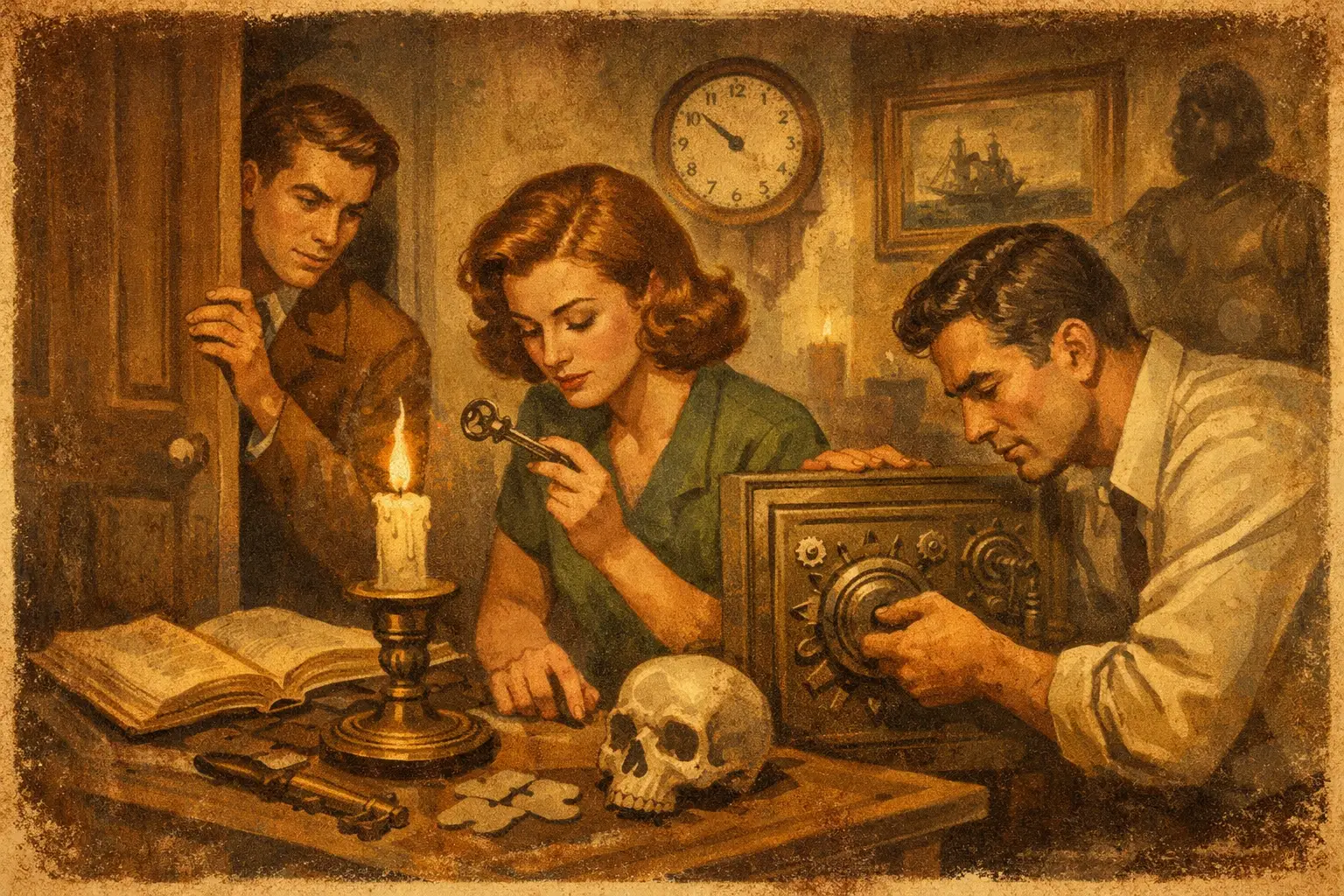
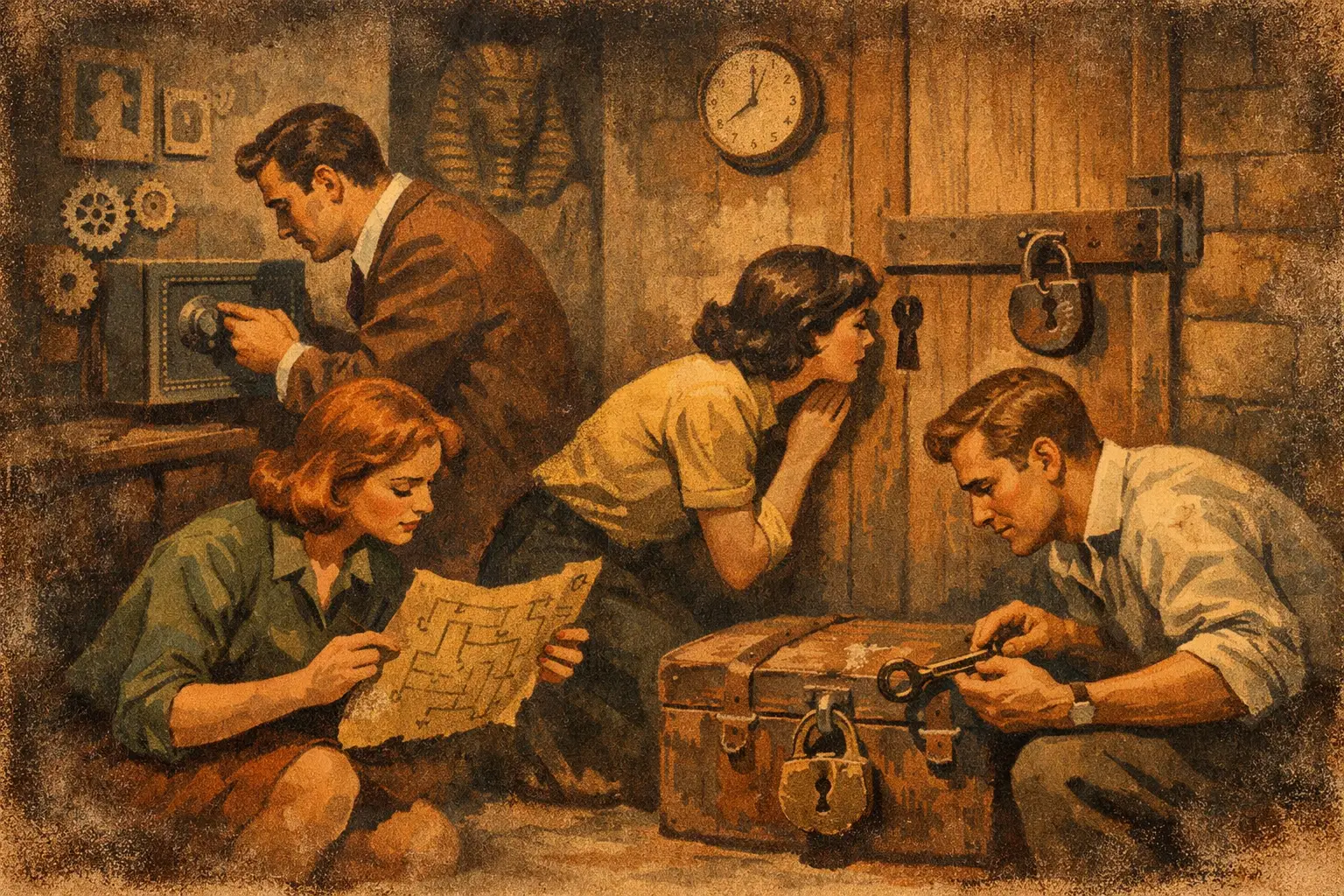
If your group gets bored easily, an escape room is one of the smartest indoor activities in Key West. It gives you a clear mission, a time limit, and a reason for everyone to actually participate. Instead of passively looking around, you are cracking codes, finding clues, and trying to beat the clock together. Every second counts!!

This works especially well for families with older kids, friend groups, birthday outings, and corporate teams that want something more exciting than dinner. It is also a strong choice when you need a private activity. You are not just sharing space with a crowd. You are stepping into a full experience with your own team.

The big advantage here is energy. Museums and galleries can be great, but they depend on attention span. Escape rooms create momentum right away. Even the person who claims they are “just watching” usually ends up searching for clues five minutes in. If you want a memorable indoor plan with built-in teamwork and plenty of laughs, this is hard to beat. Key West Room Escape is a natural fit for visitors who want a local, story-driven challenge instead of a generic rainy-day backup.

Museums that add real Key West character

Not every indoor activity needs a countdown clock. Key West museums are a good call when your group wants history, local color, and a slower pace. They work well for couples, multigenerational families, and anyone trying to balance fun with a little culture.

The nice thing about museums in Key West is that they rarely feel overly formal. The island has too much personality for that. You will find stories tied to shipwrecks, artists, writers, cigars, and the oddball history that gives the city its charm. On a hot afternoon, that mix of air conditioning and local storytelling can feel perfect.

That said, museum time depends on your group. If you are traveling with younger kids or a high-energy bachelor party, a museum might be more of a short stop than the main event. For curious travelers, though, it is one of the easiest ways to understand the island beyond the postcard version.

Galleries and studios for a quieter afternoon

Key West has a strong creative streak, and local galleries make for a surprisingly good indoor plan. This is an easy option for couples, small groups, and visitors who want something low-pressure between meals or evening plans.

Gallery hopping gives you flexibility. You can spend twenty minutes or two hours. You can browse, talk, cool off, and reset without committing to a long schedule. It is also a smart move if your group is split on what to do next. Art spaces are easy to fit into the middle of the day.

The trade-off is simple. Galleries are more about mood than action. If your group wants competition, structure, or big laughs, look elsewhere. But if you want a calm indoor activity that still feels distinctly Key West, local art delivers.

Tastings, cooking experiences, and dessert stops

Sometimes the best indoor plan is edible. Tastings and food-focused experiences work well because they feel social without requiring a ton of effort. They are especially good for adult groups, couples, and visitors building an afternoon around food and drinks.

Key West has plenty of flavor, and indoor tastings let you enjoy it without melting in the sun. Think rum, chocolate, key lime treats, or small-group food experiences that turn a snack break into something more memorable. These activities also pair well with sightseeing because they do not usually require a huge block of time.

For families, the dessert side of the equation usually works better than the tasting side. For adult groups, it depends on the mood. A tasting can be relaxed and fun, but it is not ideal if your crew wants movement and challenge. If the goal is conversation and local flavor, though, it is a strong play.

Indoor activities in Key West for families

Family trips get complicated fast. One kid wants action, another is tired, and the adults are trying to avoid another argument about lunch. The best family-friendly indoor activities in Key West are the ones that keep everyone engaged at the same time.

Interactive experiences usually win. Escape rooms are great for families with kids old enough to participate in solving puzzles. Hands-on museums can work too, especially if they are broken into shorter visits. Even a simple combo of a museum stop and a dessert break can turn a rough weather day into a good memory.

The main thing to avoid is overcommitting. If your family is already hot, hungry, or tired, a long indoor activity may backfire. Pick something with a clear start and finish, and give yourself room to pivot. Vacation days go better when the plan feels easy.

Best picks for couples and adult groups

Couples usually want indoor activities that feel a little more memorable than killing time. Friend groups want something they can talk about later. Those are not always the same thing.

For couples, galleries, museums, tastings, and immersive games all work, depending on your style. If you like shared challenges, an escape room is a great date move because it gives you something to do together instead of just sitting across from each other. If you want a slower pace, art and food experiences are more natural.

For adult groups, momentum matters more. The larger the group, the more helpful it is to choose an activity with structure. That is why puzzle games, private group experiences, and organized tastings tend to land better than casual wandering. Nobody wants to spend an hour debating where to go next.

How to choose the right indoor plan

Start with your group size and energy level. A couple can pivot easily. A group of eight needs a real decision. If people are restless, choose something active. If they are drained, choose something easy to enjoy without much effort.

Next, think about timing. Are you filling one hour before dinner or trying to rescue an entire rainy afternoon? Short windows favor galleries, dessert stops, and smaller museum visits. Longer blocks are better for immersive attractions and booked group experiences.

Budget matters too. Some indoor options are inexpensive and casual. Others are premium experiences with private access and a stronger entertainment factor. Neither is better across the board. It depends on whether you are passing time or trying to make the activity itself the highlight.

Finally, think about what your group will actually remember. People rarely talk for years about the time they sat around waiting for the rain to stop. They do remember the challenge they almost solved, the unexpected museum they loved, or the tasting that turned into the best part of the afternoon.

A great Key West day does not have to be all sunshine and open water. Sometimes the smartest move is stepping inside, cooling off, and choosing something with a little personality. When the weather shifts or your group needs a reset, crack the code on a better plan and let the island surprise you.


11 Things to Do in Key West for Groups

Trying to keep a whole group happy in Key West can get chaotic fast. One person wants the water, another wants air conditioning, somebody is already asking about happy hour, and at least one planner is quietly doing math in their head. The good news? There are plenty of things to do in Key West for groups if you pick activities that actually fit your crowd instead of forcing everyone into the same postcard version of the island.

The trick is choosing experiences that give your group something to do together, not just somewhere to stand together. Key West works best when the plan mixes energy, personality, and a little flexibility. Some groups want action. Some want a slower pace. Most want a bit of both.

Best things to do in Key West for groups

Book a private escape room when you want real group interaction

If your group is tired of the usual dinner-and-drinks routine, an escape room is a strong move. It gives everyone a role right away. The loud friend starts shouting theories, the quiet one notices the clue nobody else saw, and suddenly your group has a mission instead of a loose plan.

This works especially well for birthdays, family trips, bachelor and bachelorette groups, and work outings because it is structured without feeling stiff. You get a clear start time, a shared objective, and a built-in conversation starter after the game is over. It is also one of the few activities where your whole group is actively participating the entire time.

If your group likes puzzles, competition, and a little pressure, this is the kind of fun that sticks. Every second counts, and that is part of the magic.

Get out on the water with a private boat day

A private boat charter is one of the easiest ways to make a group trip feel special. Instead of squeezing into a crowded public outing, your group gets its own space, its own pace, and a much better shot at actually enjoying each other.

This is a smart pick for celebrations because it can go in a few different directions. Some groups want a laid-back cruise with great views and drinks in hand. Others want more movement, more stops, and more stories to tell later. The private format gives you room to make the day feel like yours instead of following somebody else’s schedule.

For mixed-age groups, this can be a better choice than high-intensity water sports. It is still memorable, but it is easier to tailor to comfort levels.

Try a city puzzle adventure for groups that like to move

Some groups do not want to sit still, but they also do not want a long, passive tour. That is where an outdoor puzzle experience shines. You get the fun of a challenge, the movement of a walking activity, and the bonus of seeing Key West in a way that feels more playful than standard sightseeing.

This format is great for competitive friend groups, team-building events, and families with older kids or teens who need more than a photo stop to stay engaged. Instead of wandering with no plan, your group is solving clues, making decisions, and turning Old Town into part of the game.

It is also a smart daytime option if your group wants to earn that next round of cocktails or key lime pie.

Take a food tour if your group cannot agree on where to eat

Every group has that moment. Half the people want seafood, someone is craving something sweet, and one person has already read six restaurant reviews and made things worse. A food tour solves the problem by turning the meal into the activity.

For groups, this works because it keeps everyone moving while offering enough variety to satisfy different tastes. It also takes pressure off the planner. Instead of locking into one restaurant and hoping for the best, you get multiple stops and a more social rhythm.

Food tours are especially good for first-day itineraries. They help your group get familiar with the area, loosen up, and start the trip on an easy win.

Spend a beach day at Fort Zachary Taylor

Not every group outing needs a timer, a puzzle, or a reservation. Sometimes the right answer is simple: grab the towels, pack the snacks, and head to the beach. Fort Zachary Taylor is a favorite for a reason. It offers space to spread out, swim, relax, and reset.

For family groups or wedding parties looking for breathing room between bigger plans, this is a reliable option. The atmosphere is more grounded than a loud pool scene, and people can do their own thing without fully splitting off.

The trade-off is weather and attention span. If your group gets restless easily, a full beach day may feel too loose. In that case, pair it with lunch or another scheduled activity later.

Catch the sunset, but do it strategically

Sunset in Key West is practically a group ritual. The mistake is treating it like a complete plan. For most groups, sunset works best as a centerpiece, not the whole evening.

Mallory Square brings energy, performers, and people-watching, which can be fun for first-time visitors and celebratory groups. But it is also busy, and not every crowd loves big crowds. If your group wants a more relaxed experience, consider watching from the water or finding a quieter vantage point.

This is one of those it-depends activities. If your group enjoys festive chaos, go all in. If they want connection more than spectacle, keep it simple and skip the shoulder-to-shoulder scene.

Things to do in Key West for groups with different personalities

Choose live music and bar hopping for high-energy nights

If your group came to Key West ready to stay out late, the nightlife delivers. Live music, casual bars, and a come-as-you-are attitude make it easy to keep the night moving without overplanning every hour.

This is usually best for adult groups who are flexible and social. If your crew likes hopping from place to place, hearing local music, and keeping things spontaneous, this part of town can carry an entire evening.

The catch is that nightlife is not always ideal for conversation or coordination. Large groups can get split up, wait times can pile on, and not everybody wants the same pace. It helps to pick a meeting point and accept that the night may become a little gloriously messy.

Rent bikes or scooters for a casual group adventure

Key West is compact enough that getting around can be part of the fun. Renting bikes or scooters adds movement to the day and gives your group an easy way to explore without committing to a formal tour.

This is a better fit for groups that enjoy independence. You can stop for coffee, cruise past historic streets, and build your own route as you go. It feels breezy and low-pressure, which is exactly what some vacation groups want.

Still, this option depends on comfort level. Not everybody wants to ride in traffic or deal with parking and navigation. For groups with uneven confidence, bikes may be easier than scooters.

Visit museums and historic spots when your group wants substance

Key West has plenty of personality, but it also has depth. Historic homes, museums, and local landmarks can be surprisingly good group stops if your crowd likes stories, architecture, or a break from the heat.

These outings work well in the middle of the day when everyone needs air conditioning and a slower pace. They are also useful for multi-generational groups because they offer something engaging without demanding a lot physically.

The only real downside is momentum. If your group is craving action, too much history all at once can flatten the energy. One well-chosen stop usually lands better than trying to turn the day into a marathon of cultural check-ins.

Plan a brunch or group dinner that feels like an event

Meals matter more on group trips than people expect. A good brunch can reset the whole mood after a late night, and a lively dinner can anchor the day when everyone has been doing different things.

For larger groups, it is worth treating the reservation like a real plan, not an afterthought. Pick a place with enough personality to feel memorable, but not so formal that it turns dinner into a logistical challenge. The best group meals in Key West usually feel relaxed, celebratory, and easy to linger over.

If your group has strong opinions, make the reservation early and keep expectations realistic. No single restaurant is going to match every taste, which is why the atmosphere often matters just as much as the menu.

Mix one active event with one easy event

If you are building a full group itinerary, this is the move that saves the day. Pair something hands-on, like an escape room or boat adventure, with something looser, like a beach afternoon or sunset drinks. That combination gives your group both momentum and breathing room.

Going too hard all day can wear people out. Leaving the whole day unstructured can make it drift. The sweet spot is one event people will talk about and one stretch where they can just enjoy being in Key West.

That is also why group-friendly experiences like Key West Room Escape work so well here. They give your crew a shared challenge, a clear time block, and a real payoff without eating the entire day.

The best group trips are not about checking every box. They are about giving people enough fun, enough freedom, and at least one moment where everybody says, that was a blast. Start there, and Key West does the rest.

Best Rainy Day Group Activity in Key West

The sky flips from sunny to stormy fast in the Keys. One minute your group is talking about beach time, boat time, or bar hopping, and the next everyone is standing under an awning checking the radar. That is exactly when the search for the best rainy day group activity starts – and in Key West, an escape room is hard to beat.

Rain changes the plan, but it does not have to kill the energy. A great group activity should keep everyone involved, work for different personalities, and feel like more than just a backup option. That is where escape rooms win. They are indoor, fast-paced, private, and built for the kind of shared moments people actually talk about afterward.

What makes the best rainy day group activity?

Not every indoor activity can save a washed-out day. Some are fine for passing time, but they do not really bring a group together. If you are traveling with family, friends, coworkers, or a celebration crew, you need something that gives everyone a role instead of turning half the group into spectators.

The best rainy day group activity does three things well. First, it gets people off their phones and into the same experience. Second, it gives the group a clear goal, which instantly creates energy. Third, it works whether your crew is competitive, goofy, quiet, or all of the above.

Movies are easy, but they are passive. Dinner is fun, but it can feel like filling time until the weather clears. Shopping works for some groups and completely misses for others. An escape room creates momentum. Once the door closes and the clock starts, every second counts.

Why escape rooms work so well when it rains

Rainy day plans tend to fail for one simple reason: too many activities depend on the weather improving. An escape room does not. You walk in, your team gets the mission, and the fun starts right away.

That matters in a place like Key West, where many group plans revolve around being outside. If your snorkeling trip is canceled or your walking plans get soaked, you do not want a low-energy replacement. You want something with enough excitement to feel like the day got upgraded, not downgraded.

Escape rooms are especially strong for mixed groups. Some people love puzzles. Some love the race against the clock. Some just want to laugh while their friend insists the weird clue definitely means something. Everyone gets pulled in differently, which is part of the magic.

There is also a practical side. Indoor group activities sound great until you realize they are hard to organize on the fly. Escape rooms are structured. There is a set start time, a clear length, and a shared objective. That makes them much easier to plug into a vacation day, birthday plan, team outing, or family schedule.

The best rainy day group activity for different types of groups

A family group usually needs something active but not chaotic. Kids want excitement. Adults want something more memorable than sitting around waiting for the rain to stop. Escape rooms hit that middle ground nicely because they reward observation, communication, and teamwork instead of requiring athletic skill or perfect weather.

Friend groups often want the story and the bragging rights. Who found the hidden clue first? Who solved the big puzzle? Who completely panicked with ten minutes left? Rainy days can make people restless, and this gives that energy somewhere fun to go.

For birthdays, bachelor and bachelorette outings, and vacation crews, the big win is that the experience feels shared. You are not just in the same room passing time. You are trying to crack the code together. That creates better stories than most backup plans.

Corporate teams get a different benefit. A lot of team-building activities feel forced, and everyone knows it. Escape rooms work because the collaboration is built into the game. People naturally divide tasks, communicate under pressure, and learn how each other thinks. It feels like fun first, which is exactly why it works.

Why an escape room beats other rainy day options

The usual rainy day choices all have trade-offs. Restaurants are great, but unless your group is really there for the meal, you may be done in an hour and still stuck with the weather. Museums and galleries can be a nice fit for certain travelers, but they are not always the right match for groups looking for high energy. Bars can work for adults, but they exclude younger guests and do not give the group much to do together beyond talk.

An escape room gives your group a mission. That changes the whole feel of the outing. It is active without requiring sunshine, competitive without leaving people out, and social without putting all the pressure on conversation.

There is one trade-off, and it is worth saying clearly: if your group hates puzzles and wants a totally passive afternoon, this may not be the right fit. But for most groups, especially those looking for something memorable, the puzzle element is exactly what turns a rainy afternoon into the highlight of the day.

Best rainy day group activity in Key West? Local flavor matters

A rainy day activity gets better when it still feels connected to where you are. Generic indoor entertainment can be fun, but destination-based experiences tend to land harder because they feel like part of the trip, not just shelter from the storm.

That is one reason escape rooms fit Key West so well. The city already has a built-in sense of adventure – pirates, hidden history, Old Town stories, treasure-hunt energy. A themed puzzle experience taps into that spirit while giving your group something dry, organized, and exciting to do.

For visitors, that matters. If weather forces you inside, you still want an activity that feels like Key West. You do not want your day to suddenly feel like it could be happening anywhere. Themed group adventures keep the destination vibe alive even when the forecast is not cooperating.

How to choose the right escape room for your group

Start with group size. Some experiences are best for small teams that want everyone deeply involved. Others are better for larger groups that bring louder energy and more division of labor. A private room usually makes the experience stronger because your team gets the full challenge to yourselves.

Next, think about your mix of players. Families with younger players may want a theme that feels exciting without being too intense. Adult groups often want higher stakes, trickier puzzles, or a more immersive story. Corporate teams usually do best with a room that encourages communication over pure difficulty.

Timing matters too. A rainy day scramble is easier when the activity has clear arrival instructions, a straightforward booking process, and a predictable run time. If your group is already rerouting a day, simplicity helps.

If you are in Key West and need a weather-proof plan that still feels like an adventure, Key West Room Escape is the kind of option that keeps the day from fizzling out. Instead of waiting for the clouds to move, your group gets a clock, a challenge, and a reason to start shouting about clues!

Make the most of a rainy day game

A little prep goes a long way. Show up on time, use the restroom before the game starts, and make sure everyone in your group knows the goal is participation, not perfection. The best teams are not always the smartest. They are the ones that talk, share ideas, and keep moving.

It also helps to embrace the chaos a little. Someone will overthink a clue. Someone will spot a detail nobody else noticed. Someone will become very emotionally invested in a lock. That is part of the fun.

If your group is worried about whether they will be good at it, the answer is simple: that is not the point. Escape rooms are about the experience as much as the outcome. Solving everything feels great, of course, but so does laughing your way through the last ten minutes while everyone races to connect the dots.

Rain has a way of exposing weak plans. The upside is that it can also push your group into doing something more memorable than the original idea. When the sidewalks are slick, the boat is canceled, or the beach plan is done for, go for the activity that gives your group a real challenge, a shared story, and a shot at beating the clock. Bad weather is a lot less annoying when your team is busy trying to escape.

Why a Family Friendly Escape Room Activity Works

Vacation arguments usually start with good intentions. One person wants the beach, one wants air conditioning, one wants something the kids will actually remember, and suddenly the group chat feels like a negotiation. That is exactly why a family friendly escape room activity works so well. It gives everyone one mission, one clock, and one reason to work together instead of splitting off into separate plans.

For families in Key West, that matters. You are not just filling an hour. You are looking for something that feels worth the time, works for different ages, and turns into a real shared story. Escape rooms do that better than a lot of attractions because nobody is standing on the sidelines. Every person in the room gets to notice something, test an idea, solve a clue, or celebrate the moment when the final lock clicks open.

What makes a family friendly escape room activity actually family friendly?

Not every group activity earns that label. A truly family friendly escape room activity has to hit the sweet spot between exciting and approachable. If it is too hard, younger players check out fast. If it is too easy, teens and adults feel like they are paying for a decorated waiting room. The fun lives in the middle.

That usually means puzzles with variety rather than one single skill set. Families do best when there are visual clues, word puzzles, physical searches, pattern recognition, and a few satisfying “aha” moments that reward teamwork more than trivia knowledge. A great room does not expect every player to solve everything alone. It gives different personalities different ways to contribute.

Theme matters too. Families respond to adventure, mystery, treasure hunts, and playful suspense because those stories create energy without crossing into anything too intense. A pirate mystery in Key West feels like part of the trip. A room built around local flavor can feel more memorable than a generic game you could play anywhere.

There is also a practical side. Family-friendly means clear rules, a welcoming game master, and private bookings that let your group play at its own pace. That makes a big difference for parents with younger kids, grandparents joining in, or teens who would rather laugh with people they know than team up with strangers.

Why families remember this more than passive attractions

A lot of vacation activities are fun in the moment and fuzzy by dinner. You saw it, you took a photo, you moved on. Escape rooms stick because your family created the experience together.

That is the real difference. You are not watching a performance. You are the performance. The loud clue-reader, the kid who spots the hidden key before anyone else, the cousin who insists the code has to mean something, the parent trying to keep everyone calm with 12 minutes left – those roles become part of the story your group tells afterward.

That shared momentum is hard to fake. Families spend so much time moving in parallel. One person is booking, one is scrolling, one is hungry, one is tired. In an escape room, all of that narrows into one objective. Find the clues. Crack the code. Beat the clock. Every second counts, and suddenly everybody is engaged in the same thing.

For families with older kids and teens, this is especially useful. It is one of the few activities that feels active and social without requiring athletic skill or a perfect weather forecast. For mixed-age groups, it creates a rare even playing field. A 12-year-old might spot the pattern the adults missed. Grandpa might be the one who keeps the team organized. That balance is part of the fun.

A family friendly escape room activity works best when the group knows what to expect

The easiest way to make the experience better is to set expectations before your game starts. Families do not need a strategy seminar, but they do better when everyone understands that escape rooms are cooperative, fast-moving, and not about one person taking over.

Tell younger players that they will absolutely have jobs to do. Searching carefully, reading clues out loud, matching symbols, and keeping track of what has already been tried are real contributions. Tell competitive adults that solving everything solo is not the goal. The best teams talk constantly and share information fast.

It also helps to choose the right difficulty level. Some families want a challenge with a little pressure. Others want a win with plenty of laughs. There is no wrong choice. It depends on the age range, your group size, and whether this is your first escape room or your tenth.

If you are planning around a vacation schedule, timing matters. Escape rooms are a smart option when the midday heat kicks in, when rain rolls through, or when your family wants something active without another full outdoor commitment. They fit neatly into a travel day because the experience is structured and the start time is clear.

Why Key West is a great place for this kind of family adventure

Some activities feel interchangeable from city to city. Escape rooms can be different when they lean into where you are. In Key West, the best experiences do not feel pasted in from somewhere else. They pull from the island’s offbeat energy, maritime history, treasure-hunt spirit, and old-town sense of adventure.

That local angle matters more than people think. Families on vacation want at least one activity that feels tied to the destination, not just inserted into it. A room with pirate lore, island storytelling, or a city-based puzzle challenge can turn your outing into something bigger than a standard indoor game.

That is one reason Key West Room Escape fits so naturally into a family trip. The experience has the urgency and puzzle-solving families want, but it also carries the kind of local flavor that makes the hour feel like part of the island adventure rather than a break from it.

And if your family likes options, that flexibility helps. Some groups want the classic indoor escape room format. Others want to stretch the experience into an outdoor puzzle mission or even something more distinctive built around the water. That range lets families choose the version of adventure that matches their energy level and vacation style.

The biggest trade-offs to think about before you book

Escape rooms are a strong fit for families, but they are not one-size-fits-all. If your group includes very young children, attention span matters. A 60-minute mission can feel thrilling for one child and long for another. In that case, the private-group format becomes even more valuable because your family can play without worrying about keeping pace with strangers.

If your group has puzzle lovers and puzzle skeptics, the theme can make or break the buy-in. The skeptics usually respond better when the room sounds like an adventure first and a brain game second. Sell them on the mission, not the mechanics.

There is also the question of intensity. Some families love the countdown pressure. Others want more laughs and less stress. A good game master can help set the tone, but the room choice still matters. It is worth thinking about whether your crew wants a dramatic race against time or a lighter mystery-solving experience.

Group size changes things too. Smaller families often communicate better and move faster, but larger families bring more ideas and more energy. The sweet spot depends on your crew. Too few people can make a difficult room feel packed with tasks. Too many can turn clue-solving into friendly chaos. Fun chaos, ideally, but still chaos.

How to get the most out of the experience

The best family teams keep talking. Say what you find out loud, even if it seems small. Put solved clues aside in one spot. Let different people take the lead at different moments. When a lock opens, celebrate for three seconds and get moving – there is always another puzzle waiting.

Parents can help by resisting the urge to direct every move. Kids and teens enjoy escape rooms most when they get to make discoveries themselves. A quick nudge is helpful. Running the whole room for them is not. Half the payoff comes from that look when they realize they solved something real.

And do not judge the experience only by whether you escaped. Yes, everybody wants the win. But the best measure is whether your family stayed engaged, laughed a lot, and left talking about the moment everything finally made sense. That is success too.

For families trying to choose one activity that feels active, memorable, and surprisingly good at getting everyone on the same page, this is a strong bet. You get challenge, teamwork, and a story you actually helped create. If your crew is ready to trade the usual vacation routine for a mission with clues, countdowns, and bragging rights, an escape room is a very good place to start.

9 Bachelorette Party Escape Room Ideas

Skip the predictable dinner-and-drinks routine for a minute. If your bride wants something more interactive, funny, and genuinely memorable, bachelorette party escape room ideas are a smart way to turn the whole group into the main event. You get teamwork, inside jokes, a little chaos, and that glorious countdown pressure that makes every win feel bigger.

An escape room works especially well for bachelorette groups because it gives everyone a role. The planner gets structure. The competitive friend gets a mission. The quieter bridesmaid still has a chance to spot the clue everyone else missed. And if your group is visiting somewhere like Key West, the whole thing feels even better when the experience matches the energy of the trip – playful, a little wild, and built for stories you’ll keep retelling.

Why bachelorette party escape room ideas work so well

A lot of bachelorette activities look fun on paper but put pressure on the group in weird ways. A club night can split people up fast. A fancy dinner can get expensive before the night even starts. A spa day is relaxing, sure, but it does not always create that loud, shared, hilarious moment everyone remembers.

Escape rooms hit a different sweet spot. They are active without being exhausting, social without forcing awkward small talk, and structured enough to keep the group moving. Better yet, they work for mixed personalities. Your bride may have college friends, sisters, coworkers, and future in-laws all in one crew. Putting them in a room with one mission gives everyone an easy reason to talk, laugh, and team up fast.

There is also a built-in sense of occasion. You are not just hanging out. You are racing the clock. Every second counts, and that urgency makes even simple moments feel bigger. One hidden key or cracked puzzle can turn the whole group into instant champions.

1. Pick a theme that fits the bride, not just the trend

The best bachelorette party escape room ideas start with one question: what kind of fun does the bride actually want? If she loves mystery, go with a suspense-driven room full of secrets and twists. If she wants light, silly energy, pick something adventurous or playful instead of dark and intense.

This matters more than people think. A horror room may sound exciting to half the group and absolutely terrible to the other half. A pirate-themed challenge, a treasure hunt, or a tropical mystery usually lands better for a celebration because it keeps the energy high without making anyone spend an hour screaming in the corner.

If you are celebrating in a destination town, local flavor helps. A room with island energy, old-town intrigue, or a treasure-hunting vibe feels more special than a generic lab escape you could book anywhere.

2. Turn the bride into the star of the mission

One of the easiest ways to make an escape room feel bachelorette-specific is to build a small custom twist around the bride. You do not need to redesign the room. A few personalized details can do the job.

Maybe the group creates matching team shirts with a funny name. Maybe you give the bride a special role like clue captain or final lock opener. Maybe there is a prize waiting after the game if the team escapes in time. These little touches make the activity feel less like a random booking and more like part of the celebration.

If the venue allows it, you can even ask about adding a custom note, inside joke, or mini surprise after the game. Not every location will do this, and that is okay. The main goal is to make the bride feel like this adventure was chosen for her, not just squeezed into the itinerary.

3. Choose private play if you can

For a bachelorette group, private booking is usually the move. It gives your party room to be loud, silly, and fully yourselves. No one wants to edit their jokes or rein in the bride’s energy because strangers are standing two feet away trying to solve a cipher.

Private games also make the pace better. Your group can communicate naturally, divide up tasks, and celebrate every breakthrough without feeling self-conscious. That matters a lot for groups who may not all know each other yet.

This is one reason experience-focused operators like Key West Room Escape are such a good fit for celebrations. Private group play keeps the event feeling personal, which is exactly what you want for a bachelorette outing.

4. Match the difficulty to the mood

Not every bachelorette party wants the same level of challenge. Some groups want a real brain-burner where every clue feels earned. Others want fast, funny fun before heading to dinner, the beach, or a night out.

Be honest about your group. If half the party is new to escape rooms, an ultra-hard game can turn exciting into frustrating. On the other hand, if your bride loves puzzles and your group is competitive, a more challenging room can be the perfect centerpiece.

The sweet spot is a game that keeps people engaged without stalling the party energy. If you are booking for a mixed group, ask for a room that is immersive and active rather than brutally difficult. You want cheers, not clue fatigue.

5. Build the rest of the day around the escape room

A strong bachelorette plan does not treat the escape room like filler. It works best when it acts as the launch point or highlight of the day.

If your group is doing a daytime celebration, the game can kick things off before brunch, shopping, or a sunset cruise. If it is part of a night plan, schedule it early enough that nobody arrives too distracted to focus. Escape rooms and heavy pregame cocktails are not always best friends.

This is one of those it-depends moments. If your bride wants glam photos and a polished dinner look, book the game before everyone gets fully dressed up. If the group is keeping things casual, the room can slide more easily into the middle of the day.

6. Use team challenges to make it feel more festive

Some of the best bachelorette party escape room ideas happen before the clock even starts. Split the group into mini teams for simple side competitions. Nothing complicated – just enough to add energy.

You can award bragging rights for funniest team name, best pre-game prediction, or most dramatic clue reaction. After the game, hand out silly titles like Lock Whisperer, Panic Princess, Code Queen, or Most Likely to Yell “I found it!!” These tiny extras create instant laughs and make the whole outing feel more eventful.

Just keep the side games lightweight. The escape room itself is already the main attraction. You are enhancing the fun, not burying it under a pile of forced activities.

7. Think beyond the standard indoor room

When people hear escape room, they usually picture one locked room and one ticking timer. But some of the strongest bachelorette options stretch that formula a little.

Outdoor puzzle adventures are great for groups who want movement, sunshine, and sightseeing mixed into the challenge. They work especially well in vacation spots where the location is part of the fun. A city-based mystery can give your party that same team challenge while letting everyone enjoy the atmosphere around them.

For a bigger wow factor, destination-style experiences can be even more memorable. In a place like Key West, where adventure already feels built into the day, a themed group challenge with local character beats another generic bar crawl every time.

8. Plan for group size and personalities

A bachelorette party can be six people or sixteen. That changes the kind of experience that will feel fun.

Smaller groups usually do best in one room where everyone can stay involved. Larger groups may need to split into teams or choose an experience designed for bigger parties. Too many people crammed into one puzzle flow can leave some guests standing around while a few natural leaders take over.

Personality mix matters too. If your group includes puzzle lovers, social butterflies, shy relatives, and one person who just came for the bride, pick an experience with a variety of tasks. Search puzzles, pattern clues, physical interaction, and story beats give different people a chance to shine.

9. Don’t forget the practical details

This part is not glamorous, but it saves the day. Confirm arrival time, parking, dress comfort, group size limits, and whether the game is private. If you are stacking multiple activities, leave buffer time so nobody starts the event stressed.

Comfort matters more than people expect. If the group is heading to the room in matching heels and full makeup before a night out, make sure everyone can still move around easily. Escape rooms are active. Crawling is not always involved, but bending, searching, reaching, and hustling definitely can be.

It also helps to set expectations with the group. Tell everyone this is about having fun together, not proving who is smartest. The best bachelorette escape room experiences usually include a little overthinking, a little shouting, and at least one moment where the answer was somehow right in front of everyone.

Making the experience feel unforgettable

What people remember most is not always the final escape. It is the moment the whole group started clicking. The laugh when someone solved a clue by accident. The fake outrage when the bride insisted she was right and then turned out to be completely right. That shared adrenaline is the magic.

So if you are sorting through bachelorette party escape room ideas, think bigger than just booking an activity. Pick an experience that gives your group something to do together, something to laugh about later, and something that feels different from the standard celebration script. Give the bride a mission, put the clock on, and let the fun get a little gloriously chaotic.

Private Escape Room for Birthdays That Pop

Cake is great. A reservation at a crowded restaurant is fine. But if you want a birthday people actually talk about after the candles are gone, a private escape room for birthdays changes the whole game.

Instead of splitting into little side conversations or staring at phones between appetizers, your group gets dropped into a mission. The clock starts. The clues pile up. Everyone has a reason to jump in, laugh, shout ideas, and race toward the finish together. It feels like a party and an adventure at the same time – which is exactly why it works so well.

Why a private escape room for birthdays works so well

Birthdays can be weirdly hard to plan. You want something fun enough for the guest of honor, easy enough for the group, and memorable enough that it does not feel like the same night out with a birthday dessert added at the end.

A private escape room solves that problem fast. Your group plays only with the people you came with, so the experience feels personal right away. That matters for birthdays. You are not trying to make small talk with strangers or worry about whether your group vibe will match someone else’s. It is your crew, your jokes, your strategy, and your celebration.

The private format also makes the energy better. Friends get louder. Families get more competitive. Coworkers loosen up. The birthday person gets to be at the center of the action without having to carry the whole event. Some people lead the charge, some spot tiny details, and some become unexpected puzzle heroes. That mix is half the fun.

There is also a practical reason escape rooms work for birthday groups. They give the party structure. You have a start time, a clear experience, and a shared goal. That takes pressure off the planner. You do not have to invent entertainment because the entertainment is already built in.

What makes private better than a public game

Not every escape room booking is the same. If you are planning a birthday, private matters.

In a public game, your group may be paired with people you do not know. That can be fine for casual players, but birthdays are different. Most groups want the room to feel like their event, not a mixed session where the social dynamic depends on whoever else booked the same time.

With a private game, the celebration feels more relaxed and more natural. You can cheer loudly when someone cracks a code. You can joke around without feeling self-conscious. You can let the birthday guest take charge, or make them hilariously bad at leadership for an hour. Either way, the room becomes part of your story.

Private bookings are also easier for different age mixes. Maybe you have teens, parents, and grandparents all coming. Maybe it is a group of adults on vacation. Maybe it is a birthday weekend with friends who all bring different energy. A private room gives you breathing room to play at your own pace and enjoy the experience as your own group.

The birthday sweet spot – who loves escape rooms most

Escape rooms are one of those rare activities that work across a surprisingly wide range of birthday plans. They are great for teens who want something more exciting than pizza and a movie. They work for adults who are tired of loud bars and overpriced dinners. They are a strong pick for families because everyone can contribute in some way.

That said, it depends on the group.

If your crowd loves games, mystery, competition, or teamwork, an escape room is an easy yes. If your birthday crew wants a quiet, low-energy hangout where nobody has to think too hard, it may not be the right centerpiece. The best birthday escape room groups are ready to participate, communicate, and get a little dramatic when the timer gets low.

For destination birthdays, the fit is even better. In a place like Key West, people are already looking for experiences that feel special, active, and different from everyday life. A themed puzzle adventure fits right in. It gives your group something to do that feels playful without being childish, organized without being stiff, and exciting without needing a whole day of planning.

How to choose the right room for a birthday group

This is where planners can make a good party much better.

Start with the group size. A room that is perfect for six can feel cramped with ten if the puzzles require everyone to hover in one spot. On the flip side, a larger room can be ideal if you have a bigger birthday crew and want everyone involved instead of waiting for one or two people to solve everything.

Next, think about theme. Some groups want suspense. Some want adventure. Some want local flavor and storytelling that feels tied to the destination. The theme matters more than people expect because it shapes the mood from the first minute. If the guest of honor loves pirate lore, hidden treasure, old-school mystery, or clever twists, choose a room that matches that personality.

Difficulty matters too. A tough room can make the victory feel bigger, but if your group includes first-time players, super-high difficulty can turn excitement into frustration. The best birthday pick usually has enough challenge to feel satisfying while still giving the group momentum. You want cheers, not confusion.

If you are booking while traveling, also think about location and timing. A birthday activity should fit the day, not take it over. An escape room works especially well before dinner, after the beach, or as the main event for a night out. Keep the flow simple so the celebration stays fun.

Planning tips for a smooth birthday experience

A little prep goes a long way.

Book early if your birthday falls on a weekend, holiday, or busy travel period. The best time slots go first, especially for private games. If your group is visiting Key West during peak tourism season, do not wait until the last minute and hope your ideal slot is still open.

Count heads carefully. Escape rooms have player limits for a reason, and the experience is better when the room matches the group size. If your final number might shift, check policies before you book so there are no surprises.

Arrive on time. This sounds obvious, but birthday groups are famous for running late. Escape rooms run on a schedule, and every minute matters. If the game starts with a story intro or rules briefing, you do not want the birthday guest walking in flustered instead of fired up.

Dress for comfort. You are not running a marathon, but you will move around, search carefully, and stay engaged for the full game. Vacation-casual works. So does birthday-night-out clothing if people can still bend, reach, and actually play.

Finally, set expectations with the group. Tell everyone this is interactive. They do not need to be expert puzzlers, but they do need to participate. The more the group leans in, the better the birthday feels.

What the experience actually feels like

If someone in your group has never done an escape room, they may picture a dark room and impossible riddles. The real experience is more fun and more social than that.

You walk in with your people. The theme sets the mood fast. Then the game begins, and suddenly everyone is searching drawers, spotting symbols, testing ideas, and connecting clues. One person finds a hidden detail nobody else noticed. Another realizes two strange objects fit together. Someone yells, everyone gathers, and the whole room comes alive.

That is why birthdays work here. The celebration is built into the action. There are surprise moments, funny moments, competitive moments, and those great last-minute pushes where every second counts. Whether your group escapes with time to spare or fights to the final clue, you leave with a real shared memory.

And unlike some birthday activities, everyone has something to talk about afterward. People replay the turning points. They argue about who carried the team. They laugh about the clue that was somehow sitting in plain sight the whole time.

A private escape room for birthdays in Key West just hits different

Key West is not a place people visit for boring plans. The whole point is to do something with personality.

That is why a birthday escape room works so well here. It gives your celebration a sense of occasion without getting too formal. It is active, social, and easy to pair with the rest of your day. You can make it the headline event or fold it into a bigger birthday plan with dinner, drinks, sightseeing, or time on the water.

A locally flavored experience makes it even better. Generic entertainment is easy to forget. A themed adventure that feels connected to Key West has more character, more story, and more vacation energy. At Key West Room Escape, that local spirit is part of the fun, so the birthday does not feel like it could have happened anywhere else.

If you are planning a celebration and want more than just a table reservation, this is a smart move. Bring your favorite people, pick a theme that fits your group, and get ready to crack the code before time runs out. The best birthday plans do not just fill the calendar – they give everyone a story worth retelling.

10 Escape Room Examples That Actually Work

Some escape room examples sound great on paper, then fall flat the second the clock starts. A cool theme alone is not enough. The best rooms give your group something to chase, a reason to communicate fast, and just enough pressure to make every solved clue feel like a win.

That is why good escape rooms stick with people long after the final lock pops open. You remember the moment your team spotted the hidden pattern, argued over the map, or realized the quietest person in the room had the key idea all along. If you are planning a group outing, building a game concept, or just comparing what makes one room more exciting than another, these examples show what really works.

What makes escape room examples worth copying?

A strong escape room has three things working together – theme, puzzle flow, and group energy. If one of those is weak, the experience starts to wobble. A beautiful pirate room with random clues feels frustrating. A clever puzzle chain inside a bland setting feels forgettable. And a room with no moments for teamwork can leave half the group standing around.

The sweet spot is a room where the story pushes the action forward. Players should know what they are trying to do and why it matters. Maybe they are recovering stolen treasure before rival pirates return. Maybe they are stopping a bad experiment. Maybe they are solving a mystery in Old Town before time runs out. The exact storyline can change, but the urgency has to feel real.

Good design also respects the group. A family on vacation, a birthday crew, and a corporate team do not play exactly the same way. Some want high drama. Some want laughs. Some want a challenge without feeling stuck for half the game. The best examples give different personalities room to contribute.

10 escape room examples that keep people engaged

1. Pirate treasure hunt

This one works because the mission is instantly clear. Find the treasure, beat the clock, and do not let the competition get there first. Pirate rooms are great for mixed groups because the theme feels playful, not intimidating, and it opens the door to maps, coded messages, hidden compartments, and physical search challenges.

The trick is keeping the room from becoming a pile of random nautical props. The best pirate games use the setting with purpose. A compass might reveal a directional puzzle. A ship log might hide a cipher. A captain’s chest should feel earned, not decorative.

2. Haunted hotel or ghost mystery

A spooky room can be a huge hit when the suspense supports the puzzles instead of replacing them. Players love atmosphere, but they still need a job to do. Solve the disappearance. Break the curse. Find out what happened in room 13 before the final minute.

This format works especially well for groups that want a little thrill without full horror-movie intensity. Sound, lighting, and timing matter here. Too scary, and some guests check out. Not scary enough, and the tension disappears.

3. Prison break

Prison escape remains popular for a reason. It gives players a built-in problem, a physical environment with obvious obstacles, and a strong time crunch. Handcuffs, bars, contraband clues, and hidden tools all make sense within the story.

It is also one of the best formats for teamwork. One player spots details. Another handles combinations. Another keeps everyone focused on the next step. If the room starts with players separated, even better – that creates instant communication pressure.

4. Art heist

An art theft room flips the usual escape formula. Instead of getting out, your team is trying to get in, outsmart security, and complete the mission before getting caught. That change alone makes the experience feel fresh.

This example shines when it uses elegant, layered puzzles. Think laser patterns, fake identities, security schedules, and hidden gallery clues. It is a great choice for adult groups, date nights, and team events because it feels clever and stylish without needing complicated backstory.

5. Secret laboratory

Lab rooms are puzzle-friendly by nature. They support logic, pattern recognition, and cause-and-effect tasks better than almost any other setting. Mix chemicals in the right sequence, stabilize the experiment, and stop the countdown before the whole place goes sideways.

The risk here is making everything feel too technical. Players do not want to feel like they need a science degree to have fun. The strongest lab rooms keep the rules simple and visual, then let the pressure build from there.

6. Detective case file

A detective room works because everyone understands the role right away. There is a crime, a suspect, a missing witness, or a cold case that needs cracking. Search the scene, connect the evidence, and solve it before the trail goes cold.

This format is perfect for groups that love talking through clues together. It rewards observation and discussion more than brute-force lock opening. Done well, it feels less like hunting for keys and more like building a case.

7. Island survival challenge

For a destination crowd, island-themed escape rooms can feel especially fun because they tap into adventure without taking themselves too seriously. Your team might be stranded after a storm, racing to repair a radio, decode a rescue signal, or locate hidden supplies before nightfall.

This style works well for families and vacation groups because it feels active, sunny, and approachable. It can also lean local. In a place like Key West, tropical details, shipwreck stories, and coastal clues feel natural instead of generic.

8. Time travel mission

Time travel rooms let designers go big. One puzzle might involve an old journal, the next a futuristic control panel, and the next a historical artifact that changes everything. If your group likes surprises, this format delivers.

But it needs discipline. Too many disconnected ideas can make the room feel messy. The best version has one clear mission – fix the timeline, stop the event, recover the lost object – and each era supports that goal.

9. Outdoor city puzzle adventure

Not every escape room happens inside four walls. Outdoor escape-style games can be fantastic for groups that want fresh air, movement, and a bigger sense of place. Instead of one enclosed room, the city becomes the puzzle.

This example is especially strong in walkable destinations. Landmarks, statues, signs, historic details, and local stories can all become clues. It feels part scavenger hunt, part escape game, part sightseeing with a mission. For travelers, that is a strong combo.

10. Boat escape adventure

A boat-based escape game is memorable for one simple reason – most people have never done one. The setting changes the energy immediately. You are not just solving puzzles. You are on the water, working through a challenge that feels like part action story, part group mission.

This format needs smart pacing because the environment itself is part of the excitement. The goal is not to overload the space with locks and codes. It is to use the boat, the route, and the theme to create something your group will talk about all vacation long. That is exactly why unusual formats can outperform standard ones when they are done right.

How to choose the right escape room example for your group

If you are booking for a family, theme matters more than extreme difficulty. Kids and parents usually have the most fun in rooms with clear objectives, strong visuals, and a balance of searching and solving. Pirate adventures, island survival setups, and mystery games tend to play well because everyone can jump in.

If you are planning a birthday, bachelor or bachelorette outing, or a friend-group event, go for energy. Choose a room with big reveals, laugh-out-loud moments, and enough pressure to keep everyone involved. The best social rooms are the ones that turn your group into the story instead of making half the players watch from the sidelines.

For corporate teams, the smartest choice is not always the hardest room. Team building works best when the challenge exposes communication habits, leadership styles, and problem-solving strengths without crushing morale. A game with parallel puzzles and shared information usually works better than one bottleneck clue that leaves everyone stuck.

Why themed local experiences stand out

Here is where many generic rooms miss the mark. They could be anywhere. Swap out the signs, and the experience barely changes. That is not ideal when people are on vacation or looking for something they cannot do back home.

The strongest escape room examples borrow from the place around them. Local legends, neighborhood history, pirate lore, island atmosphere, and city-specific details make the game feel grounded and memorable. That is a big reason destination-based experiences stand out. They do not just challenge your group. They give you a story tied to where you actually are.

For a tourism-heavy spot, that matters. Visitors want more than another activity to fill an hour. They want something they will bring up at dinner later. A room with local personality has a better shot at becoming the highlight of the trip.

At Key West Room Escape, that local flavor is part of the fun. When a game feels connected to the island, the streets, or the water around you, the adventure lands harder.

The best escape room is not always the flashiest one. It is the one that gets your group talking, moving, laughing, and racing the clock together. Pick the example that fits your crew, and every second counts.

What Is the Purpose of Escape Rooms?

You can only sit on the beach for so long before someone in the group says, “Okay, what are we doing tonight?” That is exactly where the purpose of escape rooms starts to make sense. They are not just games for puzzle lovers. They are a fast, memorable way to turn a regular outing into a shared mission where everyone has something to do, every second counts, and the story pulls your whole group in.

The real purpose of escape rooms

At the most basic level, the purpose of escape rooms is to entertain people through live, interactive problem-solving. But that answer is too small for what actually happens inside the room. A good escape game gives your group a challenge, a deadline, and a reason to work together. That combination changes the energy right away.

Instead of watching something happen, you are in it. Instead of splitting off into little side conversations, your group starts swapping clues, checking locks, spotting patterns, and celebrating small wins. The room gives everybody a common goal, which is why escape rooms feel more social than a movie and more structured than just wandering around town looking for something to do.

That is a big part of their appeal for tourists, families, friend groups, and work teams. People want an activity that feels active without being exhausting, exciting without being complicated, and fun without needing everyone to like the exact same thing. Escape rooms hit that sweet spot.

Why escape rooms work so well for groups

A lot of activities are fun for one or two people but get awkward once the group gets bigger. Escape rooms are built for the opposite. Their whole design depends on participation.

They give everyone a role

One person notices hidden objects. Another catches wordplay. Someone else is great at staying calm under pressure. Even the friend who swears they are “bad at puzzles” often ends up being the one who spots the clue everybody missed. That is one of the best answers to the question, what is the purpose of escape rooms? They create a space where different personalities and strengths actually help the group.

This matters because shared fun is better when nobody feels like a spectator. In a strong escape room, the challenge is layered enough that people can contribute in different ways. You do not need to be a genius. You need to pay attention, communicate, and be willing to jump in.

They create instant teamwork

Most groups do not need more small talk. They need something to do together. Escape rooms cut past the usual social warm-up and drop everybody into action. The timer starts, clues are waiting, and now your group has a mission.

That is why they work so well for birthdays, family outings, double dates, bachelor and bachelorette groups, and corporate events. You are not forcing connection. The room creates it naturally.

They feel like an event, not just a time filler

People remember escape rooms because they are participatory. There is a difference between saying, “We went out,” and saying, “We had 12 minutes left, found the missing key, and barely cracked the final code!” One is a plan. The other becomes a story.

The purpose of escape rooms goes beyond puzzles

If you have never tried one, it is easy to assume escape rooms are only about logic problems. Puzzles are part of it, sure, but they are not the whole point.

They deliver immersion

The best rooms put you inside a theme instead of just handing you a worksheet with locks. Maybe you are solving a mystery, chasing pirate treasure, or trying to outsmart a villain. The setting matters because it gives the challenge personality.

That sense of immersion is a huge reason people choose escape rooms over more ordinary group activities. The room feels like a mini adventure. In a place like Key West, where visitors are already looking for memorable experiences, that kind of themed entertainment fits right in.

They make problem-solving fun

Real-life problems usually come with stress, confusion, and no satisfying buzzer at the end. Escape room problems are different. They are designed to be challenging in a fun way. You get pressure, but it is playful pressure. You get difficulty, but with momentum.

That is what makes the experience satisfying. Your group moves from confusion to progress, then from progress to momentum. Every solved clue gives you a little jolt of energy. It is one of the few activities where thinking hard is actually part of the fun.

They offer a break from passive entertainment

A lot of leisure time is passive. You watch, scroll, sit, or listen. There is nothing wrong with that, but sometimes a group wants something that feels more active and memorable. Escape rooms ask people to participate fully. You are moving, searching, talking, and reacting.

That active engagement is part of the purpose of escape rooms, especially for people who want an experience that feels more exciting than dinner reservations and more interactive than sightseeing.

Why people choose escape rooms on vacation

Vacation time is valuable. Nobody wants to waste an evening on an activity that feels generic or forgettable. That is why escape rooms are such a smart pick for travelers.

They are weather-proof, group-friendly, and easy to fit into a day packed with other plans. If the sun has worn everybody out, or the group wants a break from bars, shopping, and the usual tourist stops, an escape room gives you a different kind of energy. It is indoors, organized, and packed with action.

There is also a practical side. Vacation groups often include different ages and personalities. Some people want adventure. Some want air conditioning. Some want a challenge. Some just want to laugh and do something new. Escape rooms work because they can satisfy all of that at once.

When the experience has local flavor, even better. A room or puzzle adventure tied to Key West history, pirate lore, or island character feels more connected to the trip than a generic activity you could do anywhere.

Escape rooms for team building, and when they help most

Corporate groups often ask about the purpose of escape rooms because they want more than entertainment. They want a team activity that reveals how people communicate.

Escape rooms can do that well. They show who listens, who leads, who stays organized, and who notices details. They also create low-stakes pressure, which is useful. Teams have to share information, avoid talking over one another, and adjust when a plan is not working.

That said, not every escape room is automatically a great team-building exercise. It depends on the room design, the size of the group, and the goal. If the challenge is too hard, people can get frustrated. If the group is too large for the space, some participants may feel left out. If the team expects a formal workshop, an escape room will feel more like recreation than training.

The sweet spot is when a team wants a practical, high-energy shared activity that encourages communication without making everyone sit through another conference room exercise. That is where escape rooms shine.

Are escape rooms just for puzzle experts?

Not at all, and that misconception stops some people from trying them. The purpose of escape rooms is not to prove who is smartest. It is to create a fun challenge that rewards curiosity, observation, teamwork, and momentum.

Some players are excellent at riddles. Others are better at spotting physical clues or keeping track of what has already been tried. Most rooms are designed so groups can make progress by combining different skills, not by relying on one person to carry the whole game.

There is also a difference between a hard room and an enjoyable room. A well-designed experience should make players feel challenged, not shut out. The best games build confidence as you go. Even when your group gets stuck, there is still excitement in the process.

What makes the experience worth it

People do not book escape rooms just to beat a clock. They book them because they want that mix of suspense, laughter, urgency, and shared victory. Even near-misses can be fun when the game is designed well and the group is all in.

That is why businesses like Key West Room Escape attract such a wide range of players. Families want an activity everyone can join. Friends want something more memorable than another casual night out. Visitors want a story to take home. Teams want a challenge that gets people working together fast.

The purpose of escape rooms, really, is to turn time together into something more active, connected, and unforgettable. They give groups a reason to focus on one another, think on their feet, and have a blast doing it. If your crew is looking for something that feels like an adventure instead of another way to pass the time, that is a pretty good place to start.

What Is an Escape Room Experience?

You’ve got 60 minutes, a locked door, a table full of strange clues, and one friend already insisting the answer is “definitely pirate-related.” That’s usually the moment people start asking, what is an escape room experience, really? The short answer: it’s a live-action group adventure where you solve puzzles, uncover hidden clues, and work against the clock to complete a mission before time runs out.

But that simple answer misses the best part. An escape room is not just a game. It’s part puzzle hunt, part team challenge, and part story you get to step into. One minute you’re laughing at a ridiculous wrong guess, and the next minute your whole group is shouting because a secret compartment just popped open. Every second counts, and that’s exactly why people love it.

What Is an Escape Room Experience and How Does It Work?

At its core, an escape room experience is an immersive game played in a themed environment. You and your group enter a room, or sometimes a larger multi-room setting, with a goal to complete. That goal might be escaping from a pirate’s hideout, solving a mystery, recovering stolen treasure, or stopping a mission before the clock hits zero.

Once the game begins, you search the space for clues. Some are obvious, like a locked chest or a coded message on the wall. Others are easier to miss, like a pattern hidden in the decor or an object that only makes sense after you solve a different puzzle. The clues connect, and your team has to figure out how.

Most games are designed for small groups, often between 2 and 10 players, though some experiences can handle larger teams. The room is private in many cases, which means you’re only playing with your own group. That matters if you want the experience to feel personal, whether you’re with family, coworkers, or a bunch of competitive friends on vacation.

A game host usually explains the rules before you start. You’ll learn the mission, safety guidelines, and what to expect if you need help. After that, the countdown starts. You search, solve, communicate, and try to finish before time runs out. If you get stuck, many escape rooms offer hints, which keeps the game fun without turning it into an hour of staring at the same lock.

What an Escape Room Feels Like

If you’ve never played before, the biggest surprise is how quickly everyone gets into it. Even the person who says, “I’m just here to watch,” usually ends up crawling around looking for hidden clues five minutes later.

There’s a certain kind of energy in the room. It’s focused, but not stiff. You’re thinking hard, but you’re also laughing. You might split up to search different corners, then rush back together when someone finds a key or cracks a code. Good escape rooms create that sweet spot where the challenge feels real, but the fun stays front and center.

The theme makes a big difference. A plain room with random puzzles can still be entertaining, but a well-designed themed game pulls you in faster. Suddenly you’re not just opening locks. You’re hunting treasure, outsmarting a villain, or piecing together a story. That extra layer is what turns a puzzle activity into a memorable outing.

In a destination like Key West, that local flavor can make the whole thing even better. A room built around pirates, island legends, or Old Town style feels more connected to the place you’re visiting. It becomes part of the trip, not just something to do indoors when it’s too hot or raining.

The Puzzles Are About Teamwork, Not Trivia

A lot of first-time players worry they need to be geniuses. You don’t. Escape rooms are not IQ tests, and they’re not designed just for hardcore puzzle experts.

Most games use a mix of logic, observation, pattern recognition, wordplay, sequencing, and hands-on discovery. One person might notice tiny visual details. Another might be great at number patterns. Someone else might connect story clues faster than anyone. That mix is the whole point.

The best teams are not always the smartest on paper. They’re the ones that communicate well. If you find something, say it out loud. If you solve part of a puzzle, tell the group. If an idea sounds weird, mention it anyway. Sometimes the random guess is the one that cracks the next step.

That’s also why escape rooms work so well for team building. They quickly reveal how a group shares information, handles pressure, and solves problems together. It feels like fun because it is fun, but there’s a real teamwork element underneath it.

Who Should Try an Escape Room?

Pretty much any group that wants to do something more active than dinner and more memorable than scrolling through vacation options on a phone. Escape rooms are popular with families, friend groups, couples, birthday parties, bachelor and bachelorette outings, and work teams.

For tourists, they’re a great way to mix up a trip. You get a break from the usual sightseeing routine, but you still do something social and story-driven. For locals, they’re an easy win when you want a night out that feels different. For corporate groups, they offer a structured challenge without feeling forced or overly formal.

That said, the right room depends on the group. Some games are spooky, some are lighthearted, and some are more challenging than others. Families with younger kids may want a theme that feels adventurous rather than intense. Experienced players may want something with more complex puzzles. It depends on the group’s age, comfort level, and patience for pressure.

What to Expect Before You Go

Most escape rooms are easy to book in advance, and that’s usually the smart move, especially in a busy tourist town. You choose your date, time, and group size, then show up a little early so you can check in and hear the instructions.

Wear comfortable clothes. You usually won’t need anything athletic, but you do want to move around easily. Expect to stand, search, and interact with the room. You’re there to play, not sit on the sidelines.

It’s also smart to arrive with the right mindset. Don’t overthink every clue in the first five minutes. Search thoroughly, talk constantly, and use hints when needed. There’s no trophy for suffering in silence while the clock burns down.

If you’re worried about being locked in, don’t be. Modern escape rooms are designed with safety in mind, and staff will explain exactly how that works before the game begins. The challenge is the mission, not actual danger.

Why People Get Hooked After One Game

Once you play a good escape room, you start to get it. The countdown creates urgency. The puzzles give everyone a role. The theme makes it feel bigger than a standard game night. And when your group solves a big moment together, it feels earned.

That shared win is a big reason people come back. Even if you don’t escape, you still get the fun of the chase. You replay the best moments afterward. You laugh about the clue you missed that was right in front of you. You argue about who actually solved the final puzzle. It sticks with you.

Every room is different, too. A pirate adventure won’t feel the same as a detective case or an outdoor city puzzle. Some experiences even go beyond the standard room setup. At Key West Room Escape, for example, the idea of an escape adventure can stretch from indoor themed rooms to outdoor puzzle experiences and even a private boat-based challenge. That variety keeps the concept fresh and gives groups more ways to play.

Is an Escape Room Experience Worth It?

If you want passive entertainment, maybe not. Escape rooms ask you to participate. You have to talk, think, search, and stay engaged. That’s exactly why the right group loves them.

They’re worth it for people who want a real shared experience instead of everyone doing their own thing in the same place. They’re worth it for vacation groups trying to create an actual memory. They’re worth it for coworkers who need something more interactive than another awkward dinner reservation.

And while the goal is usually to beat the clock, the real payoff is what happens in the room. You solve something together. You get surprised together. You celebrate together. That’s harder to find than people think.

So if you’ve been wondering whether an escape room is just a bunch of locks and riddles, here’s the answer: it’s a fast-moving, story-driven group adventure where your team becomes part of the action. Show up ready to search, speak up, and think on your feet – the clock is already ticking!!

Escape Room Team Building Activities That Work

Your team does not need another awkward icebreaker or a lunch where everyone talks shop. If you want people to communicate faster, think sharper, and actually enjoy being together, escape room team building activities are a much better bet. Put a group in a themed challenge with a ticking clock, and you learn a lot – who takes charge, who notices details, who keeps people calm, and who finds the clue everyone else missed.

That is what makes this kind of activity more than just entertainment. A good escape room puts people into a shared mission. The pressure is real enough to create energy, but the stakes are still fun. Nobody is risking a quarterly report. They are trying to crack a code, solve a puzzle, and beat the clock together!! That mix creates the kind of bonding that feels natural instead of forced.

Why escape room team building activities work so well

Most team-building events fail for one simple reason: they tell people to collaborate without giving them a real reason to do it. Escape rooms fix that immediately. The room itself creates urgency. Information is scattered. Progress depends on communication. Success requires people to combine different strengths, often very quickly.

One person may be great at spotting patterns. Another may stay organized and track what has already been tried. Someone else may be the encourager who keeps energy up when the team gets stuck. In a normal workday, those strengths can stay hidden behind job titles. In an escape room, they show up fast.

There is also a built-in advantage here for mixed groups. Some team activities favor extroverts. Others reward physical skill or public speaking. Escape rooms are broader. Quiet thinkers often shine. Detail people become heroes. Creative minds help connect clues that seem unrelated. It gives more personalities a chance to contribute, and that is good for morale.

What teams actually build in the room

The obvious skill is communication, but not just the kind people mention in a training slide. Escape rooms reveal whether a group can share information clearly under pressure. Can they speak up when they notice something? Can they listen when someone else has a better lead? Can they avoid five people solving the same clue while another part of the room gets ignored?

Trust is another big one. Teams move faster when they stop trying to do everything alone. In a well-designed room, nobody wins by hoarding clues or trying to be the smartest person in the group. The best results come when players call out discoveries, test ideas together, and let different people lead at different moments.

Problem-solving improves too, but in a very practical way. Teams have to sort useful information from distraction, make decisions with limited time, and recover from dead ends without spiraling. That matters at work. It also matters for groups that simply want to feel more connected and capable together.

Not all escape room team building activities are the same

This is where planners should slow down for a second. The phrase sounds simple, but the experience can vary a lot depending on the setting, the game design, and the group itself.

Some escape rooms are best for small teams that want a focused challenge. Others work better for larger corporate groups that need private sessions or multiple experiences running back to back. Some games lean heavily into logic puzzles. Others include more story, more exploration, or more physical movement. If your team is brand-new and still warming up to each other, a room with approachable puzzles and a playful theme may work better than one built to be brutally hard.

It also depends on what you want out of the event. If your goal is pure fun and bonding, the room can be more theatrical and adventurous. If you want to observe communication patterns, choose a format that requires active collaboration instead of splitting people into isolated mini-tasks.

For destination teams or company retreats, the setting matters even more. A standard conference room activity rarely becomes the story people tell later. A themed challenge in a memorable place does. In a market like Key West, where groups are already looking for experiences over routine outings, escape rooms fit naturally into the day. They feel like part of the adventure, not a break from it.

How to choose the right experience for your group

Start with group size. A team of six behaves very differently from a team of twenty. Smaller groups can usually stay fully engaged inside one room. Larger groups may need multiple rooms, staggered start times, or an outdoor puzzle format that gives everyone space to participate.

Then think about the personalities in the group. Are these coworkers who already know each other well, or people meeting for the first time at an offsite? Do they want a serious challenge, or do they mostly want to laugh, compete a little, and make a memory? The best team-building activity is not the hardest one. It is the one your group will lean into.

Theme matters more than some planners expect. People engage faster when the scenario feels fun and specific. Pirate lore, local legends, mystery stories, and city-based adventures give players something to step into right away. That is one reason immersive experiences often work better than generic conference games. They pull people out of routine thinking.

Privacy is worth considering too. Teams usually open up more when the experience is just for them. Private bookings remove the weirdness of mixing with strangers and help the group relax. For company teams, that often makes the event feel more comfortable and more useful.

What a great team-building session looks like

The sweet spot is simple: everybody has something to do, the challenge feels exciting but not impossible, and the team leaves talking about specific moments. Maybe someone found a hidden compartment at the last second. Maybe the quietest person in the group solved the biggest puzzle. Maybe the whole team pulled together in the final minute and escaped with seconds left!!

Those moments matter because they create a shared reference point. Back at work, people remember who stayed cool, who communicated well, and who surprised everyone. That can shift team dynamics in a positive way.

A strong session also has good logistics behind it. Clear arrival instructions, on-time starts, and a smooth check-in process make a difference. Team-building energy can disappear fast if the group is confused before the game even starts. The best experiences feel organized without feeling stiff.

Common mistakes that weaken the experience

One mistake is choosing an activity that is too difficult for the group. Challenge is good. Total gridlock is not. If players spend most of the game confused, they stop collaborating and start checking out.

Another issue is forcing the event into the wrong schedule. If your team is rushed, distracted, or squeezed between meetings, they will not fully buy in. Escape rooms work best when people have enough breathing room to arrive, play, and talk about it afterward.

It is also a mistake to overthink the lesson. Yes, this kind of activity can reveal a lot about teamwork. But if you treat every clue like a management exercise, you drain the fun out of it. Let the game do its job. The learning comes naturally when people are genuinely engaged.

Why destination-based team building leaves a bigger impression

A team event in a fun location simply has more lift. People are already in a better mindset. They are more open, more curious, and more ready to participate. That is why activity-based outings work so well in travel destinations. They turn a group gathering into a story worth retelling.

For teams visiting Key West, this is especially true. The setting already invites adventure. A themed room escape, an outdoor puzzle challenge through town, or even a boat-based mystery feels right at home here. Key West Room Escape leans into that local energy with experiences that feel connected to the island instead of copied from anywhere else. That gives team building a stronger sense of place, and people remember that.

Making the most of the event after the game

The best follow-up is casual and short. Give the team a chance to laugh about what happened, talk through a few surprises, and notice what worked. You do not need a long debrief to get value from the experience.

A few simple questions are enough. What helped the team move forward? Where did communication break down? Who brought a strength the group did not expect? Keep it light, keep it honest, and you will usually get better insight than you would from a forced workshop.

If you are planning for a corporate group, the real goal is not just escaping the room. It is creating a situation where people have to show up for each other in real time. That is why escape room team building activities continue to work. They are fun first, but they are not fluff. They create action, interaction, and those great we-did-that-together moments every team can use a little more of.

If your group wants an outing that feels energetic, memorable, and actually worth leaving the office for, start with the challenge, add a ticking clock, and let every second count.