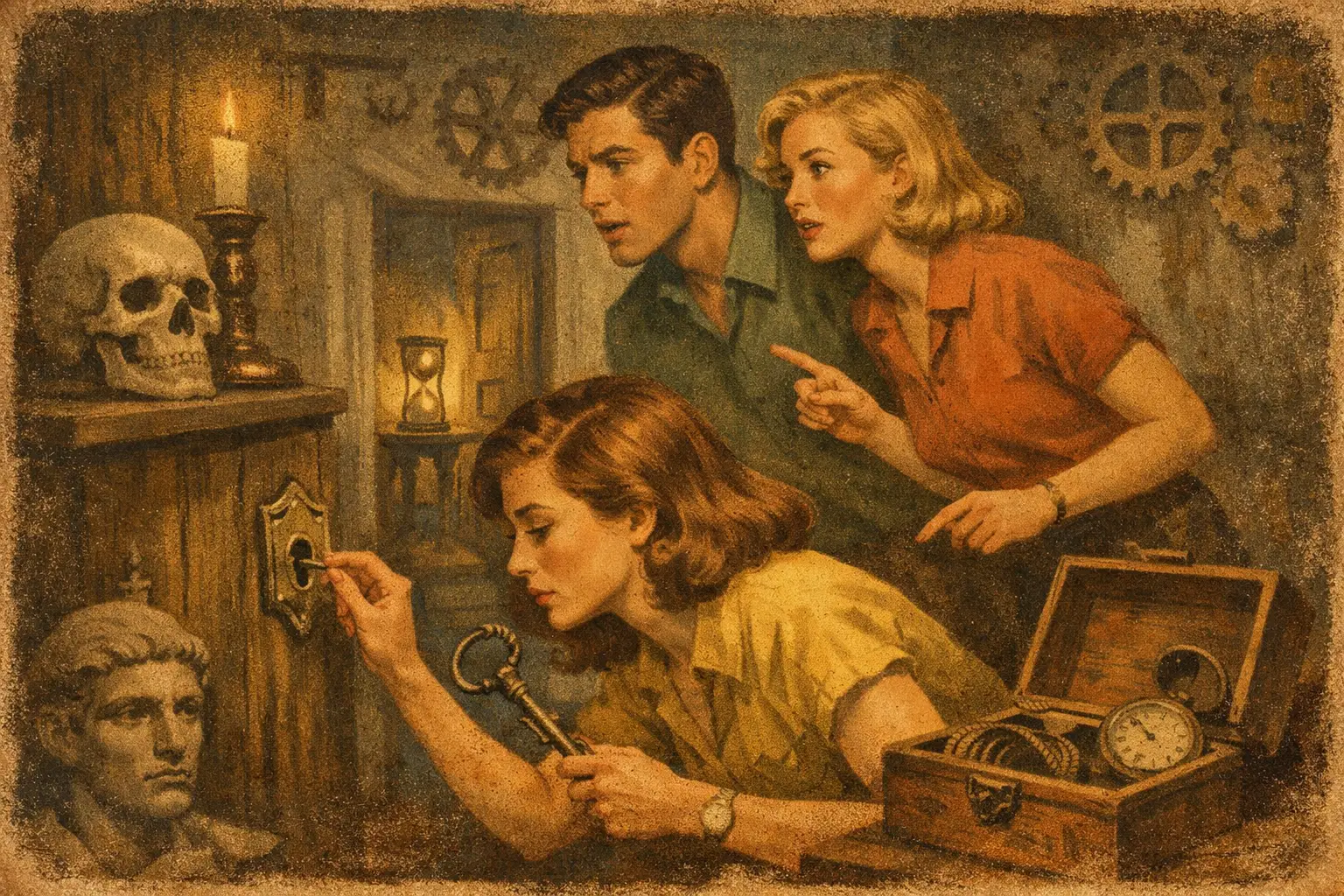
You booked an escape room, the clock is waiting, and now the questions start. What if you miss something obvious? What if you are terrible at puzzles? This escape room first timer guide is here to calm the pre-game nerves and help you walk in ready to play, not panic.
The good news is first-timers usually do better than they expect. Escape rooms are not IQ tests, and they are definitely not designed for one genius to carry the whole group. They are built for communication, curiosity, and momentum. If your team stays engaged and keeps talking, you are already playing the right way.
Escape room first timer guide basics
An escape room is a live, timed group game where you solve clues, open locks, uncover hidden information, and complete a mission before time runs out. Sometimes you are breaking out of a cell. Sometimes you are finding pirate treasure. Sometimes you are stopping a disaster with only minutes to spare. The theme changes, but the heart of the experience stays the same – search carefully, connect clues, and work together fast.
For a first visit, the biggest surprise is usually how hands-on it feels. You are not sitting around thinking quietly. You are moving, opening drawers, checking walls, reading notes, spotting patterns, and calling things out to your team. Every second counts, and that is what makes it fun.
It also helps to know what an escape room is not. It is not haunted house acting, even when the setting feels dramatic. It is not pure guesswork. And it is not about tearing the room apart like a movie scene. Good puzzle solving is more about observation than chaos.
What first-timers should expect before the game
Most escape room experiences begin before you ever enter the room itself. You check in, hear the rules, get your mission, and learn what not to touch. Pay attention here. The intro is not filler. It tells you how the room works, what kind of help is available, and how to stay safe while you play.
You should plan to arrive a little early. Rushing in late puts your team behind before the game even begins, and nobody wants to start an adventure already stressed out. Comfortable clothes are usually the right call, especially if you are coming from a day of sightseeing, dinner, or exploring Old Town.
If you are playing with family or friends, set expectations before the door closes. Some people love taking charge. Some like quietly piecing things together. Some will find clues that do not make sense until 20 minutes later. A good team makes room for all of that. The best first-time groups are not the loudest or smartest. They are the groups that share information clearly and keep the energy up.
How to actually do well in your first escape room
The smartest move for beginners is simple – say everything out loud. Found a key? Announce it. Saw a number written under a prop? Say it. Opened a box with a strange symbol inside? Tell the room. So much time gets lost when someone discovers an important clue and keeps it in their own head.
Search the room in a methodical way at the start. Do not have everyone pile onto the same shelf while half the room goes untouched. Spread out, scan carefully, and create a shared clue pile or clue area if the room allows it. Once items are found, bring them together so your team can start matching patterns and connections.
Another tip from any solid escape room first timer guide: use the room, do not fight the room. If a drawer does not open, it probably needs a code or key. If something feels bolted down, it is probably supposed to stay there. Escape rooms are designed with intention. Forcing things usually wastes time and can make your team miss the real solution sitting right in front of you.
When you solve one puzzle, reset your focus fast. Many teams spend too long celebrating a win or staring at the thing they just opened. Enjoy the moment, then move. New information often leads to the next step immediately.
Teamwork matters more than puzzle skill
This is where first-timers often overthink things. They assume escape rooms belong to puzzle pros, board game fanatics, or that one friend who always wins trivia night. Not true. A team full of brilliant individual thinkers can still struggle if nobody communicates. Meanwhile, a group of total beginners can crush a room if they stay organized and collaborative.
Good teamwork in an escape room looks like this: one person reads clues clearly, another spots visual patterns, another keeps found items grouped together, and somebody notices when the team is stuck and suggests a reset. Everyone contributes in different ways.
There is also a balance to strike. You want urgency, but not frantic energy that turns the room into a mess. You want leadership, but not one person grabbing every puzzle and shutting everyone else out. If your group starts tripping over itself, pause for ten seconds and regroup. Ask what has been solved, what has not, and what clues still need a home. That quick reset can save more time than another five minutes of random guessing.
When to ask for hints
Here is the truth – asking for a hint does not mean you failed. It means you want to keep the game moving and make the most of your hour. Experienced players know this, and first-timers should too.
The best time to ask for help is when your whole team has stalled, not just when one person is confused. If three or four people are all staring at the same puzzle with no new ideas, a hint can give you the nudge you need without spoiling the fun. Waiting too long can create a time crunch that is much harder to recover from.
That said, not every stuck moment needs a hint. Sometimes your team simply has not shared all the information yet. Before asking, do a quick verbal recap. What numbers have been found? Which locks are still closed? Which symbols, words, or objects have not been used? A lot of first-time breakthroughs happen in that recap.
Common mistakes first-timers make
The biggest mistake is treating every object like it must matter. Some room decor is there for atmosphere, and some clues are only useful later. If your team gets obsessed with one weird prop for ten minutes, you can burn valuable time. Stay curious, but stay flexible.
Another common mistake is solving in silence. Escape rooms reward loud thinking. If you are the kind of person who likes to process quietly, push yourself to speak up more than usual. Your half-formed thought might be exactly what another teammate needs.
Groups also lose time by ignoring obvious organization. Put used keys aside. Separate solved clues from unsolved ones. Keep combination locks near the clues that likely open them. Small habits make the room feel less chaotic, especially when the clock starts getting loud in your head.
And yes, some first-timers waste energy trying to be too cool. Do not worry about looking silly. Check the obvious places. Read the paper twice. Try the simple connection before inventing a complicated theory. Escape rooms love hiding answers in plain sight.
Picking the right first room
Not every first game should be the hardest one on the menu. If your group is mixed in age, attention span, or puzzle experience, choose a room that sounds fun first and difficult second. Theme matters more than people think. A team that feels excited by the story will usually stay more engaged under pressure.
For vacation groups, families, birthdays, and friend outings, a private game often makes the experience better. You can communicate freely, joke around, and play at your own pace without worrying about strangers changing the group dynamic. That is one reason places like Key West Room Escape work so well for group adventures – you get the challenge, the themed fun, and the shared win-or-lose moment all in one shot.
If anyone in your group has mobility concerns, younger kids, or a strong dislike of dark or intense environments, ask questions before booking. A great experience is not just about difficulty. It is about fit.
How to have more fun, even if you do not escape
Here is the part people remember most: the fun is not reserved for teams that beat the clock. Yes, escaping feels great. But the laughs, close calls, surprise reveals, and team chemistry are the real payoff. Nobody walks out talking only about the final lock. They talk about the clue someone almost sat on, the bizarre theory that made everyone laugh, and the moment the whole room suddenly clicked.
So give yourself permission to enjoy the game while it is happening. Stay in the story. Celebrate small wins. Keep everyone involved. If one teammate has gone quiet, pull them back in. If the pressure spikes, take a breath and refocus. The timer adds excitement, but it should not steal the fun.
Your first escape room does not require perfect logic or master-level strategy. It just asks you to show up, pay attention, and play all in. Once you do, the nerves usually disappear fast – and there is a very good chance you will start planning the next room before you even leave.