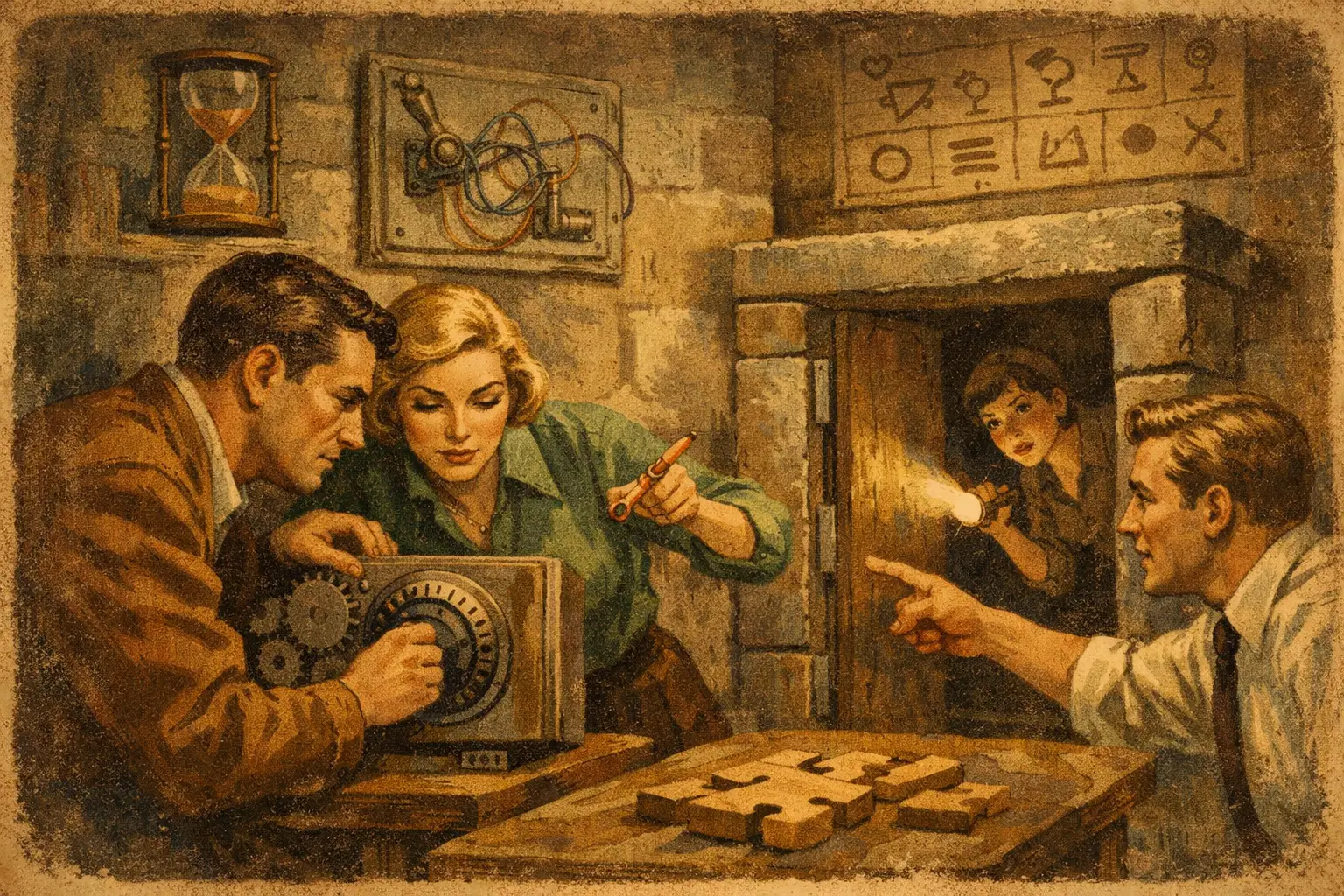
One person is shouting out a clue, someone else is digging through a drawer, and the quietest person in the group suddenly spots the pattern everyone missed. That is how escape rooms improve communication in real time – not with a lecture, but with a clock ticking, a locked box waiting, and a team that has to get on the same page fast.
That pressure is exactly what makes the experience so useful. In a good escape room, nobody gets very far by working in total silence or trying to be the lone genius. You win by sharing information clearly, listening closely, and adjusting quickly when a plan is not working. It is fun first, of course. But it is also one of the easiest ways to watch communication habits show up out in the open.
Why how escape rooms improve communication is easy to see
Most group activities only show one side of teamwork. Dinner lets people talk, but there is no real urgency. A meeting has structure, but not much excitement. An escape room puts people in a live challenge where communication has an immediate effect on what happens next.
If someone finds a key and forgets to say it out loud, the team loses time. If one player dominates every decision, useful ideas can get buried. If the group starts sharing discoveries in a simple, organized way, progress speeds up almost instantly. Cause and effect becomes obvious fast.
That is why escape rooms are such a strong communication exercise for families, friends, coworkers, and travel groups. You are not discussing teamwork in theory. You are using it every minute.
Everyone has to talk, and everyone has to listen
In everyday life, groups often fall into familiar roles. The loudest person leads. The most organized person keeps track of details. The more reserved people may hang back, even when they notice something important. Escape rooms shake that up.
A clue can come from anywhere. The person searching a bookshelf may spot a hidden symbol. Someone across the room may realize it connects to a code found ten minutes earlier. Another player may be the one who understands how those pieces fit together. Suddenly, communication is not about who talks the most. It is about whether the right information gets to the right person at the right time.
That shift matters. Teams start learning that useful communication is not just speaking up. It is also paying attention, repeating key details, and making space for everyone to contribute. In many groups, the best moment comes when someone says, “Wait, say that again,” and the whole puzzle clicks.
Escape rooms reward clear communication, not perfect communication
No team communicates perfectly under pressure. That is part of the fun. People talk over each other. Someone forgets to mention an important clue. Another person runs with the wrong idea for three full minutes before the team course-corrects. That does not mean the group is failing. It means the group is learning how to communicate better while the challenge is happening.
Escape rooms reward teams that keep their communication simple. Short updates help. Clear observations help. So does saying what has already been tried, so the team does not waste time repeating the same move.
This is especially useful for groups who do not spend much time solving problems together. A family on vacation, a group of friends celebrating, or coworkers from different departments may not have an established rhythm yet. The room gives them one quickly because the game demands it.
Pressure reveals habits fast
A countdown changes the way people interact. With every second ticking away, communication habits become easier to spot. Some groups stay calm and organized. Some go full pirate mutiny for a few minutes before settling down. Either way, the room gives instant feedback.
Under time pressure, weak communication shows up as confusion, repeated effort, and missed connections. Strong communication shows up as concise updates, quick handoffs, and active listening. You can almost feel the difference in the room.
This is one reason escape rooms work so well for team building. They compress a lot of group behavior into a short experience. Instead of waiting weeks to notice how a team handles stress, you can see it in under an hour. That does not mean every communication issue gets fixed on the spot. It does mean the patterns become easier to recognize and improve.
How escape rooms improve communication for different groups
The benefit is not limited to corporate teams. Families use escape rooms to get everybody engaged at once, which is not always easy on vacation. Friends learn how each person thinks when there is a shared objective instead of a casual hangout. Birthday groups and bachelor or bachelorette parties get something better than small talk because the challenge gives everyone a reason to interact.
For coworkers, the value is slightly different. Escape rooms can flatten the usual hierarchy for an hour. The manager does not automatically have the best answer. The intern may notice the hidden clue first. A quieter employee may be the best at spotting patterns. That change can improve communication because people start responding to ideas based on usefulness, not title.
For tourists and local groups, the appeal is even simpler. It is a fun way to connect. Instead of everyone staring at their own phone, the whole group is chasing the same goal. That creates the kind of shared energy people remember.
Better communication starts with small behaviors
The biggest gains usually come from very basic habits. Teams that do well in escape rooms tend to say what they find right away. They repeat important numbers or symbols so others hear them. They separate useful clues from already-solved distractions. And when a task needs two people, they ask directly instead of hoping someone notices.
These are not flashy skills, but they matter. Good communication in an escape room is often less about inspiring speeches and more about clean, timely updates. “I found a key.” “This lock takes four digits.” “We already used that code.” Simple beats complicated when the clock is running.
That is also why escape rooms feel accessible. You do not need special training to communicate better in the game. You just need to be present, speak clearly, and listen when others do the same.
Not every team communicates the same way
Here is the trade-off: there is no single perfect style. Some teams solve best by spreading out and reporting back. Others do better staying close together and working one puzzle at a time. A highly energetic group may thrive by tossing out ideas rapidly. A quieter group may progress more steadily with less noise.
It depends on the players, the room design, and how comfortable the group feels with each other. A family with younger kids may need more verbal encouragement and simpler coordination. A corporate group may need to break habits of overexplaining or competing for control. A friend group may already be comfortable talking but need to get better at listening.
The point is not to force everyone into one communication style. The point is to help the group find a style that actually works under pressure.
The fun part matters more than people think
If this all sounds a little like training camp, here is the good news: people improve communication faster when they are having a good time. That is one of the secret strengths of escape rooms. The challenge is serious enough to matter, but playful enough that mistakes do not feel heavy.
When teams laugh, reset, and keep moving, they communicate more naturally. People are more willing to speak up, suggest ideas, and admit when they are stuck. That lowers the pressure in a good way, even while the countdown keeps the energy high.
In a destination like Key West, that balance feels especially right. You want an activity that is exciting and memorable, but also easy to jump into with your group. An immersive game does exactly that. It gives you a story, a mission, and a reason to work together right now.
What groups often take away after the game
Once the final lock opens – or the clock wins this round – most groups notice the same thing. They remember the moments when communication changed the game. The clue that only mattered because someone called it out. The puzzle solved because one person listened instead of interrupting. The comeback that happened when the team got organized and started sharing information better.
That is what makes escape rooms more than just a clever way to spend an hour. They create a setting where communication is visible, useful, and fun to improve. You do not need a workshop binder or a trust fall. You need a challenge worth solving and a team willing to talk, listen, and think together.
If your group wants something more exciting than another ordinary outing, this is a pretty great place to start. Crack the code, race the clock, and pay attention to what happens when everybody truly works as a team!!