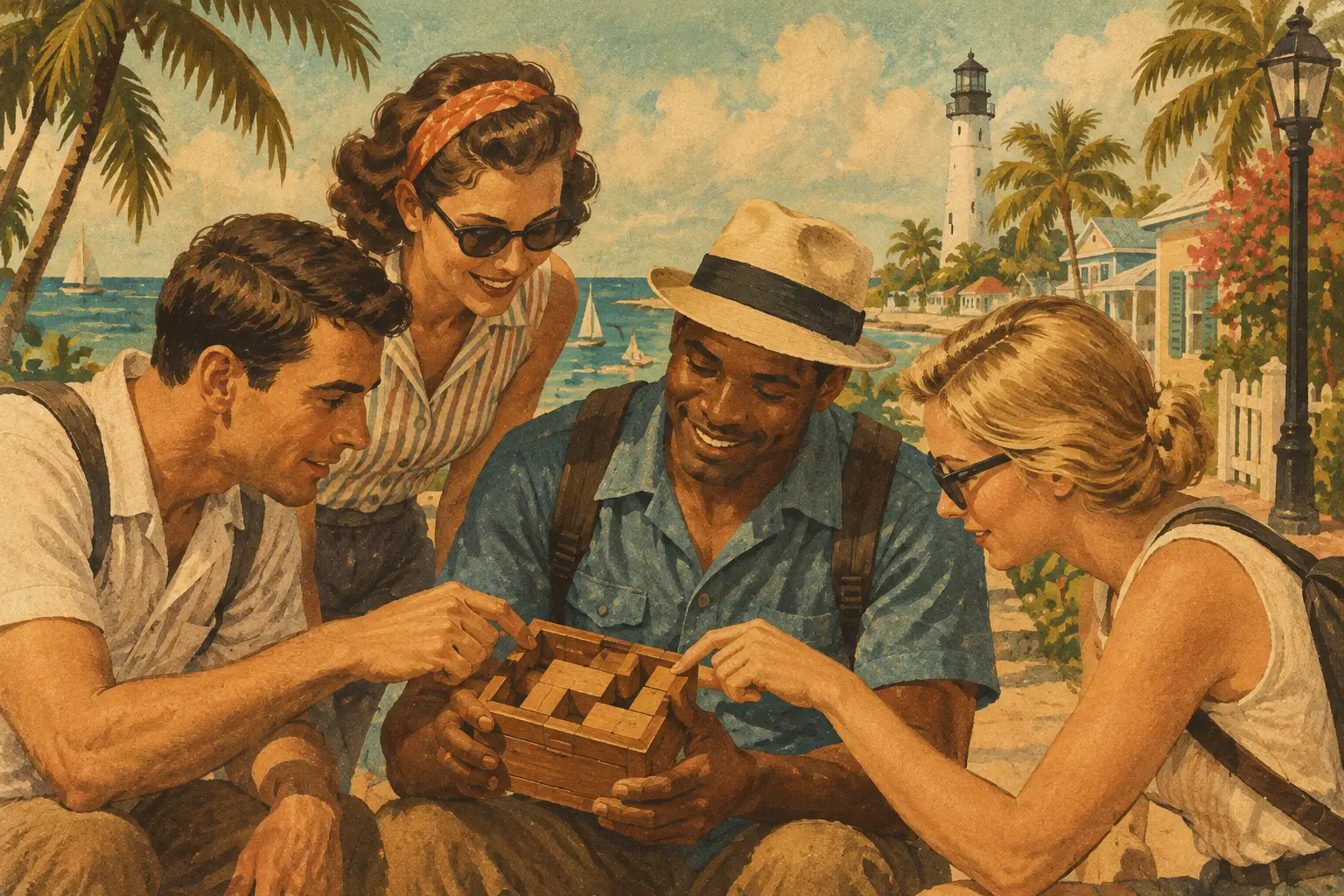
A great outdoor clue trail changes the way you see a place. That historic marker becomes a suspect. That colorful doorway might hold a pattern. That street corner you would have walked right past becomes the next move in your mission. Use this guide to outdoor clue trails to turn a Key West stroll into a real group adventure – one with clues to crack, stories to spot, and plenty of bragging rights at the finish!
What Makes an Outdoor Clue Trail So Fun?
An outdoor clue trail is part scavenger hunt, part puzzle game, and part sightseeing adventure. Instead of simply following a tour guide or checking landmarks off a list, your group works together to interpret clues, notice details, and decide where to head next.
That is the magic of it: the city is not just the backdrop. It is the game board. In Key West, that can mean looking closely at Old Town architecture, reading signs differently, spotting a bit of island history, or connecting the dots between pirate lore and local landmarks.
Unlike a traditional escape room, there may not be four walls or a ticking digital clock. But the pressure is still delightfully real when your friends are waiting for an answer, the Florida sun is shining, and your group is one clue away from a breakthrough. Every person sees something different, which makes this kind of adventure especially good for families, vacation groups, birthday crews, and team-building outings.
Plan Your Outdoor Clue Trail Before You Start
The best clue trails feel spontaneous while being just organized enough to keep the fun moving. A little preparation prevents the classic vacation problem: half the group is hungry, one person is lost, and everyone is debating whether that clue refers to a rooster or a conch shell.
Pick a route with personality
Choose an area that is easy to walk, packed with visual details, and interesting even between clues. Old Town Key West is a natural fit because it rewards curious eyes. You will find historic homes, tropical gardens, lively streets, unusual signs, local art, and plenty of island character within a walkable area.
Keep the route compact. A clue trail that involves long stretches with nothing to notice can drain the energy from the group. For most visitors, a route that lasts 60 to 90 minutes is the sweet spot. It is enough time to feel like an adventure without taking over the entire day.
Think about the trade-off between a shorter route and a more ambitious one. A short trail is better for younger kids, first-day visitors, or groups trying to fit in a beach stop, dinner, or sunset plans. A longer trail works well for puzzle fans who want more story, more walking, and a bigger challenge.
Match the challenge to your crew
Not every group wants the same kind of puzzle. Families with kids may enjoy visual clues, simple wordplay, and a clear path from one stop to the next. Adults on a getaway might prefer layered riddles, historical references, or challenges that require everyone to compare observations.
Avoid making every clue difficult in the same way. If every answer depends on reading tiny text or knowing local history, some players will end up watching from the sidelines. Mix it up. Use one clue that requires counting, another that asks players to spot a symbol, and another that rewards a clever connection.
A good trail lets different people shine. The detail-noticer, the map reader, the history fan, and the friend who says, “Wait, look at that!” all get their moment.
Make the rules clear at the beginning
Before clue number one, decide how your group will play. Are you racing the clock? Taking turns reading clues? Allowing phone searches, or keeping it old-school? There is no single right answer, but uncertainty can turn into arguments fast.
For a friendly competition, split into teams only if your route has enough room for groups to move without constantly following one another. For most families and travel groups, one shared team is more fun. You get the big reveal together, and nobody gets left behind because they stopped to take a photo.
How to Solve Clues Without Missing the Fun
The fastest group is not always the one that sprints from point to point. Outdoor clue trails reward observation first. When you reach a location, pause for a minute before guessing. Look up, down, across the street, and behind you. The answer is often hiding in plain sight.
Read each clue aloud. It sounds simple, but it gives everyone a chance to hear a word or phrase differently. A clue about a “captain,” for example, may refer to a boat, a name, a statue, a historic figure, or even the name painted on a building. Do not lock onto the first idea too quickly.
If your group is stuck, break the clue into pieces. Ask what you know for sure, what detail you may be overlooking, and whether the clue is asking for a place, a number, a word, or an object. Then give yourselves a time limit. Spending 15 minutes arguing over one riddle is not heroic. It is a sign to make your best call, use a hint if available, and keep the adventure rolling.
Phones can help, but they can also steal the moment. Use them for maps, photos, and confirming practical details. Do not let one person quietly search every answer while the rest of the group stands around. The fun is in the collective “Aha!” not in watching someone type faster than everybody else.
A Guide to Outdoor Clue Trails in Key West: Play Smart
Key West has its own rhythm, and a little local awareness makes a clue trail better. Heat, afternoon showers, cruise-ship crowds, and busy Duval Street can all affect your route. Start earlier in the day if your group does not love peak heat, or choose a later start when the light is softer and the streets feel more relaxed.
Bring water. Seriously. Puzzle-solving gets harder when everyone is thirsty and pretending they are not. Comfortable shoes matter too. This is an island adventure, not a fashion endurance test.
Be mindful of where you stop. Do not block doorways, crowd private property, or treat a neighborhood like a movie set. The best outdoor games add to the atmosphere of a place without getting in the way of the people who live and work there.
And keep an eye on your group. Key West invites wandering, especially when there is a great photo opportunity or a suspiciously good-smelling bakery nearby. Assign a navigator, agree on meeting points, and make sure younger players know not to dart across streets in pursuit of the next clue.
Add a Story to Raise the Stakes
A trail is more memorable when the clues are connected by a simple mission. Maybe your group is tracking a missing pirate map, recovering a coded message from an old island character, or piecing together the story behind a fictional Key West mystery. You do not need a Hollywood-sized plot. You need just enough story to give each stop a purpose.
Build the story around the location rather than forcing random riddles onto it. A nautical mystery belongs near the waterfront. A historical clue works best where the details can support it. A strange local legend becomes more entertaining when players can see the setting that inspired it.
This is one reason a professionally designed city puzzle experience can be a great choice for visitors. At Key West Room Escape, the goal is not simply to hand your group a list and send you walking. It is to turn shared problem-solving and Key West flavor into an adventure with momentum.
Keep the Group Energy High
The best clue trails make room for both competition and laughter. Celebrate correct answers, even the obvious ones. Let the kids read a clue aloud. Give the person who spotted the hidden detail their well-earned victory speech. Take a photo when your group reaches a landmark or solves a particularly sneaky puzzle.
Do not overpack the schedule around the trail. Leave time afterward for a cold drink, lunch, or a wander through town. That gives your group a chance to retell the funny wrong guesses and relive the clue that had everyone stumped.
When you head out, bring water, charge your phone, put on comfortable shoes, and appoint someone to read the first clue. Then look closer than you normally would. The next answer may be painted above a doorway, tucked into a historic detail, or waiting at the end of the block. Go crack the code!