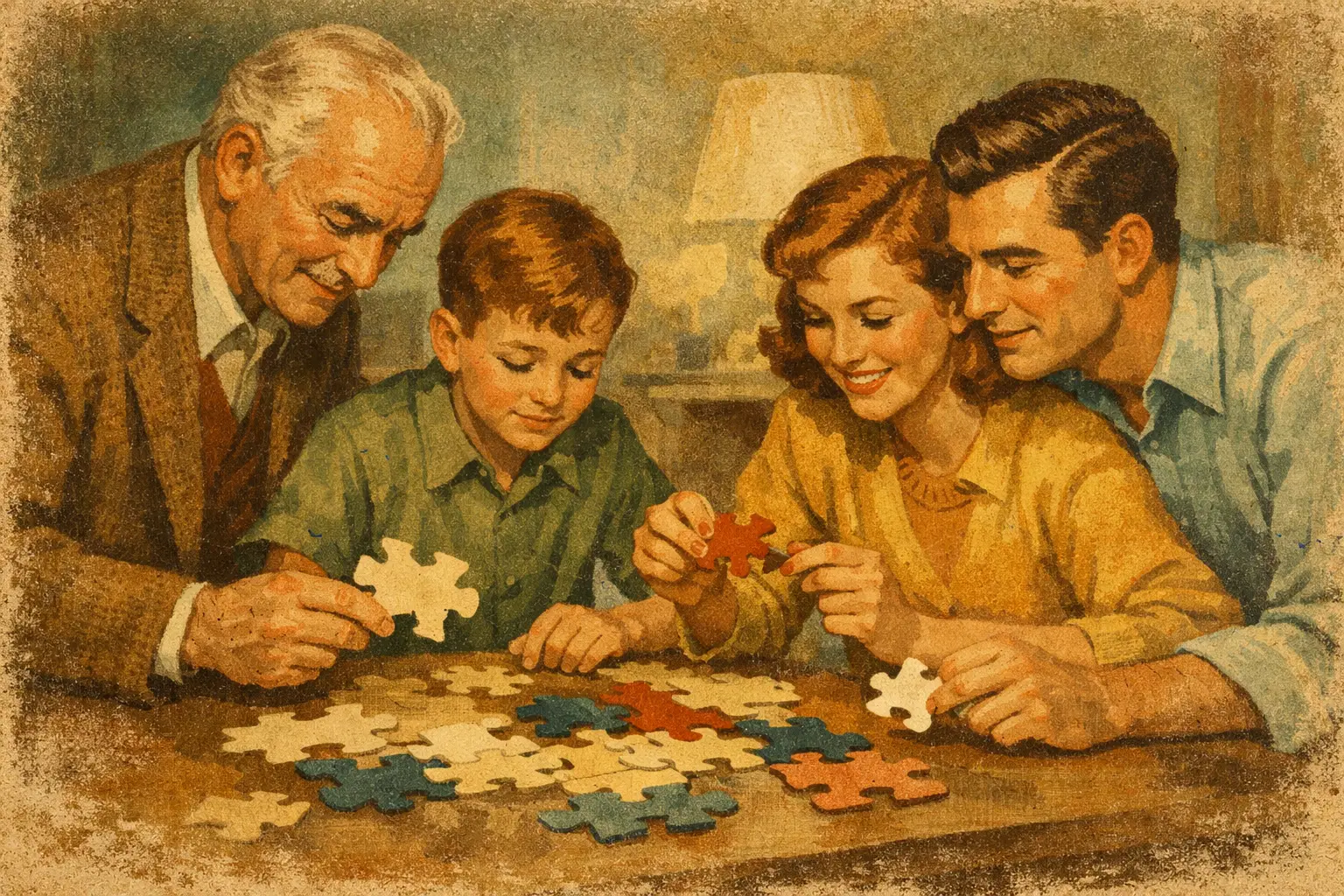
A 10-year-old spots the tiny symbol everyone else missed. A grandparent remembers a historical detail that cracks open the next clue. One competitive cousin is already reaching for the lock. That is the magic of a mixed-age escape room crew – if you know how to manage mixed age puzzle teams without letting the loudest players take over.
The goal is not to turn your group into a board meeting. You are here to chase clues, laugh at wrong answers, and beat the clock! A little structure at the start helps every player get a moment to shine when every second counts.
Start With a Game Plan, Not a Lecture
Before the door closes and the countdown begins, take 60 seconds to set the tone. Tell the group that every observation counts, that clues should be said out loud, and that nobody gets to claim a puzzle forever. This is especially useful when your team includes kids, teens, parents, grandparents, coworkers, or friends who have never played together before.
A simple agreement works better than a long list of rules: if you are stuck for a few minutes, ask for fresh eyes. If you solve something, announce what changed. If someone has an idea, let them try it before dismissing it. Escape rooms reward momentum, not ego.
The best teams are not always the ones with the most experienced puzzlers. They are the teams that share information quickly. A child may notice a color pattern because they are not overthinking it. An adult may recognize a map reference or a wordplay trick. Give both observations the same airtime.
Give Everyone a Job Without Making It Feel Like Homework
Mixed ages often mean mixed confidence levels. Some players will sprint toward every locked box. Others may hang back because they do not want to be wrong. A few light roles can get everyone moving without turning the adventure into a spreadsheet.
Ask one person to keep loose track of used keys and solved codes. Have a strong reader handle clue cards when there is lots of text, but invite younger players to search for matching shapes, objects, and hidden details. Let the hands-on people work mechanisms while someone else checks the room for connections. Rotate naturally as new puzzles appear.
The trick is to avoid assigning roles by age alone. Kids are not just “the searchers,” and adults are not automatically “the thinkers.” A teenager who loves logic puzzles may be your codebreaker. A grandparent with sharp attention to detail may spot the one item that does not belong. Let interests lead whenever possible.
Keep One Person Watching the Big Picture
Every group benefits from a friendly coordinator. This should not be a bossy captain barking orders. It is the player who says, “We have three clues on this table. Are they connected?” or “That key did not work here. Where else have we seen a lock like that?”
For family groups, an adult can take this role while making sure younger players get a turn. For corporate teams, choose someone who can encourage participation without slipping into workplace mode. The room is not a performance review. It is a pirate lair, a mystery, or a race against time. Keep it fun!
How to Manage Mixed Age Puzzle Teams When Energy Levels Differ
Age is not the only difference in a group. Attention spans, mobility, puzzle experience, reading comfort, and competitiveness can vary wildly. That is normal. Great team management means creating more than one way to contribute.
If younger players are bouncing from clue to clue, give them a mission with a clear finish line: find every item with a star, collect numbers, or check which objects open. If adults are stuck in analysis mode, encourage them to test the obvious idea. Sometimes the suspicious painting is just a suspicious painting. Sometimes it is exactly where the clue is hiding.
For players who prefer not to crouch, climb, or squeeze into tight spaces, keep visible tabletop puzzles and clue tracking within reach. If a player needs extra time to read or process a clue, do not rush them out of the moment. Another teammate can keep searching while they work. Parallel progress is your best friend.
Competitive groups need a little extra care. A race against the clock is exciting. Racing each other inside the room can leave half the team behind. Frame success as a shared win: the group escapes together, or the group does not. Celebrate the person who finds a clue and the person who figures out how to use it.
Make Communication Loud, Clear, and Kind
Most escape room slowdowns are not caused by impossible puzzles. They happen because one person finds something useful and forgets to tell the room. Create a habit of calling out discoveries as soon as they happen.
Say what you found, where you found it, and what it looks like. “There is a brass key under the desk” is much more helpful than “I got something!” If a code is tested and fails, announce that too. Repeating the same dead end wastes precious minutes and can frustrate players who were not in the first conversation.
Keep the language positive. Replace “No, that is wrong” with “Let’s test that after we check this symbol.” Instead of grabbing a puzzle from someone’s hands, ask, “Want another set of eyes?” This matters even more when adults and kids play together. Kids will take bigger creative swings when they know a wrong guess will not earn an eye roll.
Know When to Ask for a Hint
Hints are not a defeat. They are a tool for keeping the adventure moving. If the entire team has been circling the same puzzle, talking in loops, or trying random combinations, ask for help before frustration takes over.
A good hint should point your group back toward something you already have, not hand over the finish line. Use it to restore momentum, then let the team make the final connection. This is particularly helpful with mixed-age groups because the pace needs to feel exciting for experienced players and approachable for first-timers.
At Key West Room Escape, the fun is in the shared “aha!” moment, not in proving who can suffer through a dead end the longest. Keep the clock moving and the team smiling.
Let Kids Lead Sometimes
Adults often take charge without realizing it. They read faster, move faster, and may feel responsible for getting the most out of the booking. But if kids are part of the team, give them real ownership of a clue.
Try asking, “What do you think this means?” and then wait for the answer. Let them enter a code they helped solve or turn the key they found. Those small moments transform them from spectators into teammates.
That does not mean pretending every idea is right. It means giving ideas a fair test. When an idea fails, turn it into progress: “Good try. Now we know those numbers are not for this lock.” That is exactly how strong puzzle teams operate.
Do a Quick Reset When the Room Gets Chaotic
Sometimes the room hits peak chaos. Props are spread everywhere, three conversations are happening, and someone is trying a code for the fifth time. Pause for 20 seconds and reset.
Gather the group near the center of the room. Name what has been solved, what items are still active, and which puzzle needs fresh eyes. Then split into two or three small efforts instead of having everyone crowd around one lock. This tiny reset can save a surprising amount of time.
Keep it light. A quick “Pirate crew meeting!” or “Mystery squad huddle!” works far better than sounding annoyed. The point is to get everyone back into the story and back on the same mission.
When the countdown starts, your mixed-age team does not need identical skills or identical ideas. It needs curiosity, clear communication, and room for every player to make a move. Let the youngest clue hunter search boldly, let the seasoned solver connect the dots, and let the whole crew enjoy the moment that final lock clicks open.