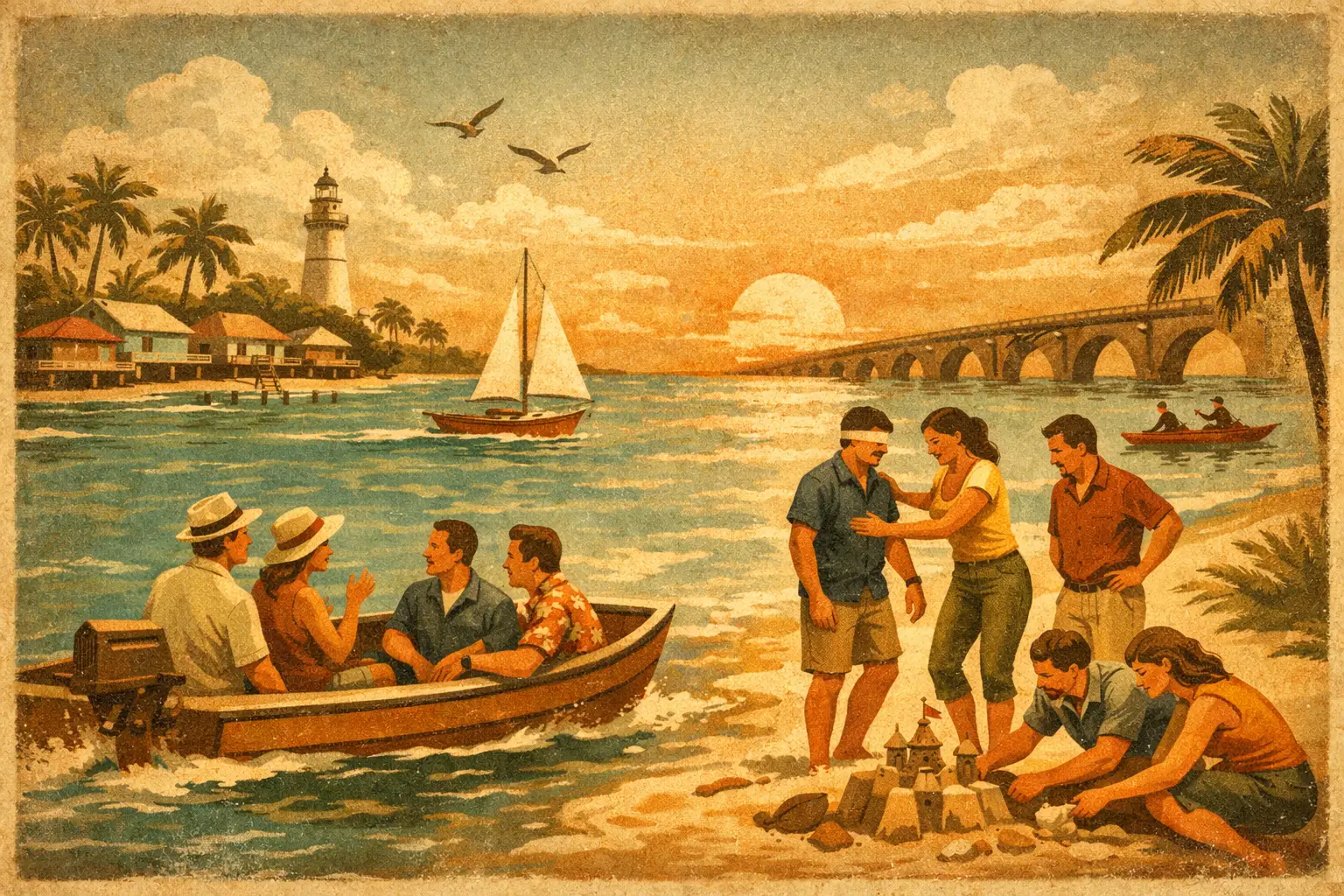
A conference room can hold a meeting. It cannot compete with turquoise water, Old Town streets, and a group trying to crack a pirate’s code before the clock hits zero! This guide to destination team building is for planners who want more than a hotel ballroom, a slide deck, and a polite round of applause. The goal is to give your team a shared story they will still be talking about on the flight home.
Destination team building works best when the place is part of the experience. In Key West, that could mean a scavenger-style challenge through historic streets, a private boat adventure, or an escape room where every clue needs a different kind of brain. Fun is not a side effect here. It is the engine that gets people communicating, adapting, and cheering each other on.
Start With the Outcome, Not the Activity
Before booking a single activity, decide what your team needs from the trip. A newly merged department may need low-pressure ways to get acquainted. A remote team meeting face-to-face for the first time may need opportunities for real conversation outside work. A high-performing group that has been running hard may simply need to blow off steam together.
Be specific. “Better teamwork” sounds good, but it is hard to plan around. Try a clearer target: get cross-functional coworkers talking, build trust among new managers, celebrate a major launch, or help a team practice decision-making under a little friendly pressure. Once you know the purpose, you can choose experiences that support it instead of filling the schedule with random fun.
There is a trade-off to consider. A highly structured challenge can reveal communication habits fast, but it can feel like more work if your team is already stretched thin. A relaxed outing creates room for connection, but it may not give quieter people a natural reason to participate. The sweet spot is usually a mix of both.
Pick a Destination That Does Some of the Work
A destination should make people feel like they have left their regular routine behind. That is why Key West is such a strong setting for group travel. It is walkable, colorful, casual, and packed with character. Your team can move from a morning planning session to an outdoor adventure without spending half the day in transit.
The best destination team building itinerary leaves breathing room. Do not stack a breakfast meeting, a three-hour workshop, a group lunch, a boating excursion, dinner, and nightlife into one marathon day. People need time to recharge, especially if they are traveling across time zones or meeting coworkers in person for the first time.
Think in energy levels. Use the morning for focused sessions when attention is high. Plan your main group challenge in the afternoon, when people benefit from getting out of their seats. Keep evenings flexible enough for teammates to choose a quiet dinner, a sunset walk, or one more round of stories from the day.
Build the Trip Around One Can’t-Miss Group Challenge
Every great team trip needs a centerpiece: one activity that gets everyone involved and gives the group a common reference point. “Remember when Jamie found that clue?” is much more powerful than “Remember that nice catered lunch?”
Escape room games are a natural fit because they give everyone a job. One person spots details, another connects patterns, someone keeps the group organized, and somebody has the wild theory that turns out to be exactly right. The countdown adds excitement, but the real value is watching coworkers learn how each other think.
For teams visiting Key West, private experiences matter. A private game means your group can be loud, competitive, goofy, and fully present without sharing the room with strangers. Key West Room Escape offers themed private escape games, outdoor city puzzle experiences, and boat-based adventures that put local flavor right into the challenge. Pirate lore, island mysteries, and real teamwork beat another generic icebreaker every time.
Choose the format based on your group size and comfort level. A smaller leadership team may love being locked into a 60-minute puzzle mission together. A larger group may do better with multiple teams, staggered start times, or an outdoor experience that lets people spread out. If your group includes people with different mobility needs or comfort levels on the water, give clear options before the trip so no one feels pressured into an activity that is not right for them.
Make Participation Easy for Every Personality
The loudest person in the group is not always the best teammate. Destination activities should create openings for planners, observers, creative thinkers, competitive players, and people who need a moment to warm up before jumping in.
That starts with your instructions. Tell attendees what to expect: how long the activity lasts, whether it is indoors or outdoors, what to wear, how physical it is, and whether teams will compete. Surprises are fun inside the game. They are less fun when someone realizes they wore dress shoes for a walking challenge.
It also helps to set the right tone. Make it clear that the point is participation, not proving who is smartest or fastest. Friendly competition can bring big energy, especially with a silly prize or traveling trophy, but keep the stakes low. Nobody needs a performance review disguised as a vacation activity.
If managers are attending, encourage them to participate instead of directing from the sidelines. A leader who laughs at a wrong answer, asks for ideas, and lets someone else take the lead sends a stronger message than any welcome speech.
Handle the Logistics Before They Become a Buzzkill
A destination trip has moving parts: flights, hotel check-ins, transportation, weather, meal preferences, budgets, and schedules. Good planning does not make the trip feel corporate. It protects the fun from preventable chaos.
Start with a simple schedule that includes meeting points, start times, travel windows, and a contact person for each activity. Send it early, then send a short reminder shortly before the trip. Include practical details such as recommended arrival time, parking or pickup information, clothing guidance, and any age or participation rules if employees are bringing partners or families.
Budget for the full experience, not just the activity ticket. Transportation, gratuities, meals, water, snacks, and a little buffer for last-minute changes all matter. If the company is paying, say so clearly. If team members will need to submit expenses, explain the process before anyone orders the most mysterious item on the menu.
Weather deserves a backup plan in Key West. Outdoor and boat experiences can be unforgettable, but conditions can change. Have an indoor alternative available or build flexibility into the itinerary. A rained-out plan does not have to sink the day if you already know where the group can go next.
Turn the Fun Into a Useful Team Moment
You do not need to force a deep debrief after every activity. Let people enjoy winning, losing, and arguing over whether that one clue was “obvious.” Still, a few well-timed questions can help the experience stick.
Ask the group what helped them make progress. Did someone notice a detail everyone else missed? Did the team get faster once they stopped talking over each other? Did they split into smaller groups too soon, or not soon enough? Keep it light, specific, and connected to real work only when the connection is honest.
A five-minute conversation over drinks or at the next morning’s breakfast is plenty. The point is not to turn a pirate puzzle into a leadership lecture. It is to give people language for the strengths they saw in one another.
You can also capture the moment without making it feel staged. Take a team photo before the challenge, celebrate the finish with a group shot, and share a few candid photos afterward. For remote or distributed teams, those images help extend the value of the trip long after everyone is back at their desk.
A Simple Key West Team Building Flow
For many groups, a two- or three-day schedule is enough. Arrive on day one, keep the first evening casual, and give people time to settle in. Use day two for your main meeting block and signature team challenge, followed by a relaxed group meal. On day three, choose an optional outdoor activity or a short planning session before departures.
The key word is optional. Some people will want every minute of island adventure. Others will need coffee, shade, and an hour with no agenda. Giving people a little choice makes the trip feel like a reward, not a mandatory endurance event.
A destination team building trip earns its place on the calendar when people return with stronger connections and a little more confidence in each other. Give your group a real challenge, a great setting, and enough room to enjoy the island. Then let the stories do the bonding for you.