Are Escape Rooms Scary? What to Expect Inside

A locked door, a ticking clock, strange clues on the wall… it is fair to wonder, are escape rooms scary? Sometimes they can feel spooky, tense, or full of surprises. But that does not automatically mean you are signing up for a full-on haunted house experience.

For most groups, the biggest rush comes from racing the clock and realizing the answer has been hiding in plain sight. You might jump when a sound effect plays or get goosebumps in a pirate’s cabin after dark, but escape rooms are designed for teamwork, laughter, and that big “WE DID IT!” moment. The key is choosing an adventure that matches your crew.

Are escape rooms scary, or just exciting?

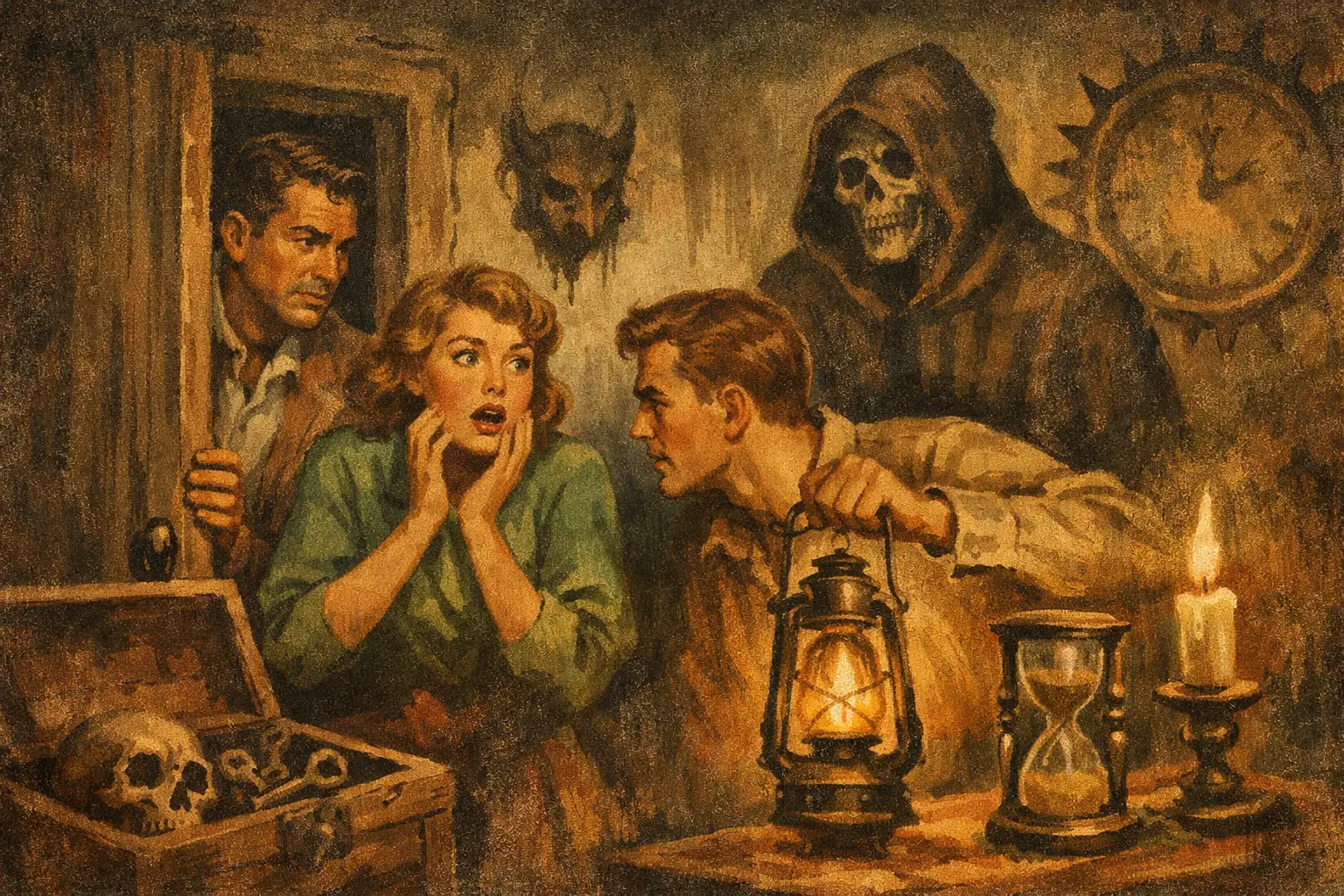
Escape rooms can be scary in a few different ways. A room may use dim lighting, eerie music, old journals, skeleton props, mysterious voices, or a story involving a missing treasure. Those details create atmosphere. They make the puzzles feel like part of an adventure instead of a stack of brain teasers on a table.

That is different from being a haunted attraction. A horror-focused escape room may lean into suspense, creepy imagery, or startling moments. A family-friendly pirate, detective, jailbreak, or treasure-hunt game usually aims for excitement first. The room might be dramatic, but the goal is still to crack codes, find clues, and beat the clock with your people.

It also depends on the player. One guest sees a dark corner and starts imagining ghosts. Another sees a dark corner and immediately searches it for a hidden key. Both reactions are part of the fun!

What makes an escape room feel scary?

The theme sets the mood, but several details can raise the suspense level. A countdown clock is the universal pressure cooker. Even a bright, cheerful room gets intense when your group has three minutes left and one final lock to solve.

Sound and lighting matter, too. A thunderclap, a creaking floorboard, a flashlight-only search, or a sudden change in music can make a harmless clue feel much bigger. Some games also use a storyline that puts your team in danger on paper: a cursed relic, a pirate trap, a secret experiment, or a villain’s lair.

Then there is the simple fact that you are working in an unfamiliar space. You do not know which drawer matters, which painting hides a clue, or what will happen after you enter the next code. That uncertainty creates a delicious little jolt of suspense.

Still, scary does not have to mean overwhelming. A well-run game gives players a challenge without making them feel helpless. You are there with your own group, working toward a clear goal, and game staff can provide hints when your team gets stuck.

How to choose escape rooms scary enough for your group

Before booking, read the game description closely. Words like “haunted,” “psychological horror,” “disturbing,” “intense,” “jump scares,” or “not recommended for young children” are strong signals that the room is built to frighten. If your group wants spooky fun, those details may be exactly what you want.

If you would rather keep the adventure light, look for themes built around treasure, espionage, historical mysteries, fantasy, jail breaks, or local legends. A pirate story can have shadowy secrets and still feel more swashbuckling than scary. A detective game can be tense without being creepy.

Ask direct questions before you book. Is there a horror element? Are there jump scares? Are there live actors? Is the room dark or loud? Is it a good fit for kids, teens, or someone who gets anxious in tight spaces? A quality escape room team should be happy to explain the experience clearly. No group should have to guess what they are walking into.

Private games are especially helpful for mixed groups. Your family, friends, coworkers, or celebration crew can set the energy together. You will not be paired with strangers, and everyone can focus on having fun at their own comfort level.

You are not actually trapped

The word “escape” can make first-timers picture being locked in a room with no way out. In a properly operated escape room, safety comes first. You should receive an introduction before the game, know how to reach staff if needed, and be able to leave if you have to.

This matters for anyone who feels claustrophobic, has anxiety around enclosed spaces, or simply wants reassurance before starting. Let the staff know. You do not need to prove anything by staying uncomfortable. The best escape room strategy is communicating with your team, and that begins before the clock starts.

Also, remember that escape games are not endurance tests. You generally do not need to crawl through narrow tunnels, perform risky physical stunts, or be physically strong to contribute. Observation, curiosity, pattern recognition, and clear communication win far more games than brute force.

How to handle the suspense once the clock starts

If you are nervous, give yourself a job right away. Search one section of the room, organize found objects, read every note aloud, or keep track of used codes. Being active turns nervous energy into useful energy.

Talk through what you see. In scary movies, somebody always wanders off alone. In an escape room, that person may miss the clue that the rest of the team needs. Stay connected, call out discoveries, and do not dismiss an idea just because it sounds odd. The weirdest thought is often the one that opens the next lock.

When a room feels intense, pause for a breath and look at the facts. You are with your group. You are playing a game. The eerie soundtrack is there to make the story more fun. Then get back to the mission!

For parents and group planners, it helps to set expectations before arriving. Tell younger players that there may be dark corners, timed puzzles, and surprising sounds, but that the adults and staff are right there. For a bachelorette party or friend group, decide whether you want spooky screams or a lighter adventure where the only scary thing is your friend’s ability to ignore an obvious clue.

Is a spooky escape room right for you?

A suspenseful game is a great pick if your group likes mystery movies, ghost stories, true-crime podcasts, pirate legends, or the thrill of solving a puzzle under pressure. It gives everyone a role: the bold searcher, the code breaker, the clue organizer, and the person who notices the tiny symbol nobody else saw.

Skip the scarier themes if someone in your group strongly dislikes horror, loud surprises, darkness, or tight-feeling environments. There is no wrong choice. A playful, adventurous room can be just as memorable, especially when your crew is celebrating a vacation, birthday, family night, or team outing.

At Key West Room Escape, the best adventure is the one your whole crew is excited to tackle. Pick a story that sparks curiosity, bring people who like to laugh under pressure, and give yourselves time to search every suspicious shelf.

The clock will tick. The clues will get stranger. And when your team finally connects the last piece, the scary part will be wondering why you did not spot it sooner!
Are Escape Rooms Scary? What to Expect Inside

A locked door, a ticking clock, strange clues on the wall… it is fair to wonder, are escape rooms scary? Sometimes they can feel spooky, tense, or full of surprises. But that does not automatically mean you are signing up for a full-on haunted house experience.

For most groups, the biggest rush comes from racing the clock and realizing the answer has been hiding in plain sight. You might jump when a sound effect plays or get goosebumps in a pirate’s cabin after dark, but escape rooms are designed for teamwork, laughter, and that big “WE DID IT!” moment. The key is choosing an adventure that matches your crew.

Are escape rooms scary, or just exciting?

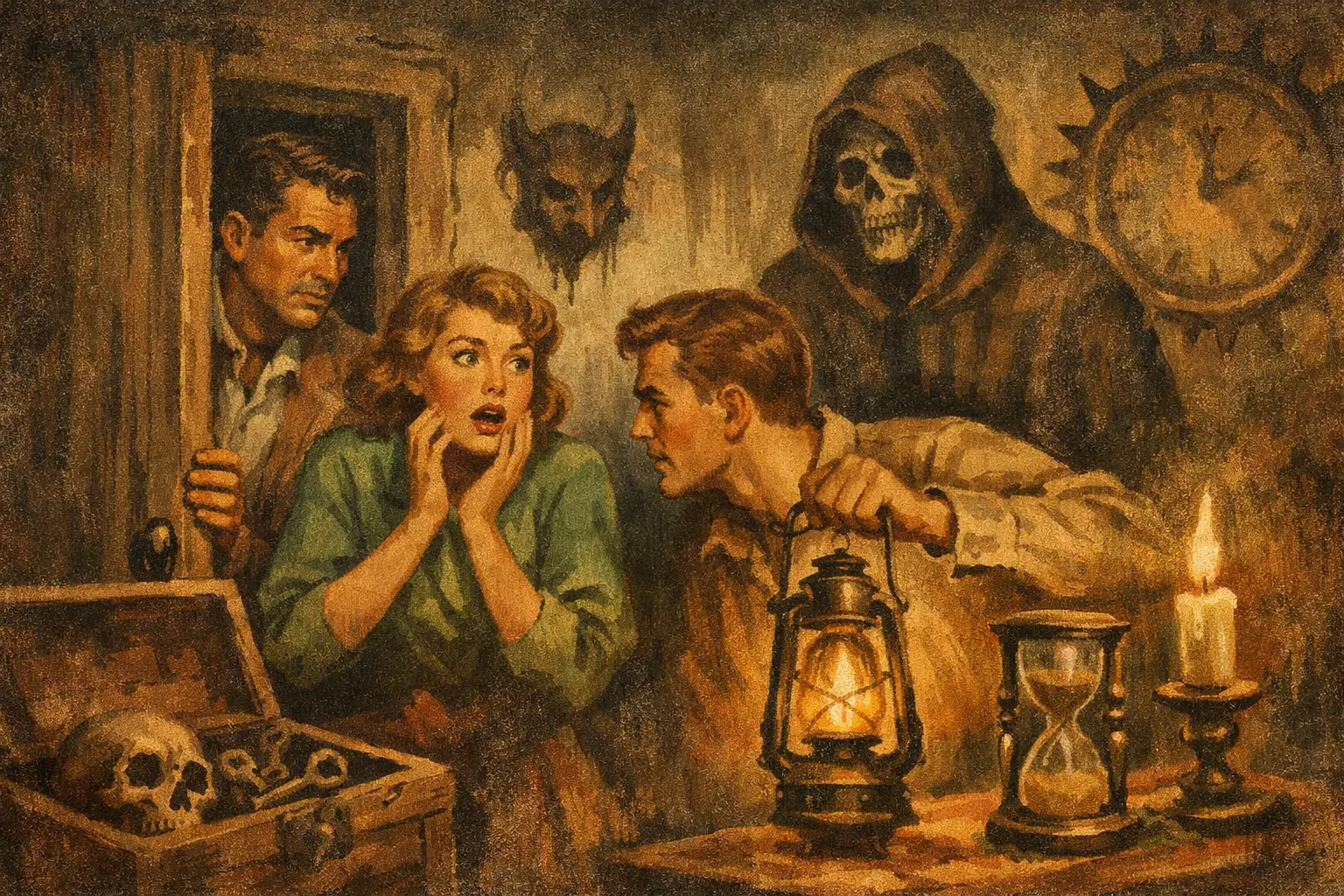
Escape rooms can be scary in a few different ways. A room may use dim lighting, eerie music, old journals, skeleton props, mysterious voices, or a story involving a missing treasure. Those details create atmosphere. They make the puzzles feel like part of an adventure instead of a stack of brain teasers on a table.

That is different from being a haunted attraction. A horror-focused escape room may lean into suspense, creepy imagery, or startling moments. A family-friendly pirate, detective, jailbreak, or treasure-hunt game usually aims for excitement first. The room might be dramatic, but the goal is still to crack codes, find clues, and beat the clock with your people.

It also depends on the player. One guest sees a dark corner and starts imagining ghosts. Another sees a dark corner and immediately searches it for a hidden key. Both reactions are part of the fun!

What makes an escape room feel scary?

The theme sets the mood, but several details can raise the suspense level. A countdown clock is the universal pressure cooker. Even a bright, cheerful room gets intense when your group has three minutes left and one final lock to solve.

Sound and lighting matter, too. A thunderclap, a creaking floorboard, a flashlight-only search, or a sudden change in music can make a harmless clue feel much bigger. Some games also use a storyline that puts your team in danger on paper: a cursed relic, a pirate trap, a secret experiment, or a villain’s lair.

Then there is the simple fact that you are working in an unfamiliar space. You do not know which drawer matters, which painting hides a clue, or what will happen after you enter the next code. That uncertainty creates a delicious little jolt of suspense.

Still, scary does not have to mean overwhelming. A well-run game gives players a challenge without making them feel helpless. You are there with your own group, working toward a clear goal, and game staff can provide hints when your team gets stuck.

How to choose escape rooms scary enough for your group

Before booking, read the game description closely. Words like “haunted,” “psychological horror,” “disturbing,” “intense,” “jump scares,” or “not recommended for young children” are strong signals that the room is built to frighten. If your group wants spooky fun, those details may be exactly what you want.

If you would rather keep the adventure light, look for themes built around treasure, espionage, historical mysteries, fantasy, jail breaks, or local legends. A pirate story can have shadowy secrets and still feel more swashbuckling than scary. A detective game can be tense without being creepy.

Ask direct questions before you book. Is there a horror element? Are there jump scares? Are there live actors? Is the room dark or loud? Is it a good fit for kids, teens, or someone who gets anxious in tight spaces? A quality escape room team should be happy to explain the experience clearly. No group should have to guess what they are walking into.

Private games are especially helpful for mixed groups. Your family, friends, coworkers, or celebration crew can set the energy together. You will not be paired with strangers, and everyone can focus on having fun at their own comfort level.

You are not actually trapped

The word “escape” can make first-timers picture being locked in a room with no way out. In a properly operated escape room, safety comes first. You should receive an introduction before the game, know how to reach staff if needed, and be able to leave if you have to.

This matters for anyone who feels claustrophobic, has anxiety around enclosed spaces, or simply wants reassurance before starting. Let the staff know. You do not need to prove anything by staying uncomfortable. The best escape room strategy is communicating with your team, and that begins before the clock starts.

Also, remember that escape games are not endurance tests. You generally do not need to crawl through narrow tunnels, perform risky physical stunts, or be physically strong to contribute. Observation, curiosity, pattern recognition, and clear communication win far more games than brute force.

How to handle the suspense once the clock starts

If you are nervous, give yourself a job right away. Search one section of the room, organize found objects, read every note aloud, or keep track of used codes. Being active turns nervous energy into useful energy.

Talk through what you see. In scary movies, somebody always wanders off alone. In an escape room, that person may miss the clue that the rest of the team needs. Stay connected, call out discoveries, and do not dismiss an idea just because it sounds odd. The weirdest thought is often the one that opens the next lock.

When a room feels intense, pause for a breath and look at the facts. You are with your group. You are playing a game. The eerie soundtrack is there to make the story more fun. Then get back to the mission!

For parents and group planners, it helps to set expectations before arriving. Tell younger players that there may be dark corners, timed puzzles, and surprising sounds, but that the adults and staff are right there. For a bachelorette party or friend group, decide whether you want spooky screams or a lighter adventure where the only scary thing is your friend’s ability to ignore an obvious clue.

Is a spooky escape room right for you?

A suspenseful game is a great pick if your group likes mystery movies, ghost stories, true-crime podcasts, pirate legends, or the thrill of solving a puzzle under pressure. It gives everyone a role: the bold searcher, the code breaker, the clue organizer, and the person who notices the tiny symbol nobody else saw.

Skip the scarier themes if someone in your group strongly dislikes horror, loud surprises, darkness, or tight-feeling environments. There is no wrong choice. A playful, adventurous room can be just as memorable, especially when your crew is celebrating a vacation, birthday, family night, or team outing.

At Key West Room Escape, the best adventure is the one your whole crew is excited to tackle. Pick a story that sparks curiosity, bring people who like to laugh under pressure, and give yourselves time to search every suspicious shelf.

The clock will tick. The clues will get stranger. And when your team finally connects the last piece, the scary part will be wondering why you did not spot it sooner!