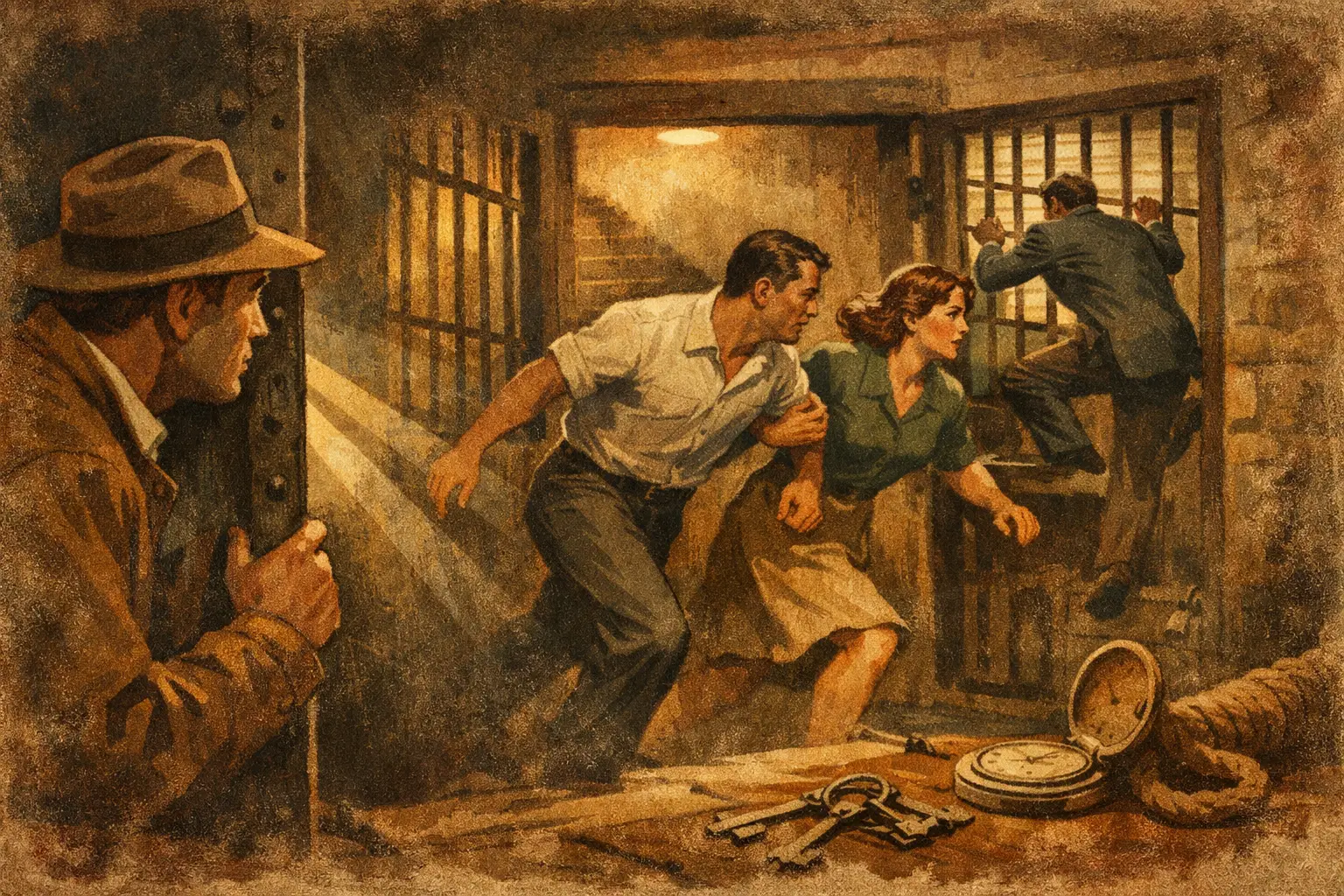
The cell door slams. The clock starts. Somewhere in the room, a clue is hiding in plain sight, and your crew has 60 minutes to turn panic into a plan. A jailbreak escape room experience is not about knowing how to pick locks or outsmart a real security system. It is a fast-paced, fictional adventure built around observation, teamwork, puzzles, and the glorious moment when a wild guess turns out to be exactly right!
For vacation crews, families, birthday groups, and competitive friends, a prison-break theme brings instant stakes to the game. You are not just solving a crossword in a room. You are building an escape plan together while every second counts.
What Makes a Jailbreak Escape Room Experience So Fun?
A great jailbreak game starts with a simple question: how do we get out? The answer is rarely simple. Your group may need to inspect a cell, find a hidden message, connect a suspicious object to a coded lock, or figure out what a prison warden has been trying to hide.
The theme gives every puzzle a purpose. A number is not merely a number when it could be a cell block code. A photo on the wall may be part of an inmate’s story. A locked box is not just another prop – it may contain the one item standing between your team and freedom.
That sense of story is what separates an escape room from a regular game night. You are moving through a shared mission, making decisions under pressure, and celebrating each breakthrough as a group. The best teams do not need to be puzzle experts. They need to stay curious, communicate clearly, and keep the energy up when the clock gets loud.
A jailbreak theme also works especially well for mixed groups. One person might spot a visual pattern, another may be great with wordplay, and someone else may notice that a clue everyone ignored ten minutes ago suddenly makes sense. There is room for different kinds of thinkers, which means grandparents, teens, coworkers, and longtime friends can all contribute.
What to Expect When the Clock Starts
Most escape room games begin with a short briefing. Listen closely. The game host will explain the rules, point out what is off-limits, and set the scene before your team enters. This is the time to ask practical questions, especially if someone in your group is new to escape rooms.
Once you are inside, expect the first few minutes to feel a little chaotic. That is normal! People tend to spread out, open drawers, inspect decorations, and call out every number they see. Let that happen briefly, then bring the group together. A jailbreak scenario rewards teams that can turn scattered discoveries into one organized plan.
You will usually encounter a mix of physical locks, combination puzzles, hidden compartments, logic challenges, and story-based clues. Not every object is part of the game, and not every clue is meant to be solved by one person alone. Often, one team member finds the information while another recognizes how to use it.
The goal is not to tear apart the room or race through every object at once. Escape rooms are designed to be solved with your brain, not brute force. If something does not open easily, pause. Look around. You may have the right lock but the wrong code, or the right idea but one missing piece.
The 60-Minute Pressure Is Part of the Adventure
A countdown changes the way a group thinks. At home, you can debate a puzzle for half an hour. In a jail escape room, you may have five minutes before you need to change direction. That urgency is where the laughs, dramatic theories, and heroic last-second solves come from.
Still, do not let the timer rush your team into silence. Fast communication beats frantic communication. Say what you find out loud. Tell the group when a lock has already been tried. If you use an item, put it in a clear spot so nobody searches for it again. Tiny habits save surprising amounts of time.
How to Give Your Crew a Real Shot at Escaping
There is no magic formula, and every room has its own twists. But groups that escape often share a few smart habits.
Start by searching with intention. Check the obvious areas, then notice details that fit the story: papers, markings, books, photos, symbols, labels, and unusual objects. Call out discoveries as you find them. A clue in one corner of the room might make no sense until someone finds its match across the cell.
Next, create a simple clue station. Put keys, coded notes, and objects you have not used yet in one visible place. Separate solved items from unsolved ones if you can. This keeps your team from repeating work and gives everyone a quick picture of what is still in play.
Avoid turning the room into a one-person show. The friend who always takes charge may be brilliant, but escape rooms are more fun and more successful when the whole group gets involved. Split up for the initial search, then regroup whenever the room starts to feel stuck. If three people are wrestling with one puzzle, ask the other players to look for fresh information instead.
Hints are not a defeat. They are part of the game. A good hint can move your crew past a mental traffic jam without giving away the whole answer. Use one when you have tested several reasonable ideas and the team is going in circles. Save time for the big finish rather than spending 15 minutes arguing over a clue that was meant to be seen from another angle.
Choose the Right Team Mindset
The strongest teams are not always the quietest or the smartest on paper. They are the teams that make space for everyone to speak up. The person who says, “This may be nothing, but…” often points to the detail that cracks the puzzle.
Keep the mood light, too. A wrong code is not a disaster. It is useful information. A strange theory can become a funny group memory, even when it leads nowhere. You are there to escape, of course, but you are also there to enjoy being trapped together for a perfectly reasonable amount of time.
Is a Jailbreak Theme Right for Your Group?
For many groups, absolutely. The stakes are easy to understand, the story is naturally suspenseful, and the setting makes every clue feel more dramatic. It is a strong choice for families with older kids and teens, friend groups looking for something beyond dinner and drinks, and travelers who want an indoor adventure between beach time and Old Town sightseeing.
It also works well for team building. A jailbreak game reveals how people share information, respond to pressure, and approach problems from different angles. That can make it more memorable than a typical meeting activity. Just keep the goal fun-first. Nobody needs a performance review while trying to decode a warden’s secret message!
The fit depends on your group. Very young children may need an adult to help them stay focused, while highly competitive players may want a room with tougher puzzles and plenty of time pressure. If anyone is nervous about small or dark spaces, ask about the room setup before booking. Escape room games are designed for entertainment, and game hosts can explain what to expect.
Make It Part of a Big Key West Day
A jailbreak escape room is an excellent reset between outdoor plans. Key West sunshine is legendary, but an hour of air-conditioned clue hunting can be exactly what a vacation crew needs after a walk down Duval Street or a day on the water.
At Key West Room Escape, private games keep your group focused on its own mission. You can cheer loudly, debate clues, and celebrate that final lock click without sharing the adventure with strangers. Arrive a little early, use the restroom beforehand, and give your team time to settle in before the countdown begins.
If you escape, enjoy the victory lap. If you do not, you will still leave with stories – who found the hidden clue, who insisted the mysterious symbol was “definitely a fish,” and who nearly solved the final puzzle with seconds to spare. That is the real prize: one hour where everyone put their phones down, leaned into the mission, and made a memory worth retelling long after the cell door opens.