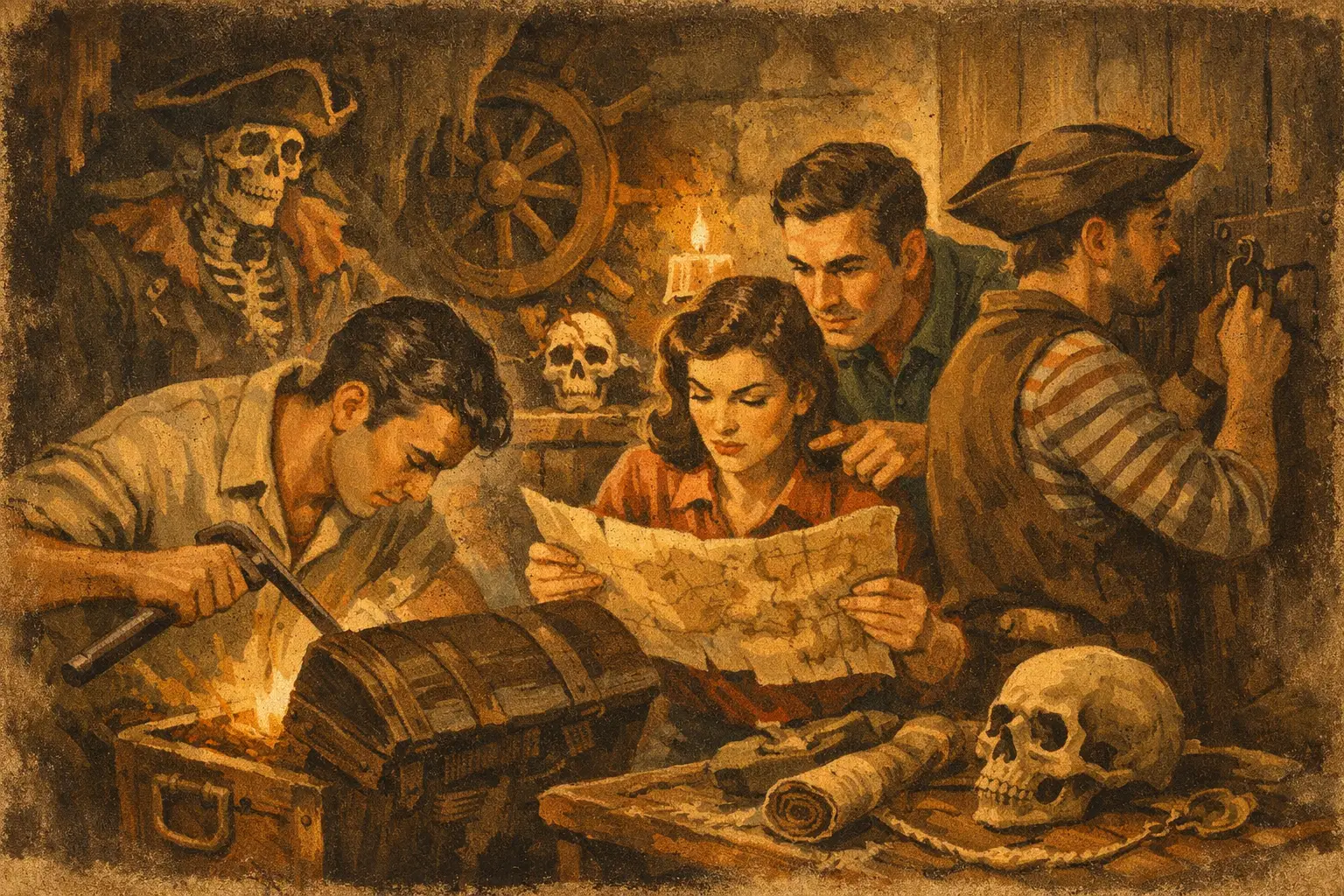
A locked captain’s cabin. A map with half the route missing. A treasure chest that will not open until your crew finds the right combination. That is the fun of a pirate themed escape room: you are not just solving puzzles, you are trying to save the voyage before time runs out!
For families, vacation groups, birthday crews, and competitive friends, pirate adventures hit the sweet spot. Everyone understands the mission. Find the treasure, outsmart the danger, crack the code, and get out in 60 minutes or less. No pirate training required.
What Makes a Pirate Themed Escape Room So Much Fun?
Pirates bring instant stakes to an escape game. A missing key is not just a missing key. It may be the key to a captain’s chest, a prison cell, or the only clue that points to buried gold. A strange symbol could be part of an old sea chart. A dusty bottle may hide a message from a mutinous crew member.
The theme gives every puzzle a reason to exist. Instead of moving from lock to lock without a story, players follow a trail through a world of secrets, danger, and hidden treasure. The best pirate rooms make your group feel like active characters in the adventure, not spectators watching it happen.
That is especially true in Key West. This island has a natural connection to maritime stories, historic ships, salty legends, and the kind of Old Town atmosphere that makes a pirate mission feel right at home. A pirate escape game is a great change of pace after sightseeing, beach time, or a long lunch in the Florida heat.
Your Crew Has 60 Minutes. Make Them Count.
A pirate escape adventure rewards curiosity, but it also rewards organization. When the clock starts, the room can feel packed with possible clues. There may be maps, books, ropes, symbols, locked boxes, nautical objects, and details that look decorative but are actually part of the mission.
The first few minutes matter. Start by searching carefully and placing anything that looks important in one central spot. That keeps clues from disappearing into someone’s pocket or getting mixed up with objects your group has already used. One player may spot a number sequence while another notices that the numbers match marks on a map. Put those observations together quickly.
Do not let one person become the captain of every puzzle. Escape rooms are built for teamwork, and the best groups share information out loud. If you find a code, say it. If you open a lock, tell the crew what was inside. If a clue seems weird, bring it to the group before deciding it is useless.
A little chaos is normal. A total communication breakdown is what feeds the sharks.
Give Everyone a Job Without Overthinking It
You do not need formal titles, but it helps when players naturally spread out. One person can search for physical clues while another studies maps, writing, and symbols. Someone else can keep an eye on the clues that have not been used yet. If your group has kids, give them real puzzles to solve, not just a lookout assignment. Younger players often notice colors, patterns, and hidden objects that adults walk right past.
For a group of two or three, stay close and talk through every idea. Smaller crews cannot afford to have one player silently working on a puzzle across the room. Larger groups have more eyes, but they can also create more noise. Split into pairs when there are clearly separate tasks, then regroup whenever a major lock opens or a new piece of the story appears.
How to Beat the Pirate Room Without Spoiling the Adventure
There is no magic trick that guarantees an escape. Some crews move quickly through the early puzzles and get stuck near the end. Others need a hint right away, then catch a wave of momentum. That is part of the game.
Still, a few habits give your crew a much better shot.
First, check the obvious before inventing a complicated theory. If a box has a three-digit lock, look for three numbers. If a symbol puzzle has four spaces, look for a four-symbol answer. Escape rooms can be clever, but they are designed to be solvable. Do not turn a simple clue into a pirate conspiracy.
Second, keep used clues separate from active clues. Once a key has opened its lock or a code has clearly been entered, move it aside. This avoids the classic escape room mistake of trying the same answer six different ways while the real next clue sits under a map.
Third, ask for a hint before frustration takes over. A well-timed hint does not ruin the game. It gets your crew moving again so you can experience more of the story. The goal is not to prove you can suffer in silence. The goal is to have a great adventure together.
Finally, resist the urge to force anything. If a drawer will not open, it is probably not supposed to open yet. Pirate treasure may be hidden, but it should never require wrestling a prop like you are boarding an enemy ship.
Who Should Book a Pirate Escape Adventure?
A pirate mission works because it is flexible. It can be a family activity, a rainy-day vacation plan, a birthday challenge, or the main event before dinner and drinks. The room gives every group a shared mission, which makes it especially useful when people do not all know each other well.
Families often love the mix of story and hands-on problem-solving. Teens get a chance to lead, adults get pulled away from their phones, and everyone has something to talk about afterward. Friend groups get the friendly competition of trying to beat the clock without needing athletic skills or a complicated dress code.
For bachelor and bachelorette groups, a pirate escape room is a smart early-evening move. It gets the whole crew together, gives everyone a few laughs, and creates a story before the night heads in a different direction. Corporate teams get a more useful benefit: the game reveals how people communicate under pressure. Who notices details? Who keeps the group organized? Who comes up with the wild idea that turns out to be exactly right?
At Key West Room Escape, private games let your group take on the mission together, without strangers joining your crew. That makes the experience easier to enjoy for families, celebrations, and teams that want to solve, laugh, and compete on their own terms.
Plan Like a Captain Before You Arrive
A little planning keeps the adventure fun from the first minute. Book for the number of players who will actually be there, and make sure everyone knows the start time. Arriving early gives your crew time to check in, use the restroom, hear the rules, and get into pirate mode before the clock begins.
Wear comfortable clothes and bring your full attention. You will not need pirate boots, a sword, or a parrot, although a little crew spirit never hurts. More importantly, avoid planning your escape game so tightly around another reservation that everyone is watching the clock before the game even starts. Give yourselves room to celebrate the win, laugh about the near misses, and take in the story.
If your group is large, remember that more players are not always an automatic advantage. A crew of eight can find clues fast, but only if they communicate. A crew of four may move more quietly and stay focused. The best group size depends on your people: energetic problem-solvers may want more hands on deck, while a smaller group may prefer a tighter challenge.
The Treasure Is the Story You Share
The chest is great. The final code is satisfying. Beating the clock feels even better. But the reason people remember a pirate escape game is usually the moment their crew finally connected the clues, the unexpected person who solved the hard puzzle, or the frantic final seconds when everyone was shouting the same answer.
So choose your crew, show up ready to play, and keep talking when the pressure rises. The treasure may be hidden, but a great Key West adventure is waiting in plain sight.